Why New Homes Get Efflorescence Stains
There’s a particular kind of disappointment that comes with watching a brand new home develop patchy white staining across the brickwork or render. You’ve just built or bought something new, everything’s meant to look sharp and fresh, and instead there’s this chalky, almost frosted appearance creeping across the walls that looks suspiciously like something’s already gone wrong.
The good news is that in the vast majority of cases, nothing has gone wrong at all. What you’re looking at almost always has a name, efflorescence, and it’s one of the most common and most misunderstood things that happens to new construction in the first year or so after it goes up.
What Efflorescence Actually Is
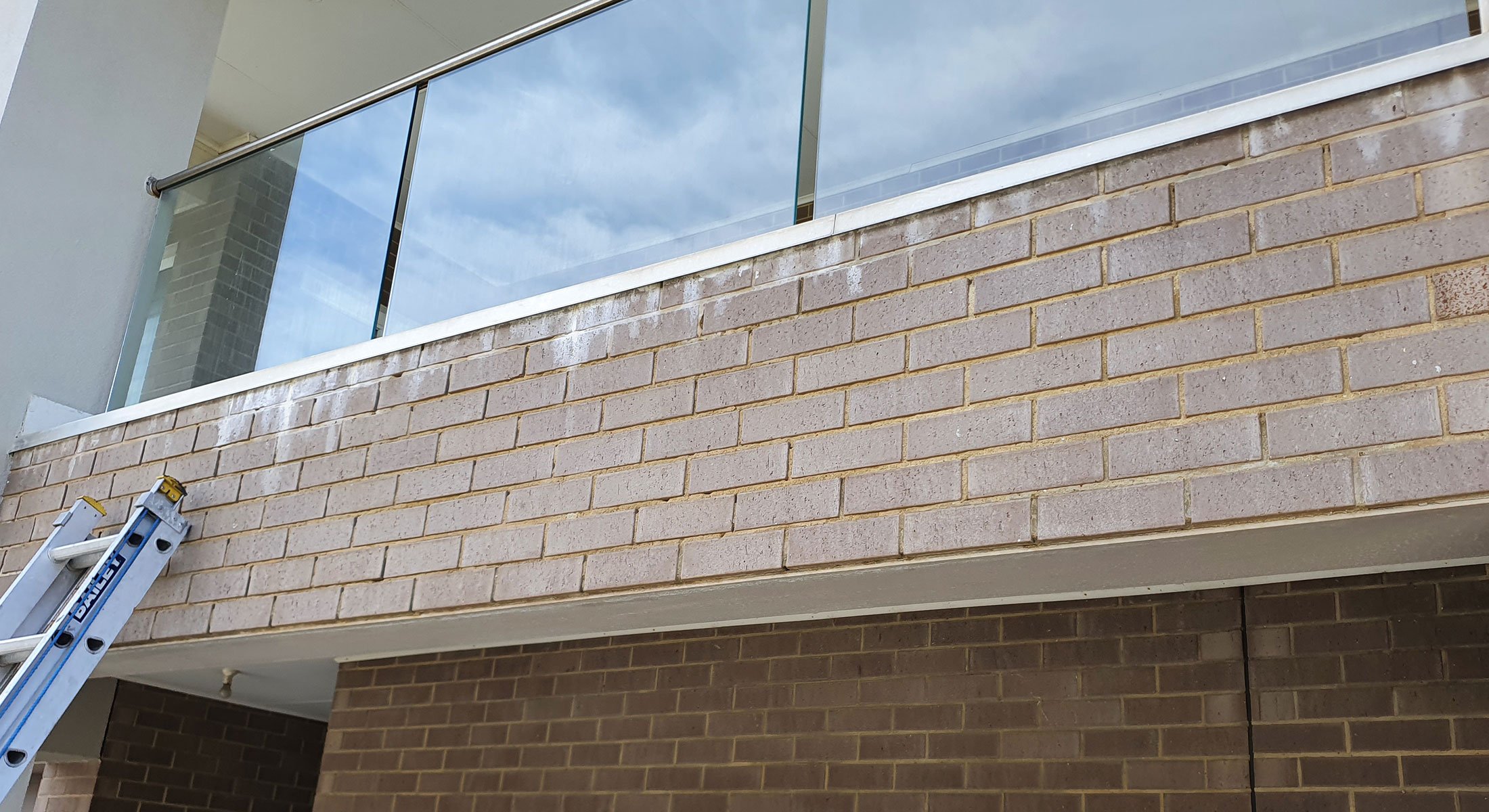
Efflorescence is the white, chalky deposit that shows up on brick, concrete, render, and mortar, and despite how it looks, it isn’t dirt and it won’t wash off with a garden hose. It’s crystallised salts and lime that have been drawn out to the surface by moisture moving through the material underneath.
Every brick, block, and bag of mortar or render used in construction contains a certain amount of naturally occurring salts and lime as part of its makeup. As long as everything stays dry, none of that is visible or a problem. But introduce moisture, and that moisture starts moving through the material, picking up those salts and lime along the way as it travels toward the surface. When the water eventually evaporates off the surface, it leaves those dissolved minerals behind as a visible, crystallised deposit. That’s the white staining you’re seeing.
Why New Builds Cop It So Often
This is the part that makes efflorescence such a common first-year problem specifically. New construction is, almost by definition, full of moisture that hasn’t fully worked its way out yet. Fresh concrete, mortar, and render all contain a significant amount of water as part of the building and curing process, and that moisture doesn’t disappear the moment the trades pack up and leave site. It continues drying out gradually, sometimes over many months, as the structure settles into its finished state.
While that drying process is underway, moisture is actively moving through the brickwork, render, and concrete, carrying salts and lime toward the surface exactly the way described above. This is why efflorescence so often appears not immediately after construction, but weeks or months later, once enough of that internal moisture has had the chance to migrate outward and evaporate. It’s also why it can seem to appear out of nowhere on a wall that looked perfectly clean at handover, the moisture simply hadn’t finished its journey to the surface yet.
It’s worth being clear that this kind of new build efflorescence, on its own, generally isn’t a sign of a structural or waterproofing problem. It’s largely just physics, new materials releasing the moisture they were always going to release as part of settling in. That said, efflorescence can also be a signal of an underlying moisture issue, poor or failed waterproofing, inadequate drainage causing water to pond against masonry, or water finding its way in through construction gaps or cracked render. This is more commonly the cause behind efflorescence that shows up on older properties or that keeps returning persistently rather than fading over time, but it’s not something to rule out entirely on a newer build either, particularly if the staining is heavy, recurring, or appearing in unusual locations.
Why It’s Trickier to Remove Than It Looks
Given that efflorescence looks like a surface deposit, the instinct is often to just hose it off or give it a scrub. Neither approach actually works, and both can make things look worse rather than better in the short term.
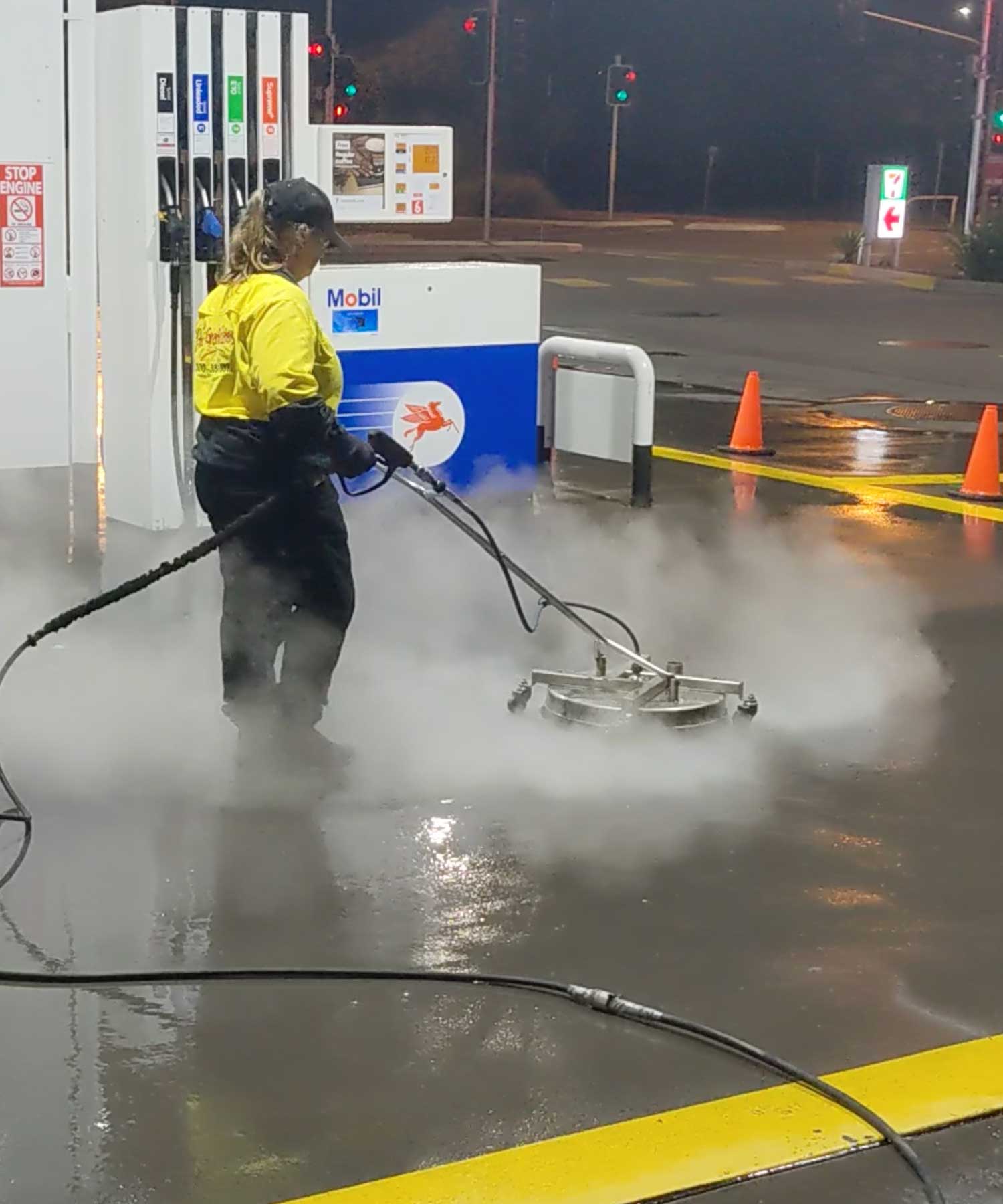
Pressure washing efflorescence on its own doesn’t remove the deposits, it just redistributes them across the surface, spreading the staining around rather than lifting it away. And reaching for the wrong cleaning product is arguably an even bigger risk on a new build, because the wrong solution can etch the surface of fresh brick or render, or make the staining noticeably worse, permanently altering the finish of a surface that’s supposed to look its absolute best.
Proper removal requires a specialist cleaning solution process that actually dissolves the crystallised deposits rather than just moving them around or masking them temporarily. That solution needs to be matched to the specific surface, brick, concrete, render, or natural stone can all respond differently, and given enough time to dwell and work into the deposits before the surface is thoroughly washed to flush everything away cleanly.
Getting It Right on a Surface That’s Meant to Look New
This is where the stakes are genuinely a little higher on a new build compared to an older property. Nobody wants their brand new home or freshly completed commercial development treated with a generic, one-size-fits-all approach that risks damaging a surface that’s only just been finished. The same solution that works perfectly well on an older concrete paver can be entirely wrong for a rendered facade or natural stone feature, and getting that match wrong on new construction is a genuinely frustrating and avoidable outcome.
A proper efflorescence removal job starts with an assessment of the surface material, the extent of the deposits, and where the moisture causing it is likely coming from. Understanding that moisture source matters, because treating the visible staining without addressing what’s actually driving it means there’s a good chance the deposits simply return down the track. From there, the right specialist solution is applied and given time to work before the surface is pressure washed clean, with hot water used where it suits the surface and deposit type, to leave everything looking properly restored rather than just temporarily improved.
Reducing the Chances of It Coming Back
Once a surface has been properly treated, sealing is genuinely one of the most effective ways to reduce the chances of efflorescence making a repeat appearance. A quality sealer reduces the porosity of the surface, limiting how easily moisture can move through it and, by extension, how much opportunity that moisture has to carry salts and lime back out to the surface again. This is particularly effective on brick, concrete, render, and paved areas, and it’s a sensible next step for any new build owner who’d rather deal with the problem once properly than keep treating it every time it reappears.
A Completely Normal Part of Owning Something New
If you’ve moved into a new home or recently completed a commercial or strata development and you’re staring at unexpected white staining on the brickwork or render, take some comfort in knowing this is one of the most common things new construction goes through, and it’s very much fixable. It’s not a reflection of poor building work, and in most cases it’s simply the natural result of everything drying out and settling in the way it’s always going to.
What it does need is the right treatment, not a garden hose and hope, but a proper assessment and a specialist approach that gets the surface back to looking exactly the way it was meant to from day one. If efflorescence has shown up on your new build, or on any brick, concrete, render, or natural stone surface, get in touch with our team today for a free assessment.