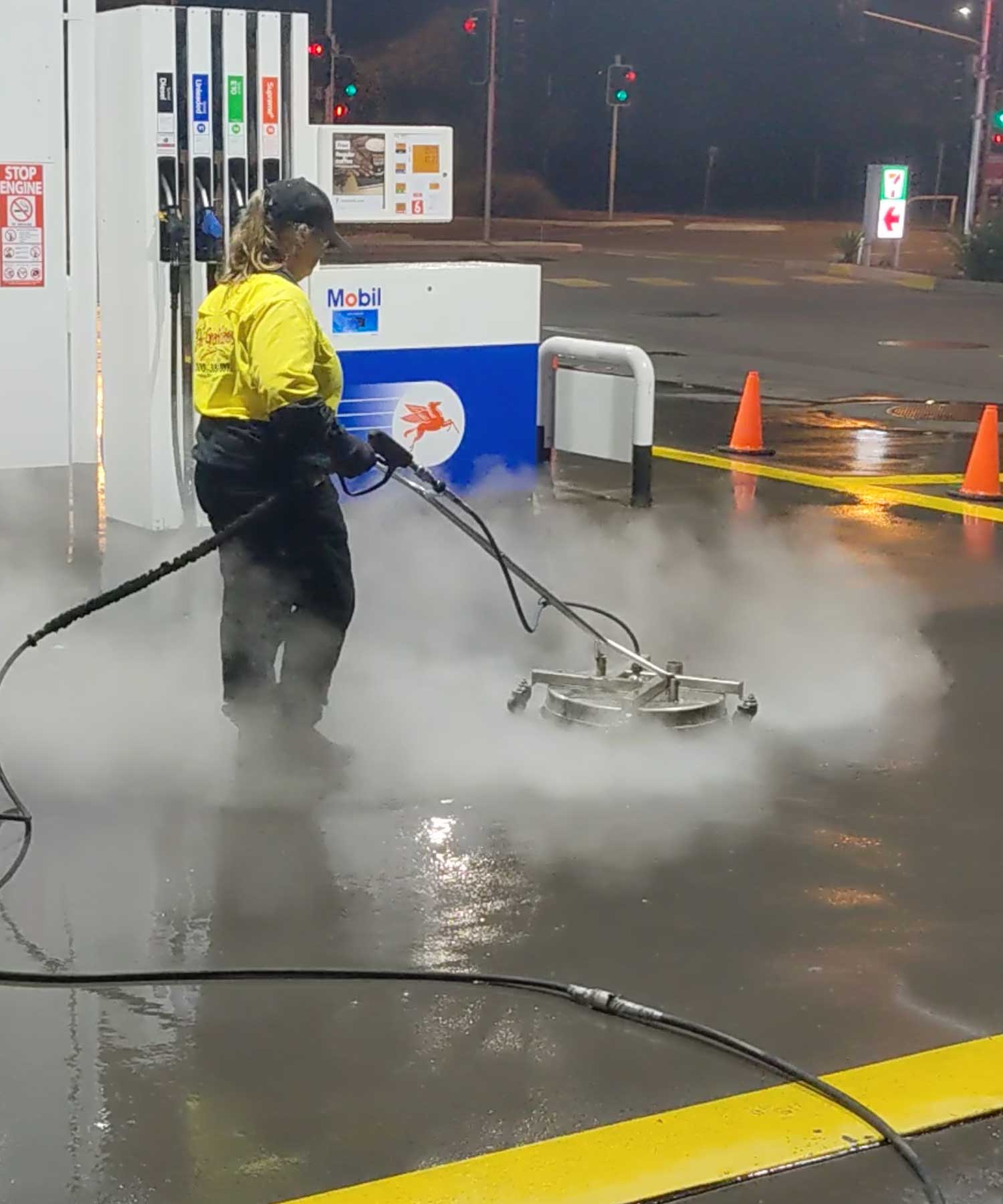
Rust Stain Removal
Rust stains are among the most stubborn surface stains to deal with — and one of the most common. Metal particles from corroding fixtures, fittings, reinforcing steel, or garden furniture lodge in porous masonry surfaces and continue to rust, leaving streaks and staining that pressure washing alone won’t touch.
The staining gets worse over time, not better. And the wrong treatment — bleach-based products are a common mistake — often leaves a larger, lighter stain than the original.
Professional rust stain removal uses a cleaning solution process matched to the surface and the stain, drawing the metal particles out of the substrate rather than trying to wash over them.


How We Remove Rust Stains
Rust stain removal is a precise cleaning solution process. The right solution, the right dwell time, and the right pressure are all critical — and they vary depending on the surface type, the age of the stain, and the source of the rust. Getting any of these wrong produces a poor result or damages the surface.
Stain assessment and testing
Before work begins, our technician assesses the surface, the stain age, and the rust source. Test patches are conducted where needed to determine the correct solution composition and dwell time. This step is what separates a proper removal from a temporary improvement.
Chemical treatment
A specialist rust treatment solution is applied to dissolve the iron oxide compounds causing the staining and reduce the metal particles to a size that can be extracted from the pores of the surface. The solution must be allowed to dwell for the time required — cutting this short leaves residual particles in the surface that cause the stain to reappear weeks later.
Pressure washing and extraction
Once the treatment has done its work, the dissolved rust compounds are extracted from the surface using water under pressure. The treated area is thoroughly rinsed to remove all cleaning solution and rust residue.
Where Rust Stains Come From
Understanding the source matters — treated rust will reappear if the cause isn’t addressed.
- Corroding metal fixings, bolts, and brackets embedded in or attached to masonry
- Reinforcing steel near the surface of concrete structures
- Metal garden furniture, planters, and outdoor fixtures
- Irrigation system components and pipes
- Corroding balustrades, handrails, and fencing
- Metal roof sheeting and guttering runoff
- Signage and structural steel on building facades
- Mineral content in bore water used for irrigation


Surfaces We Treat
- Concrete — plain, stencilled, and exposed aggregate
- Brick and masonry
- Rendered and painted walls
- Sandstone, limestone, and natural stone
- Clay and concrete pavers
- Outdoor tiles
- Granite and bluestone
Residential and Commercial Rust Stain Removal
Residential properties
Rust staining from garden furniture, irrigation fittings, and corroding fixings is one of the most common surface problems on residential properties — and one of the most noticeable. A rust streak running down rendered walls or across a driveway stands out immediately and makes an otherwise well-maintained property look neglected. Professional removal restores the surface properly, and identifying the rust source prevents the problem from recurring.
Commercial and strata properties
Rust staining on building facades, car park structures, paved common areas, and entry surfaces is a persistent maintenance issue for property managers. Corroding in ageing concrete structures, metal fixings, and signage brackets are common sources. Scheduled treatment as part of a maintenance agreement keeps rust staining from becoming an ongoing visible problem across the property.
What to Expect on Every Job
- On-site assessment before work begins — surface type, stain age, and rust source identified
- Test patches conducted where needed to determine correct solution and dwell time
- Chemical treatment applied and dwelled to dissolve rust compounds and reduce metal particles
- Pressure washing to extract dissolved rust from the surface
- Rust source identified and advice provided to prevent recurrence
- Road and footpath closure permits arranged where required
- Risk report provided before work begins
- $20 million public liability insurance on every job
- ISO-audited operations — Quality (ISO 9001), OH&S (ISO 45001), Environmental (ISO 14001)
Protect the Surface After Treatment
Once rust staining is removed, sealing the surface significantly reduces the risk of recurrence — particularly on porous concrete and natural stone surfaces where metal particles can penetrate deeply. A quality surface sealer reduces porosity and makes future rust staining easier to treat before it sets in.
We offer stain proofing and driveway and pavement sealing suitable for a range of surface types.