Pressure Cleaning and Hot Water Pressure Washing
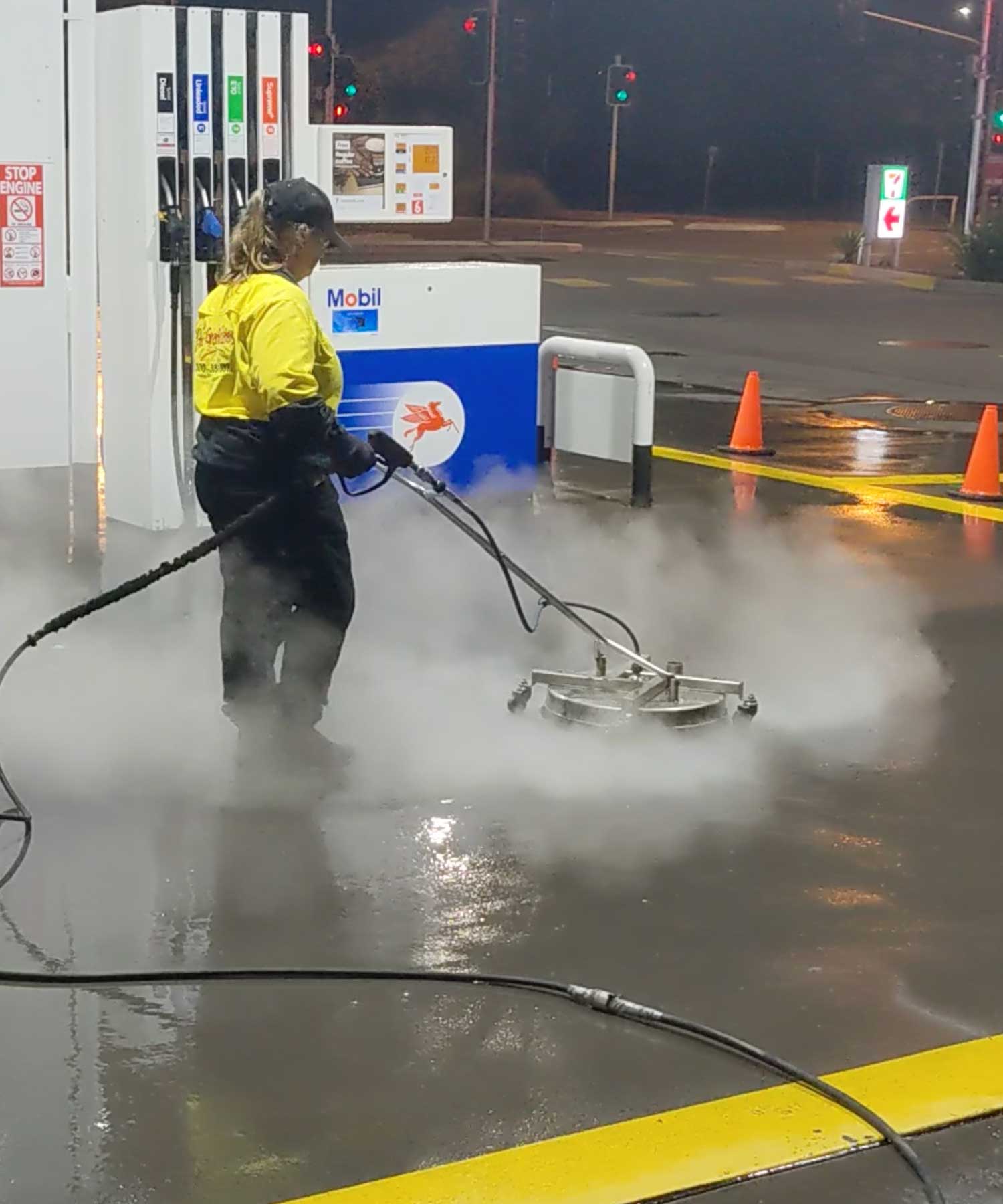
Pressure cleaning is one of the most effective tools for restoring hard surfaces — removing built-up dirt, grime, mould, oil staining, and biological growth that ordinary cleaning can’t shift. But it’s also one of the most commonly misused. The wrong pressure, temperature, or technique on a masonry surface can cause scarring, cracking, and structural damage that is expensive to repair.
Our technicians are trained specialists who assess every job before work begins, carefully matching pressure and temperature to the surface being treated.
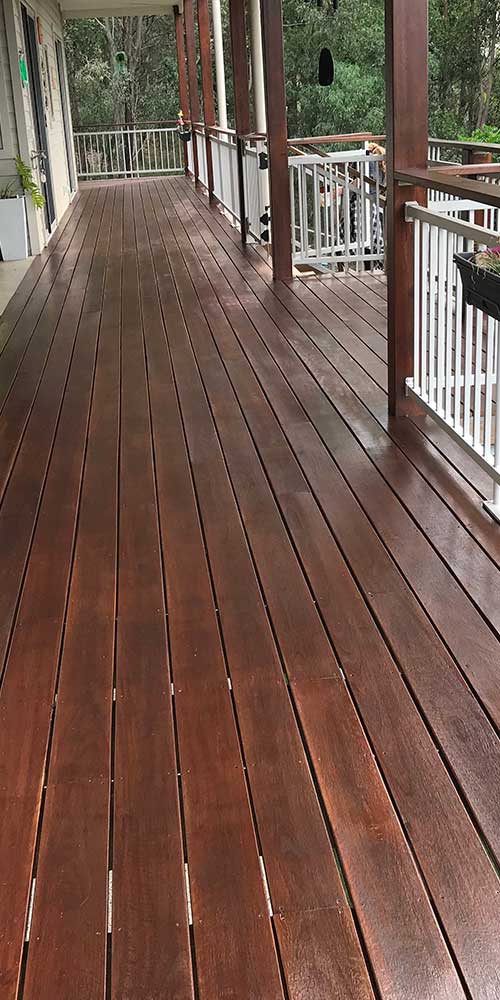
How We Restore and Stain Timber Decks
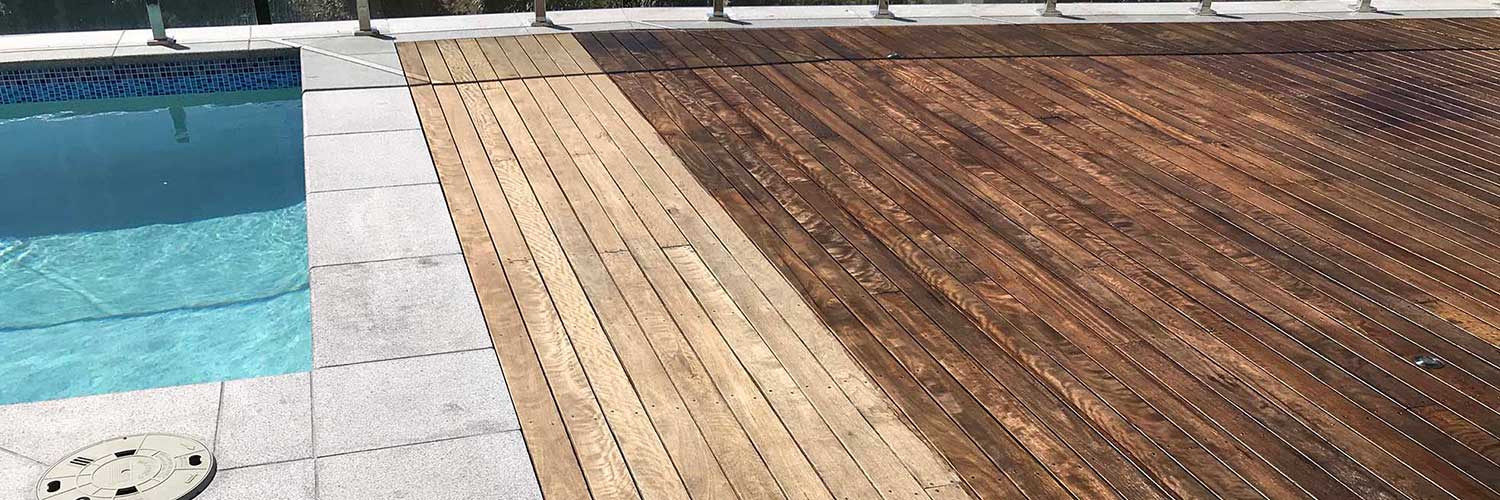
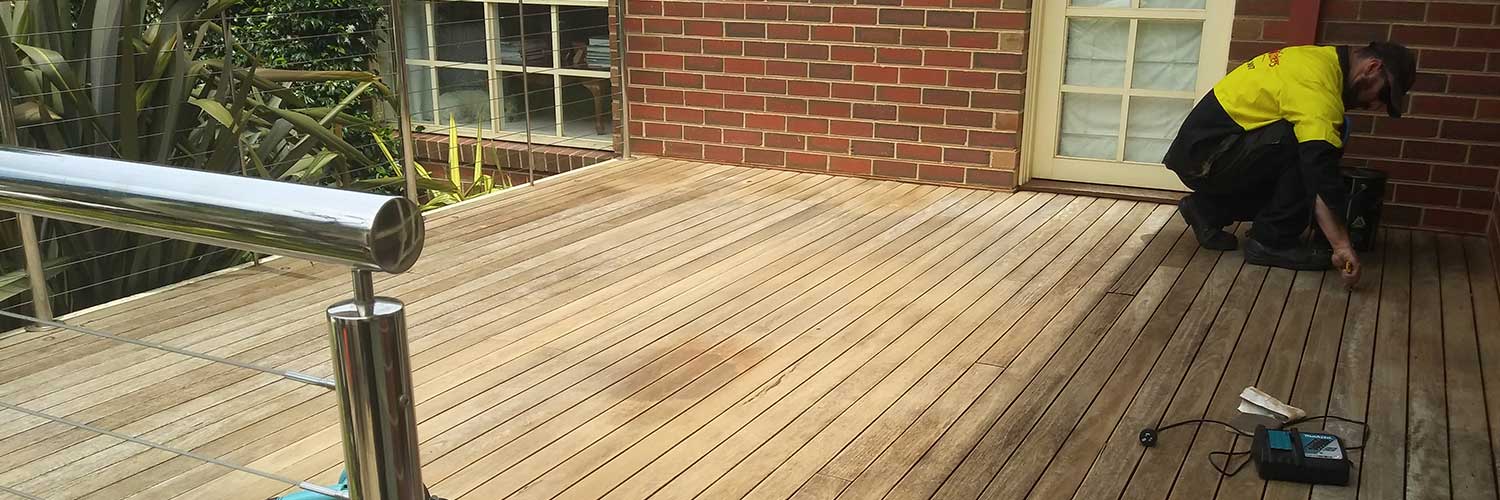
Every deck job starts with an assessment of the existing condition — the timber type, the current coating, how it’s worn, and what preparation approach is most appropriate. Our technicians advise on the process before work begins and provide a written quotation covering both preparation and staining.
Old coating removal
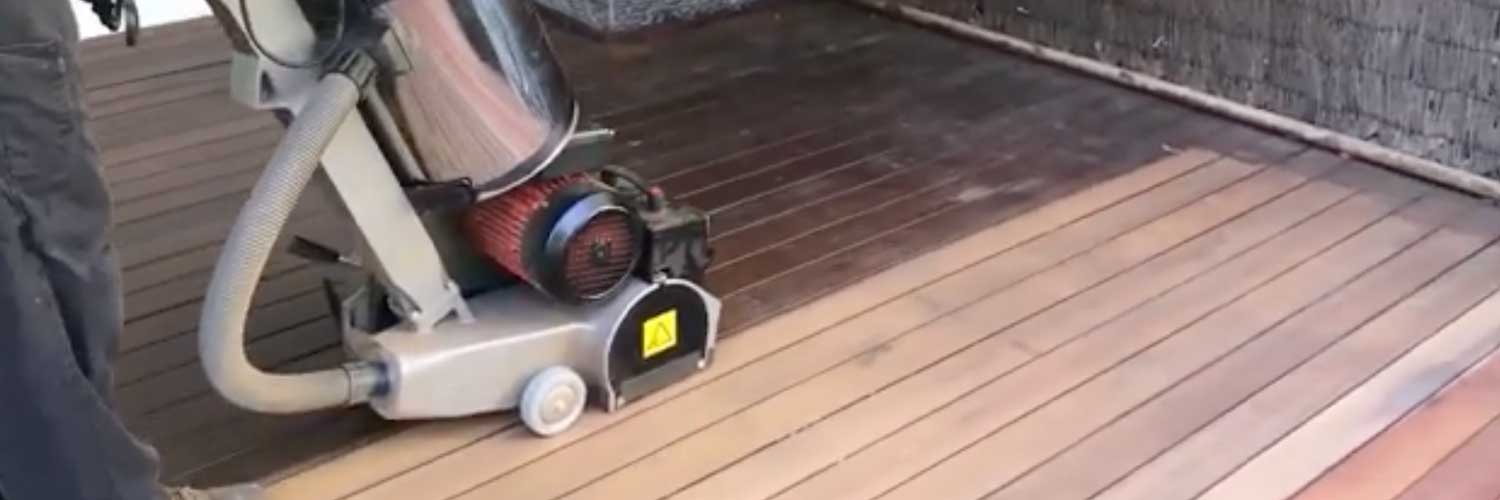
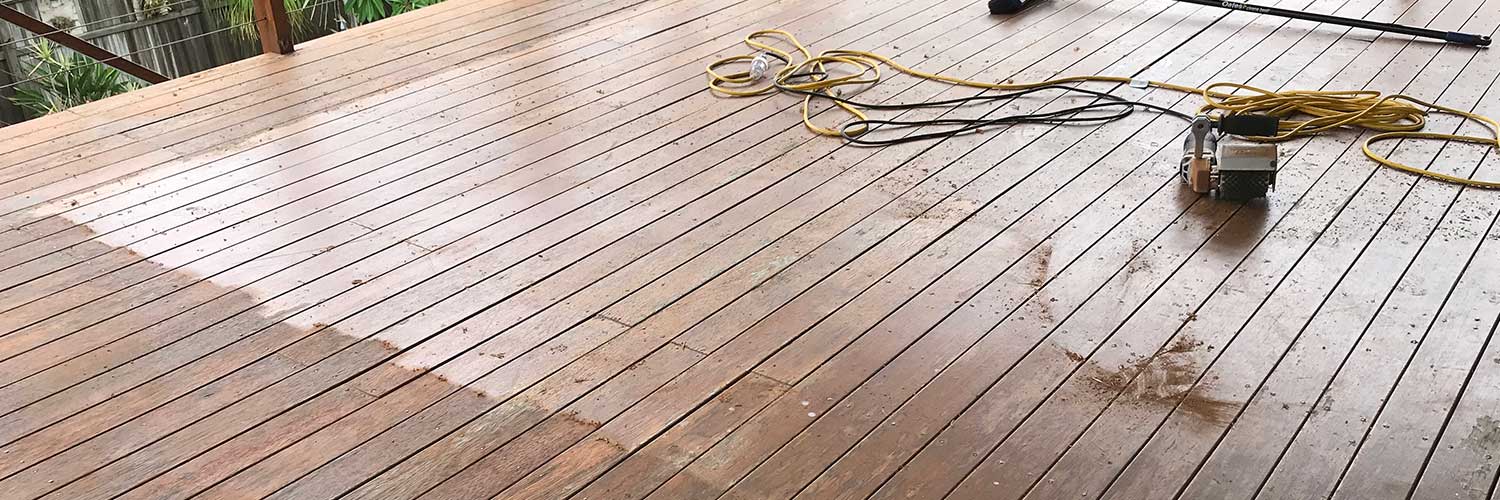
Depending on the existing coating type, its condition, and the timber species, old stain is removed by specialist cleaning solution stripping, brush sanding, or a combination of both.
Where brush sanding is appropriate, we use specialist brush sander units rather than traditional belt or paper sanders. The brush wheel removes the old coating without cutting into the timber surface — eliminating the sanding scar marks that traditional sanding leaves behind. It also opens the pores of the wood rather than closing them, allowing the new decking oil to penetrate deeper into the timber fibres for better nourishment and a longer-lasting finish. And unlike belt sanders, the brush sander is unaffected by protruding nail heads — no need to hammer nails down first, which avoids loosening the decking boards in the process. Deck edges are handled using a handheld version of the same brush sander.
Chemical stripping is used where the coating type suits it — our technician advises on the most appropriate approach for your specific deck before work begins.
Pressure cleaning
Once the old coating is stripped, the deck is pressure washed to remove all residue, dirt, oils, and mould from deep within the timber. This step cleans the surface thoroughly and prepares it to receive the new oil.
First coat application
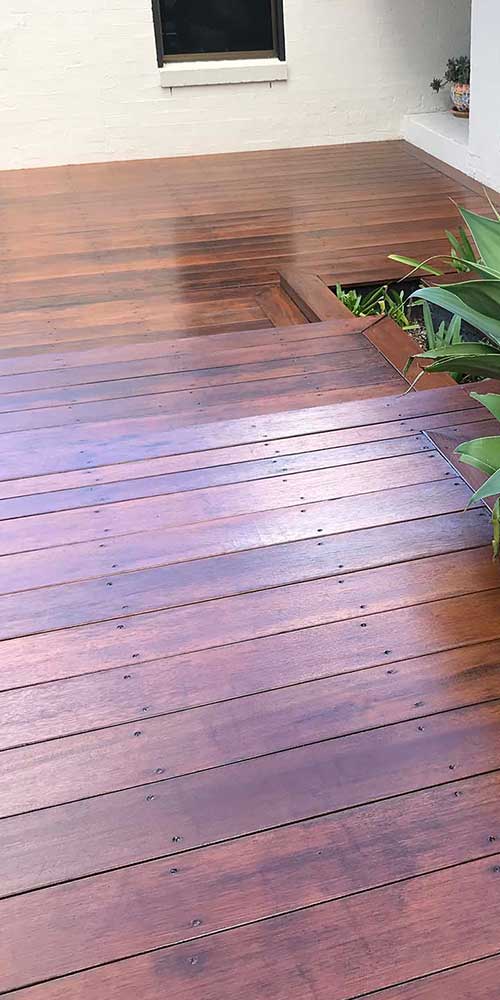
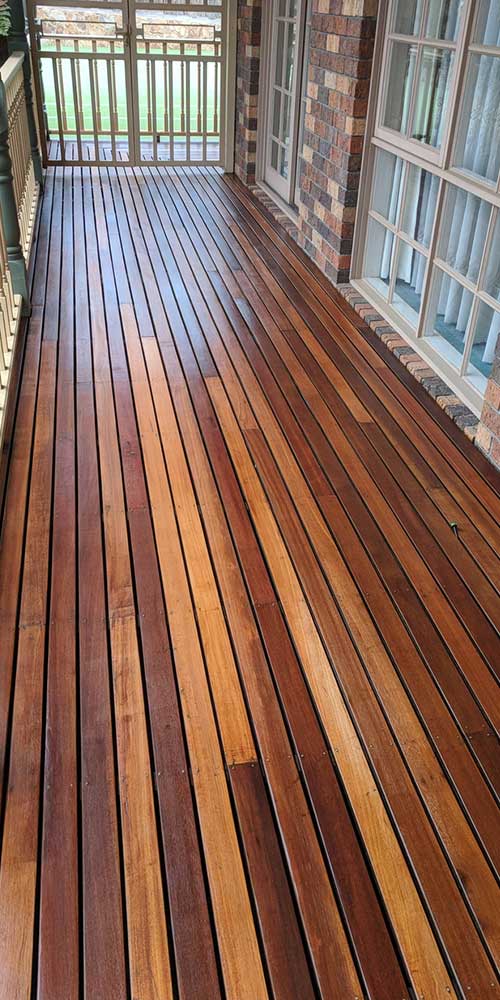
The chosen decking oil is applied to the prepared surface — restoring moisture, enhancing the natural character of the timber, and providing UV and weather protection. The oil selection is matched to the timber species, the deck’s location, and how it’s used.
Second coat application
A second coat is applied 24 to 48 hours after the first, once the initial coat has been absorbed and dried, delivering a deeper, more even, and longer-lasting finish.
Choosing the Right Decking Oil
The right decking oil depends on the timber species, the deck’s aspect and exposure, and how heavily the deck is used. Not all oils suit all timbers — a product that works well on treated pine may not be right for a dense hardwood like Merbau or Jarrah, which requires an oil that penetrates deeply into a tighter grain structure.
Aspect and exposure matter too. A deck in full sun faces very different conditions to one in a shaded southerly aspect — UV stability and heat resistance need to be matched to the environment.
Penetrating oils are generally preferred for hardwood decks as they nourish the timber from within rather than forming a surface film that can peel as the timber moves. Our technicians advise on the appropriate product before work begins, factoring in timber species, UV stability, moisture resistance, and colour preference.
What to Expect on Every Job
- On-site assessment before work begins — timber type, existing coating condition, and preparation approach confirmed
- Old coating removed via cleaning solution stripping, brush sanding, or both — matched to the timber and coating type
- Pressure cleaning to remove all residue and contaminants before oil application
- Two coats of high-quality decking oil applied with correct drying time between coats
- Risk report provided before work begins
- $20 million public liability insurance on every job
- ISO-audited operations — Quality (ISO 9001), OH&S (ISO 45001), Environmental (ISO 14001)
Timber Types We Work On
- Merbau
- Jarrah
- Treated pine
- Spotted gum
- Blackbutt
- Hardwood and softwood species generally