Tyre Mark and Burnout Removal
Tyre marks on car parks, driveways, forecourts, and factory floors are stubborn — and frustrating. Scrubbing them or blasting them with a pressure washer doesn’t work, because the rubber compounds don’t just sit on the surface. They penetrate into porous concrete and asphalt, and standard cleaning simply can’t reach them.
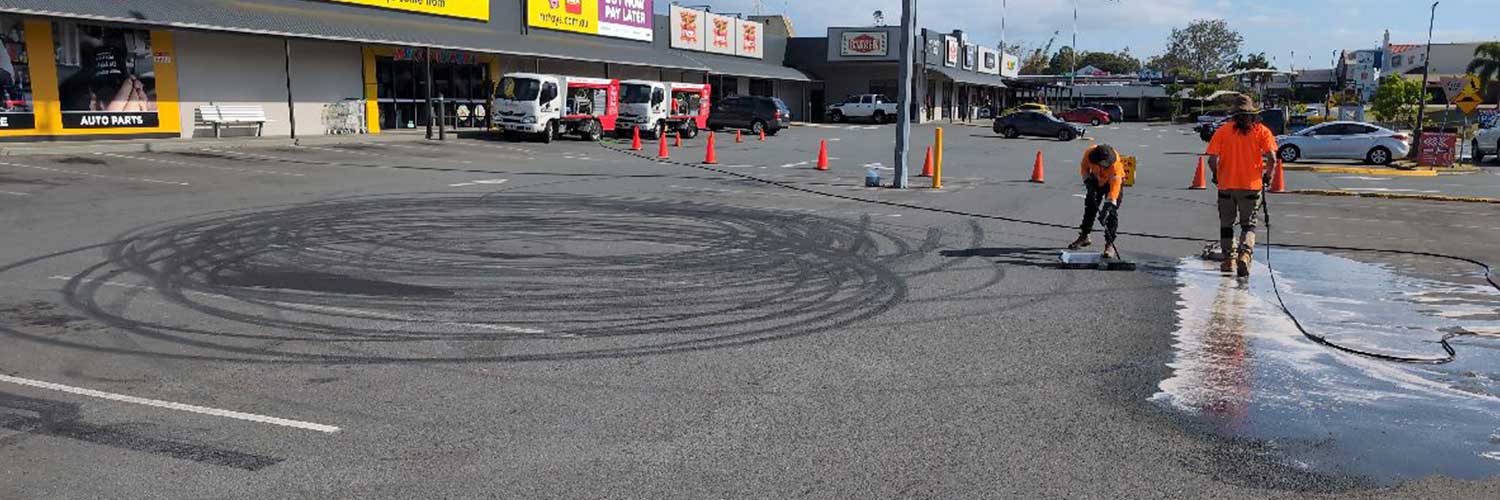
Burnout marks are worse. The heat generated during a burnout partially melts the rubber into the surface, bonding it at a level that makes removal significantly more difficult — and more damaging to attempt without the right process.
The right cleaning solution treatment breaks the rubber down and draws it to the surface where it can be properly removed, restoring the surface without abrasion or damage.
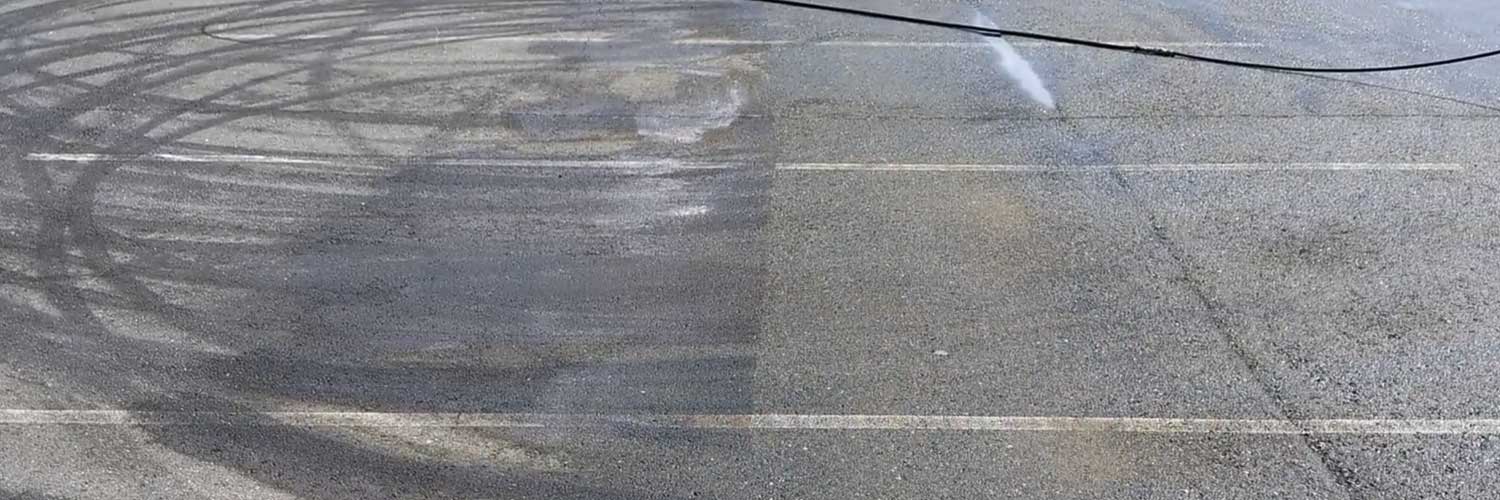
How We Remove Tyre Marks and Burnouts
Tyre mark and burnout removal is a cleaning solution process first, pressure washing second. Attempting to remove rubber deposits with pressure alone either fails to shift them or damages the surface in the process.
Assessment
The age of the marks, the surface type, and whether heat bonding is present all affect the treatment approach. Burnout marks require a more intensive process than regular tyre marks — our technician assesses this before work begins and sets realistic expectations for the outcome.
Specialist cleaning solution treatment
A specialist solution is applied to break down the molecular structure of the rubber deposits and draw them to the surface. The solution is allowed to dwell for the time needed — cutting this short means incomplete removal and potential regrowth of the stain as residual rubber oxidises.
Hot water pressure washing
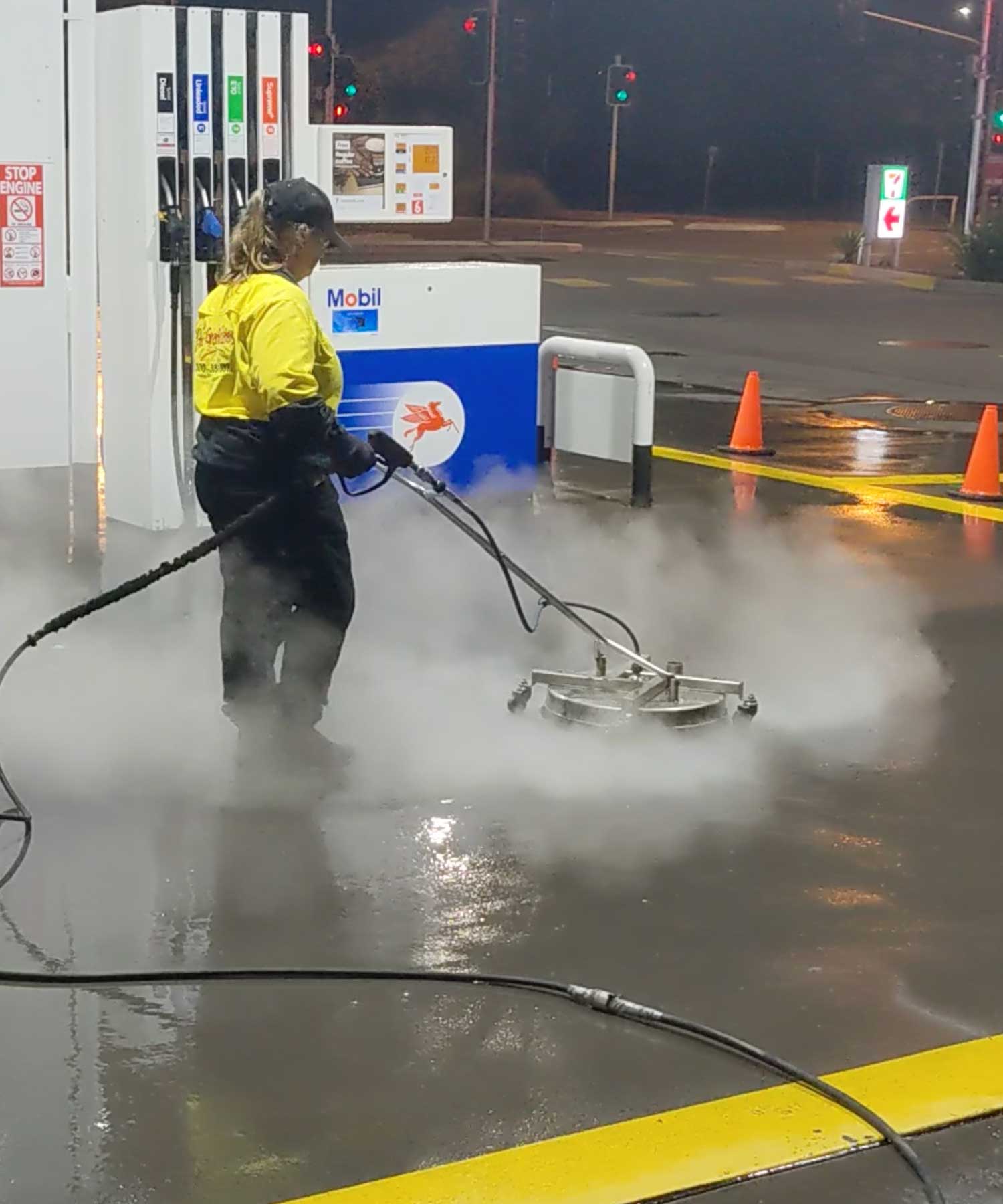
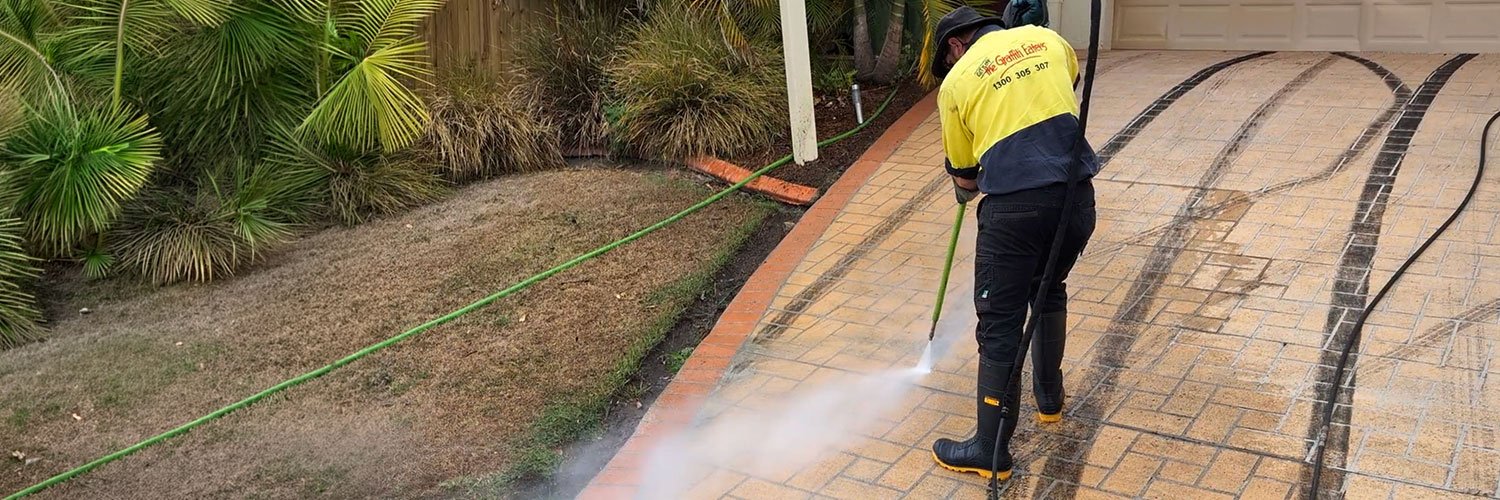
Once the treatment has lifted the rubber to the surface, hot water pressure washing removes the dissolved deposits thoroughly. Spin jet attachments are used on large flat areas for consistent, efficient coverage.
Wastewater recovery
When required, wastewater is captured on site and prevented from entering stormwater drains — compliant with environmental regulations on every job.
Tyre Marks vs Burnouts — What’s the Difference?
Regular tyre marks are caused by normal vehicle movement — hard braking, sharp turns, and forklift pivoting. The rubber is deposited on the surface and penetrates into the pores of concrete or asphalt over time. They’re unsightly and accumulate quickly in high-traffic areas.
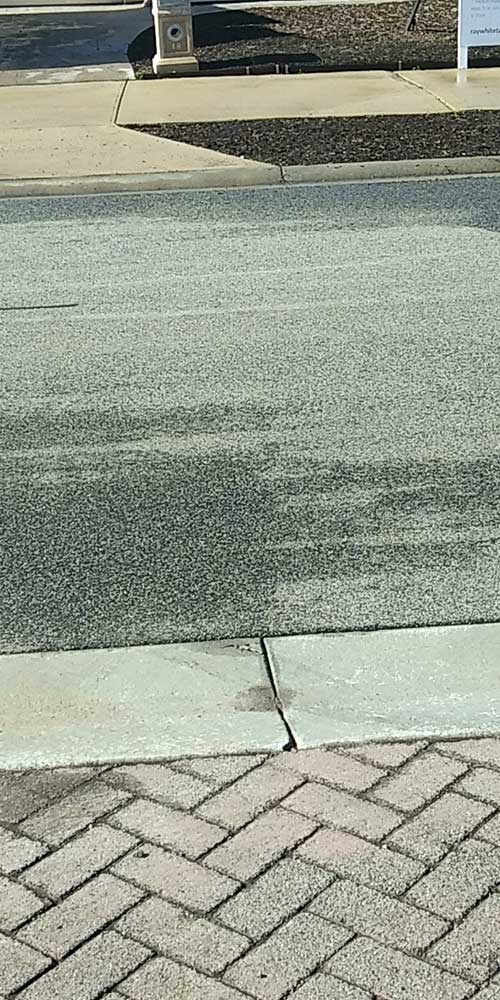
Burnout marks are caused by wheel spin that generates enough heat to partially melt the rubber into the surface. The heat bonding makes them significantly harder to remove than regular tyre marks, and in severe cases a faint shadow may remain after treatment — particularly on older or more porous surfaces. Our technician will advise on expected results before work begins.
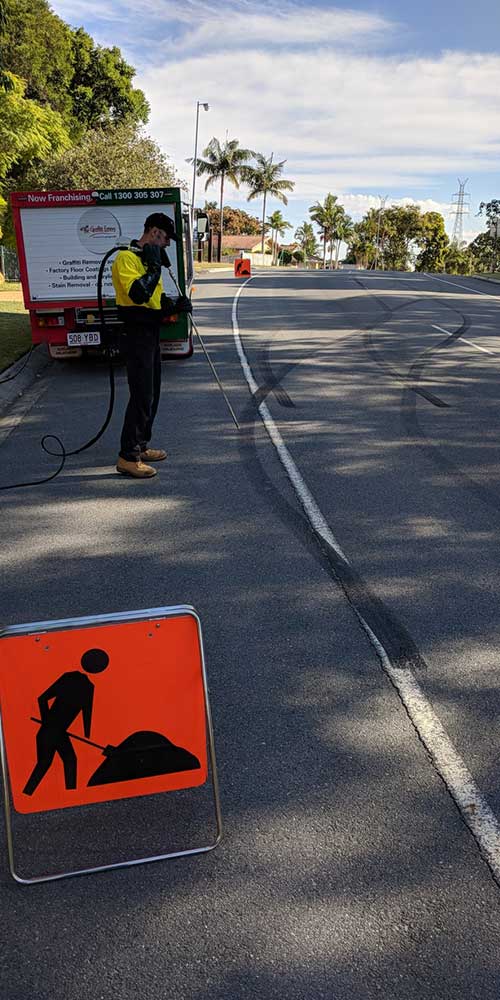

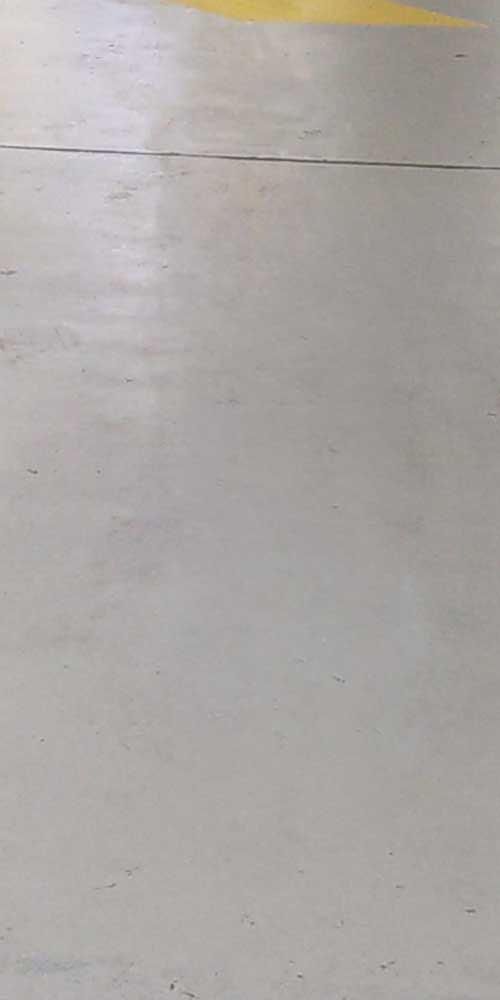

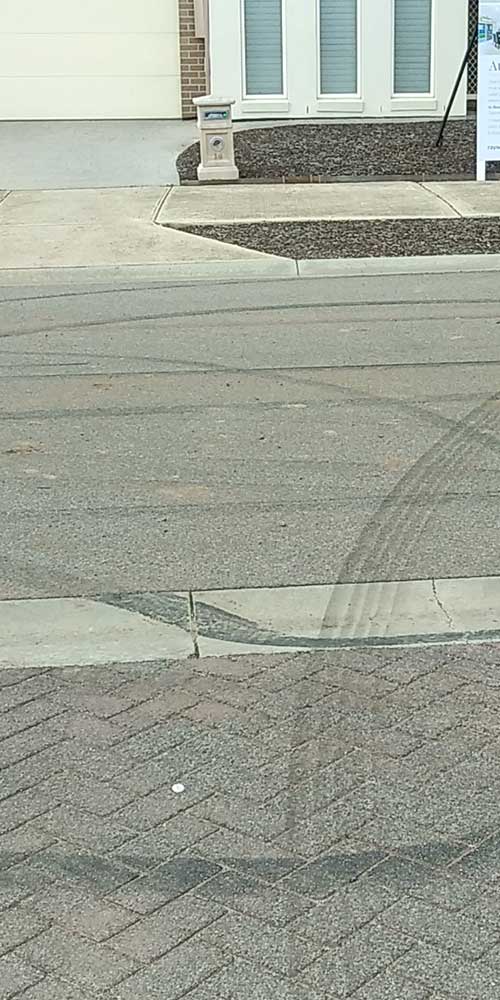
Where We Remove Tyre Marks
- Car parks — commercial, retail, and strata
- Petrol station forecourts
- Factory and warehouse floors
- Loading docks and delivery areas
- Driveways and residential car pads
- Road surfaces — including burnout marks on public roads
What Tyre Marks Cost You
For commercial property managers and facilities teams, tyre marks are more than a cosmetic issue. A heavily marked car park or loading dock signals a poorly maintained property — to tenants, customers, and potential buyers or lessees alike. For retail centres in particular, the condition of the car park is one of the first things a visitor sees, and it forms an immediate impression of how the property is managed.
For factory and warehouse operators, tyre marks from forklifts and vehicles accumulate rapidly on floor surfaces and compound with oil and grease contamination. Regular removal as part of a maintenance agreement keeps the floor in a consistently clean and presentable condition — and makes each clean faster and more cost-effective than recovering from heavy build-up.
What to Expect on Every Job
- On-site assessment before work begins — surface type, mark severity, and heat bonding assessed
- Specialist cleaning solution treatment applied and dwelled to break down rubber deposits
- Hot water pressure washing to remove dissolved deposits from the surface
- Realistic outcome discussed upfront — particularly for older burnout marks on porous surfaces
- Waste water is captured as required — no runoff into stormwater drains
- Risk report provided before work begins
- $20 million public liability insurance on every job
- ISO-audited operations — Quality (ISO 9001), OH&S (ISO 45001), Environmental (ISO 14001)
Keep On Top of It
Tyre marks are one of those problems that compound quickly — the longer they’re left, the deeper the rubber penetrates and the harder removal becomes.
For high-traffic car parks, loading docks, and factory floors, a scheduled maintenance agreement is the most cost-effective approach.
Regular visits prevent heavy build-up, keep the surface consistently presentable, and make each clean faster than recovering from months of accumulation.