Solar Panel Cleaning
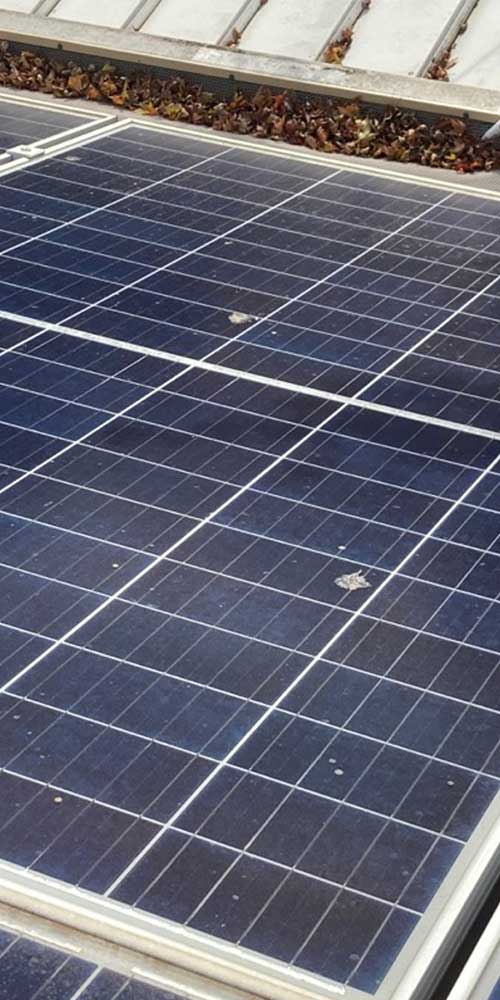
Dirty solar panels don’t just look neglected — they underperform. Dust, bird droppings, lichen, and pollution film reduce the amount of sunlight reaching the cells, and that lost efficiency translates directly into lost energy output and a slower return on your investment.
The impact compounds over time. Industry data shows energy output can increase substantially after a single clean on panels that have gone 12 months or more without attention.
Regular professional cleaning is the simplest way to make sure your solar system is actually delivering what it’s capable of.
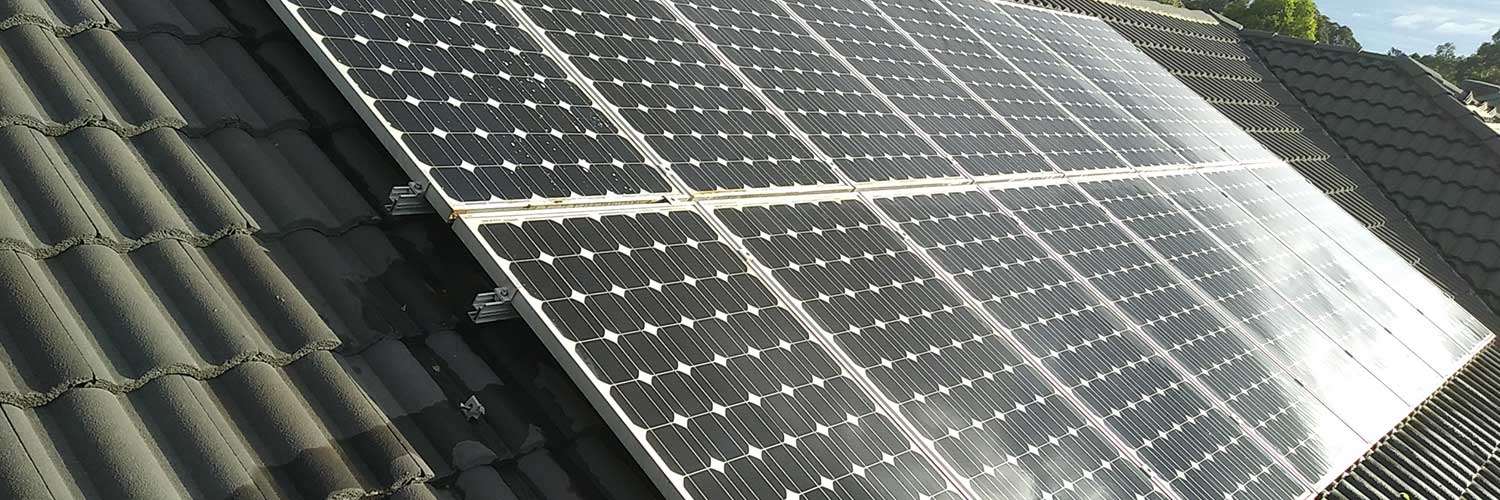
How We Clean Solar Panels
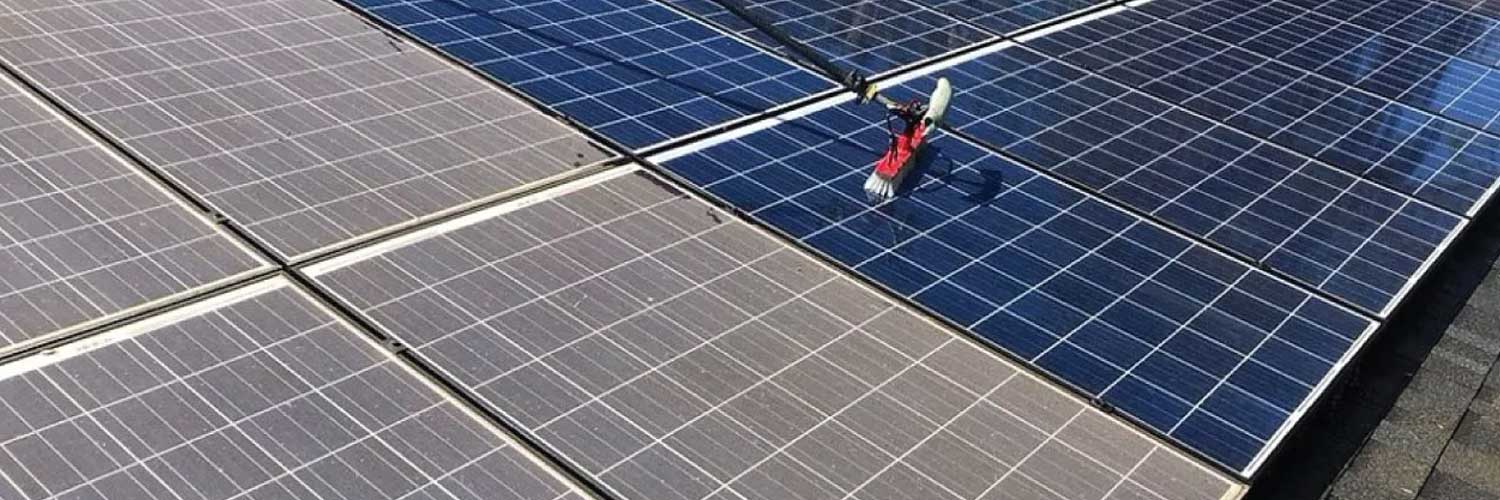
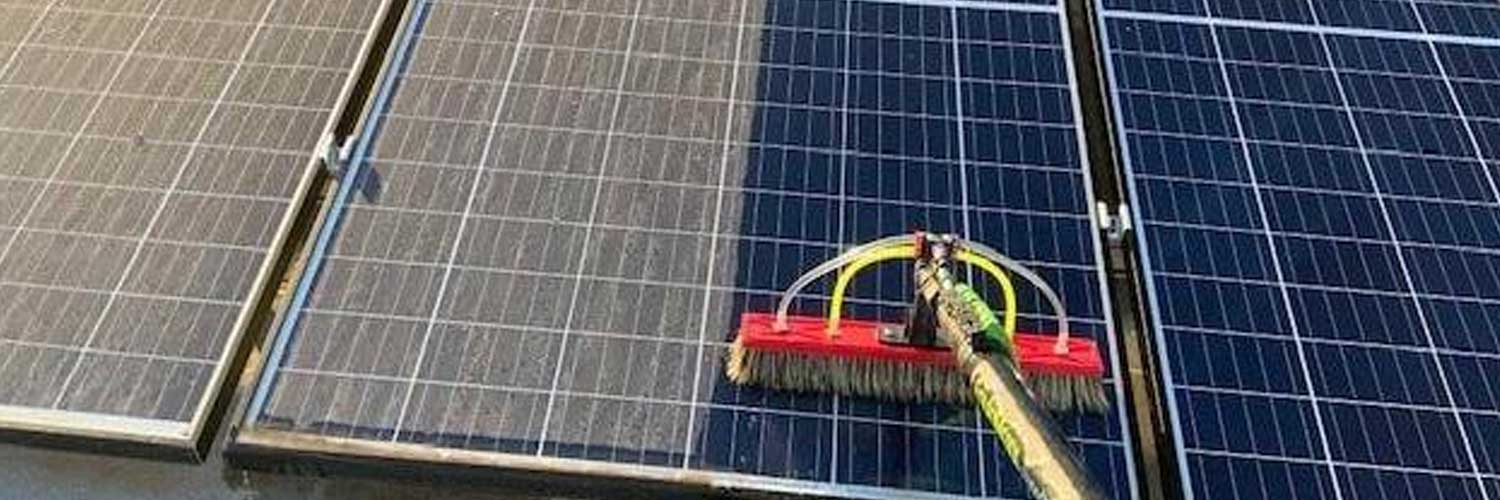
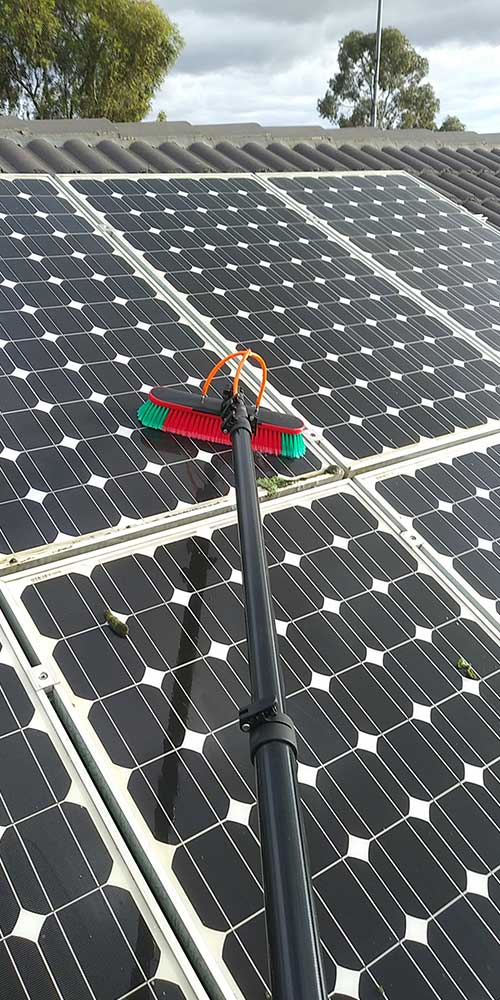
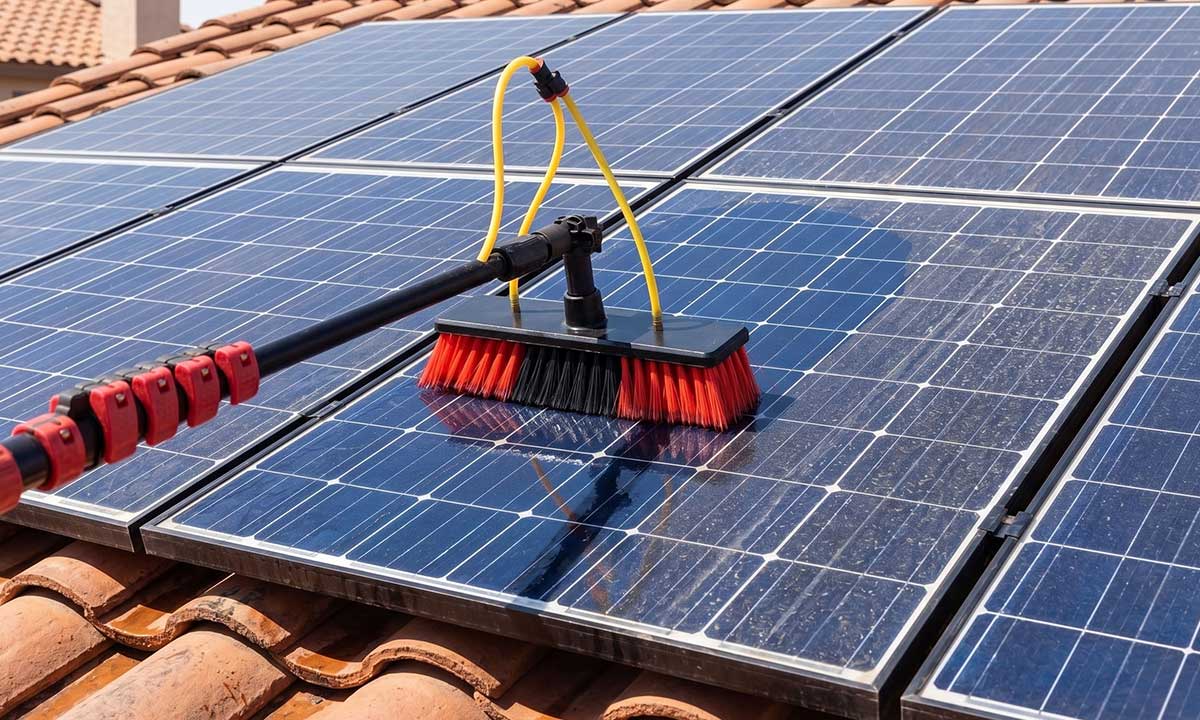
Solar panels require a careful, low-pressure approach — the wrong technique or equipment can scratch the glass surface, damage coatings, or leave streaks that affect performance. We use specialist solar panel cleaning brushes and appropriate cleaning solutions that remove contamination without abrasion or surface damage.
Assessment and access
Before work begins, we assess the panel array, the soiling profile, and the access requirements. Not all solar panel installations are accessible or suitable for professional cleaning — see our access guidelines below.
Specialist cleaning solutions
Where bird droppings, lichen, tree sap, or other stubborn contamination is present, appropriate cleaning formulations are applied to break down the soiling before brushing. This avoids the need for abrasive scrubbing that can damage panel surfaces.
Low-pressure brush cleaning
Panels are cleaned using specialist soft-bristle brushes with purified water — removing soiling thoroughly without scratching the glass or leaving mineral deposits that affect light transmission. No high-pressure washing is used directly on panel surfaces.
Streak-free finish
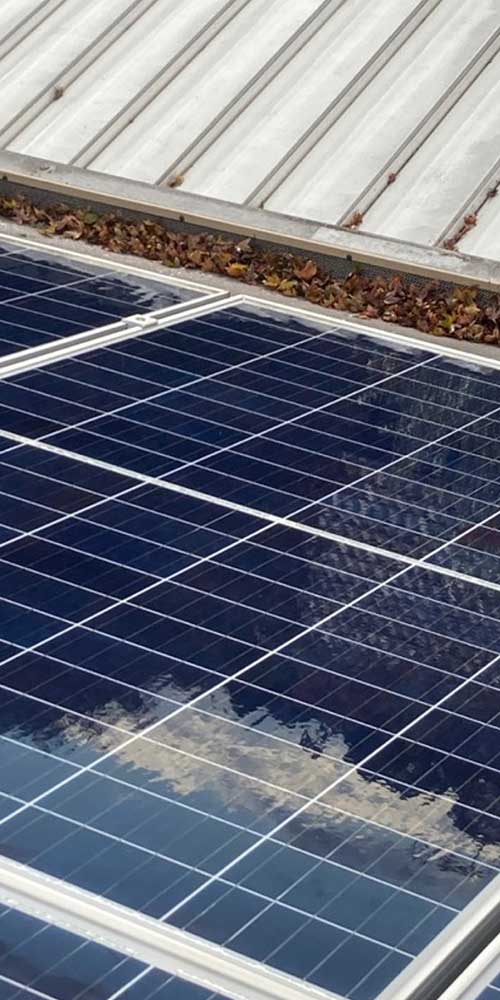
The goal is maximum light transmission across every panel in the array. Our technicians work methodically across the full installation to ensure a consistent, streak-free result.
What We Remove
- Dust and compacted dirt
- Bird droppings
- Lichen and mould
- Tree sap and leaf residue
- Pollution film and exhaust deposits
- Cobwebs
- Construction dust
How Often Should Panels Be Cleaned?
The right cleaning frequency depends on your location and environment. As a general guide:
Annually is the minimum recommended for most installations — sufficient for lower-exposure environments with moderate dust and moderate bird activity.
Every six months is recommended for installations in higher-exposure environments — near agriculture, construction, high bird activity, or heavy vehicle and industrial traffic. More frequent cleaning in these environments maintains consistent output rather than recovering from a significant efficiency drop.
A maintenance agreement locks in scheduled cleaning visits so panel performance is maintained consistently without having to remember to book each time.
What to Expect on Every Job
- On-site assessment before work begins — panel condition, soiling profile, and access confirmed
- Specialist soft-bristle brush cleaning with purified water — no abrasive scrubbing, no high-pressure on panel surfaces
- Appropriate cleaning solutions applied to stubborn soiling including bird droppings and lichen
- Streak-free finish across the full array
- Risk report provided before work begins
- $20 million public liability insurance on every job
- ISO-audited operations — Quality (ISO 9001), OH&S (ISO 45001), Environmental (ISO 14001)
Access — What We Can and Can’t Do
Solar panel access and safety requirements determine whether a professional clean is feasible. Our guidelines are straightforward:
We service:
- Ground-mounted solar arrays — commercial, industrial, and rural installations
- Single-storey residential and commercial rooftop systems with safe roof access
- Flat roof installations at any height where safe access to the panels is achievable
We generally don’t service:
- Rooftop systems on two-storey or higher residential properties
- Steeply pitched rooftop installations where safe access cannot be arranged
If you’re unsure whether your installation is suitable, contact us and we’ll advise before you book.