Graffiti Removal from Glass and Windows
Glass is one of the most visible and vulnerable surfaces for graffiti — and one where the wrong removal technique can cause permanent, irreversible damage.
Graffiti on glass is immediately noticeable and creates a poor first impression for any business or property. But beyond the visual impact, glass presents a unique removal challenge — it can be permanently scratched or etched by incorrect cleaning methods, leaving damage that no amount of cleaning will fix.
This is a surface where getting it wrong isn’t just ineffective — it can be costly. Replacing scratched or etched glass panels, shopfronts, or windows is a significant expense that far outweighs the cost of having the graffiti professionally removed in the first place.

How We Remove Graffiti from Glass
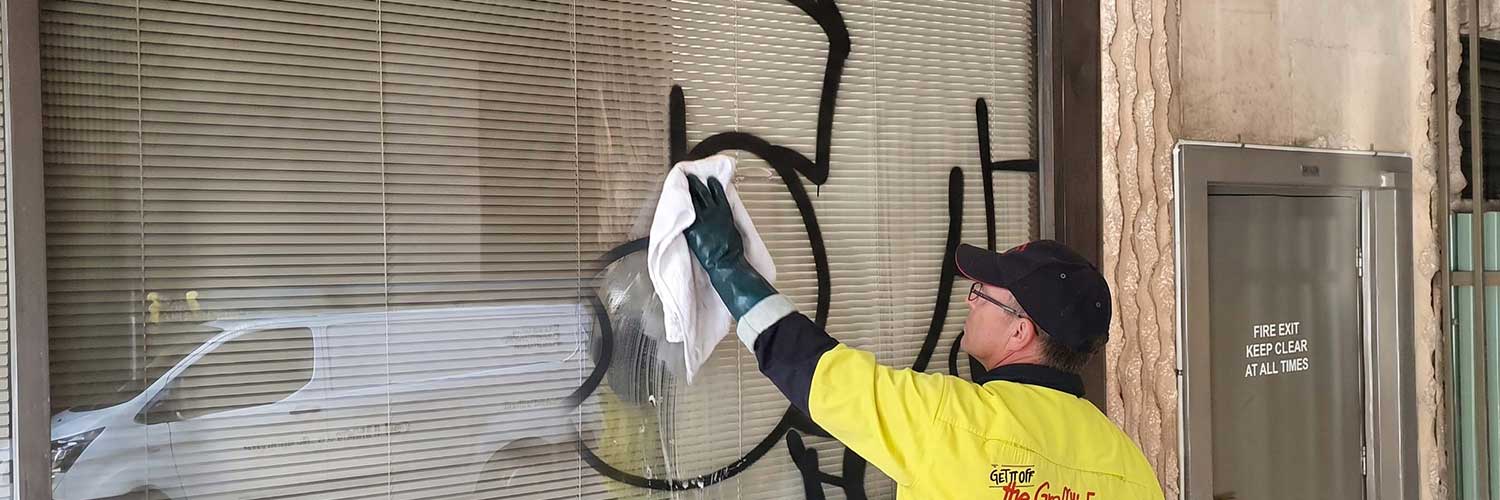
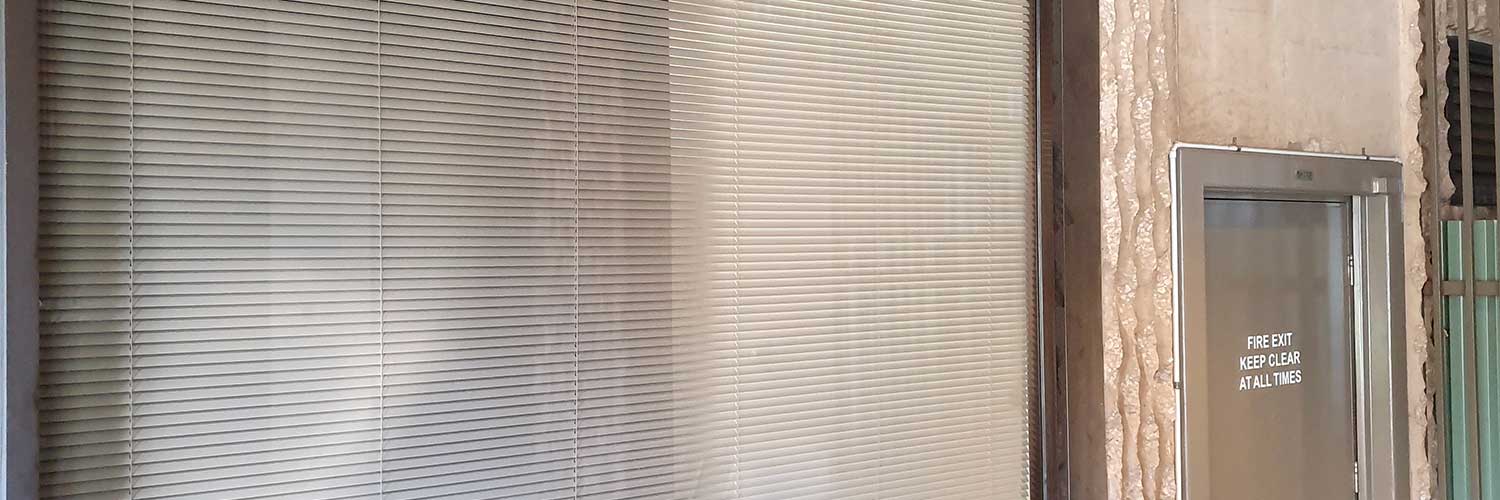
All graffiti removal from glass is carried out by hand — pressure washing is never used on glass surfaces. Hand application gives our technicians full control over the process, ensuring the graffiti is removed carefully and without risk to the glass beneath.
How we treat it:
1. Assessment
Our technician first assesses the type of graffiti on the glass — spray paint, marker pen, paint splatter — as each requires a different approach and has different implications for the outcome.
2. Specialist cleaning solution
A carefully selected graffiti cleaning solution suited to the glass surface and the graffiti type is applied by hand. The solution is worked gently into the affected area to break down the graffiti substance without scratching or marking the glass.
3. Careful hand removal
The graffiti is carefully removed by hand using appropriate tools and technique. Abrasive materials are never used on glass — even materials that seem soft can introduce fine scratches that become permanently visible.
4. Surface inspection
Once cleaned, the glass is inspected to ensure the surface is clear and undamaged. Any remaining residue is addressed before the job is considered complete.
The Risk of Scratched Glass
This is worth understanding before attempting any DIY removal on glass surfaces.
Glass can be permanently scratched by materials and tools that might seem harmless — including some scrubbing pads, razor blades used incorrectly, and even certain cleaning powders. Once scratched, the glass surface cannot be restored through cleaning — the only solution is replacement.
Our technicians are trained to identify the type of graffiti on arrival and set realistic expectations about what’s achievable — before any work begins.

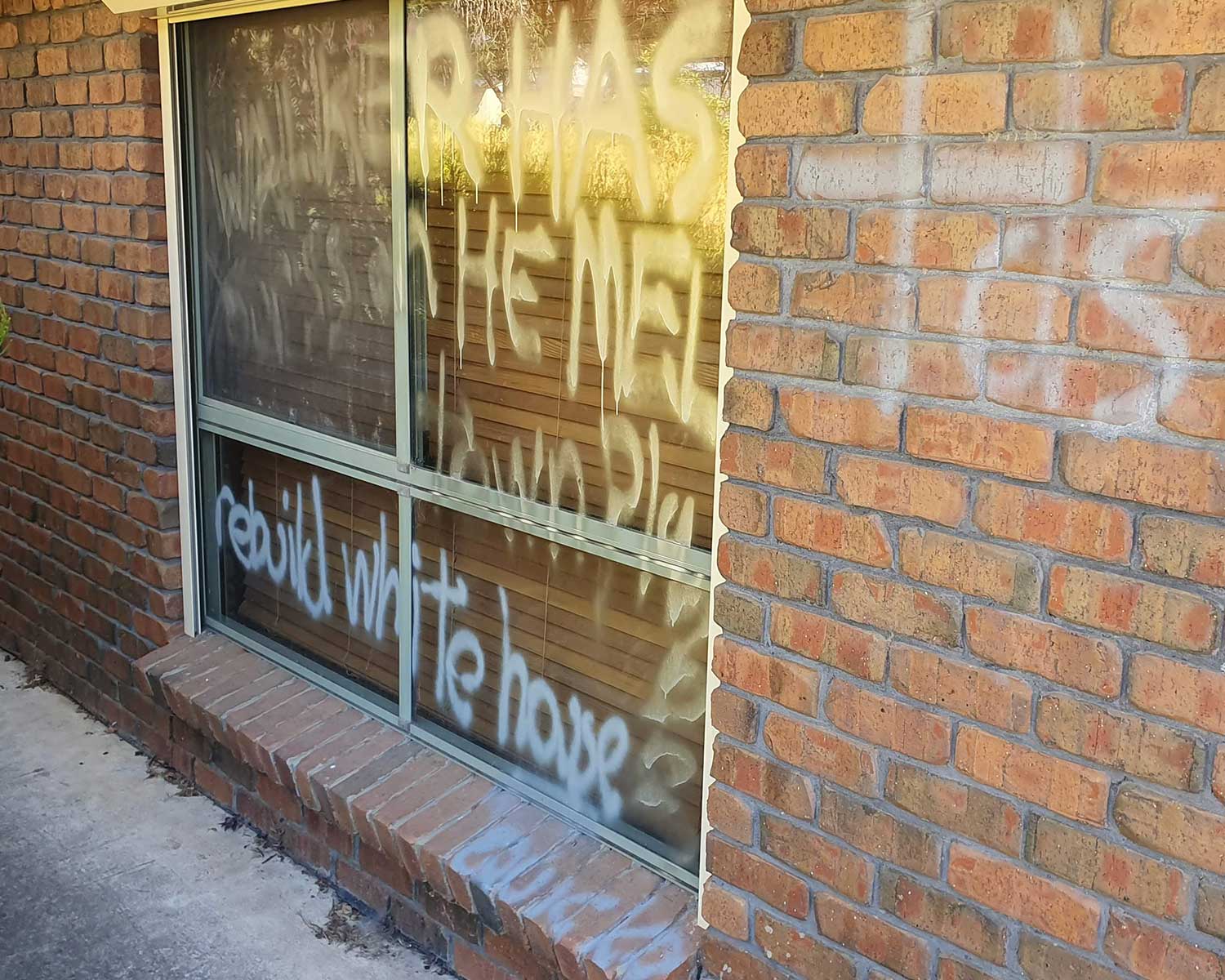
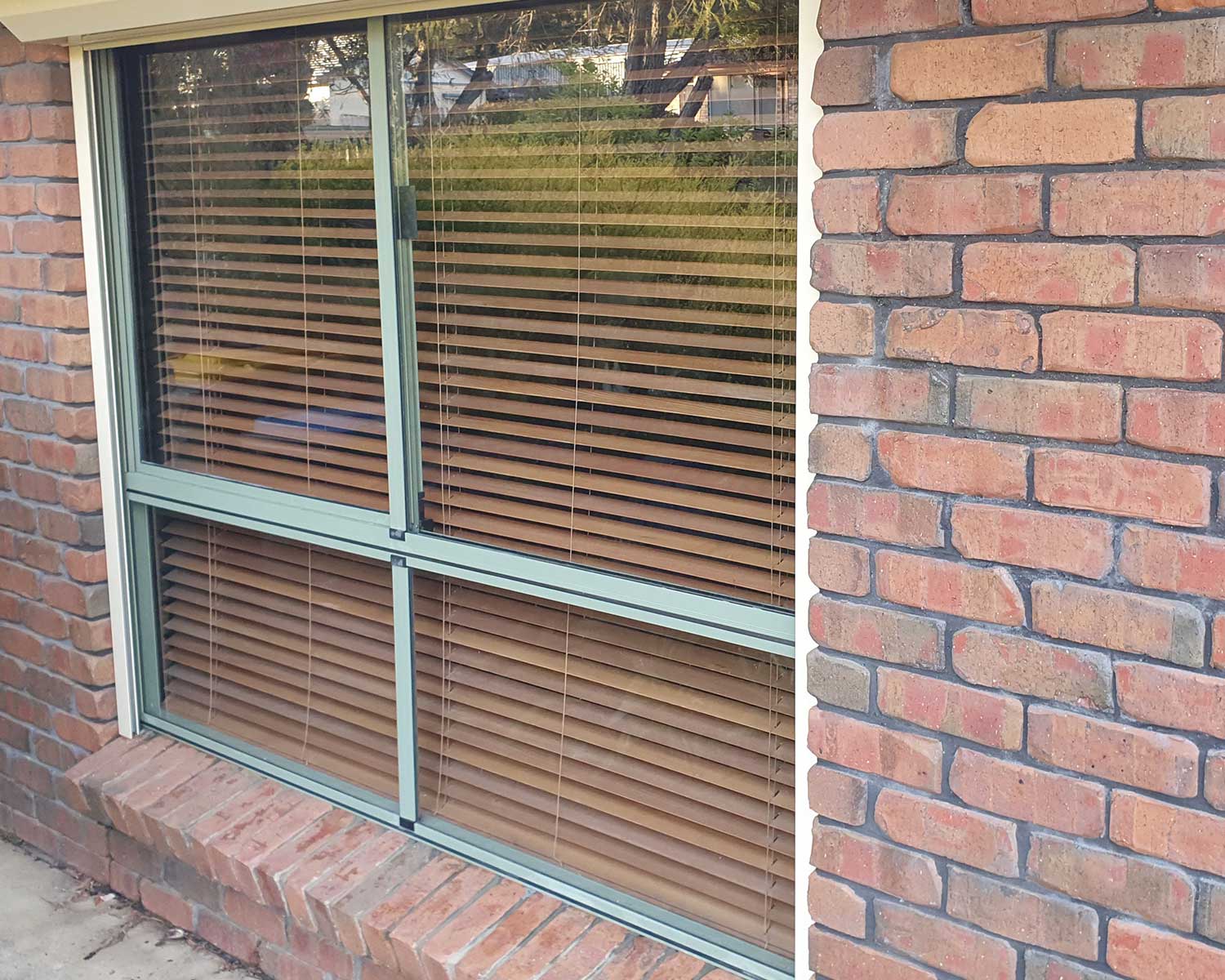
Glass Surfaces We Treat
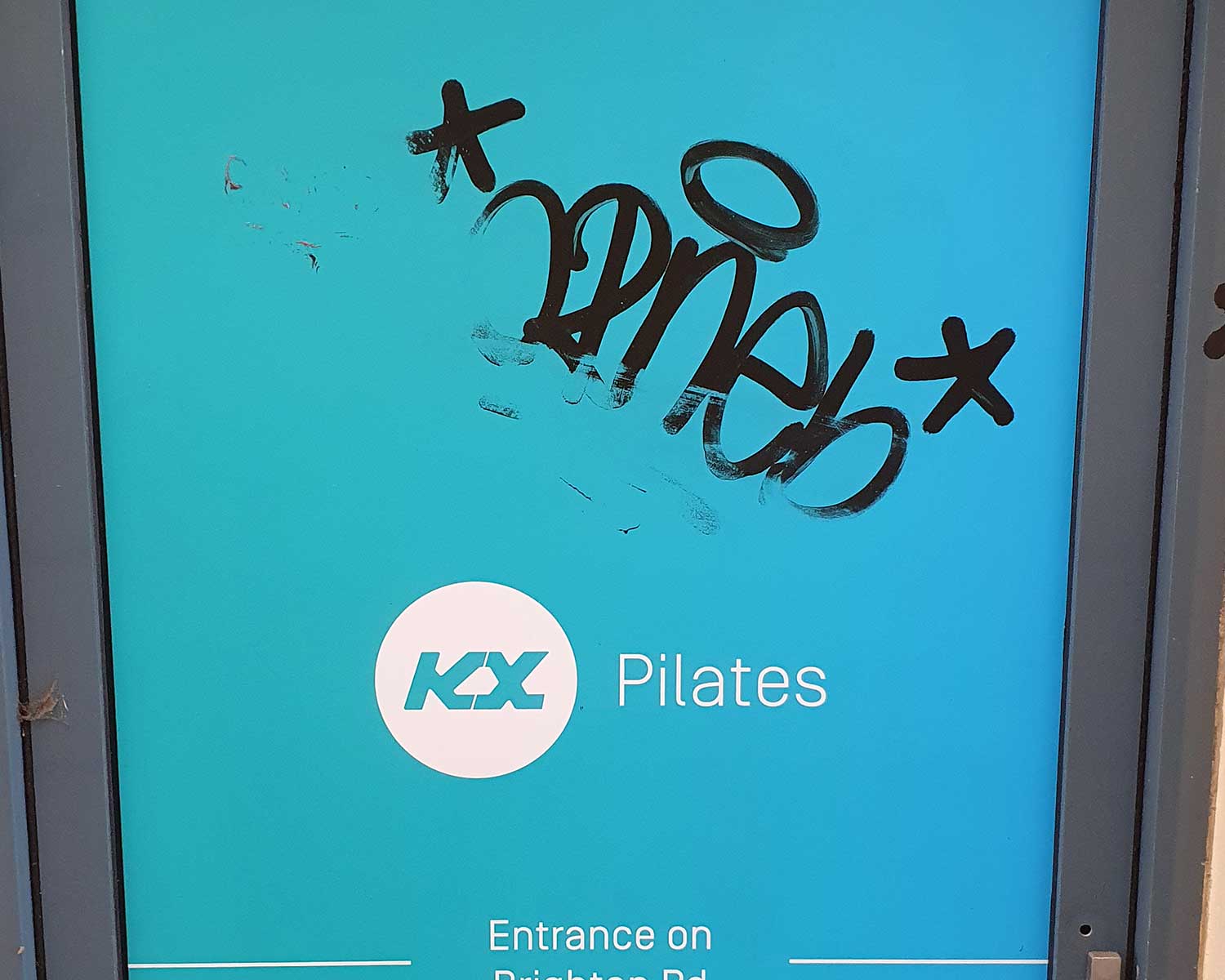
We remove graffiti from a wide range of glass and glazed surfaces:
- Shopfront windows and doors
- Office and commercial glazing
- Residential windows
- Glass balustrades and barriers
- Bus shelters and transit infrastructure
- Glass signage panels
- Mirrors
- Tinted and treated glass
What to Expect
- Hand application only — pressure washing is rarely used on glass surfaces
- Surface assessment on arrival — graffiti type is identified before treatment begins, with honest advice on expected outcomes
- Specialist cleaning solutions selected for glass and the specific graffiti substance
- No abrasive materials — technique and product selection prioritise the integrity of the glass surface throughout
- $20 million public liability insurance covers every job
- Traffic and pedestrian management arranged where required for street-facing shopfronts and public infrastructure

Act Quickly — Especially for Spray Paint
On glass, the sooner graffiti is treated the better. Spray paint that is still fresh is significantly easier to remove cleanly without risk to the glass surface. As paint cures and hardens, the solvents required to break it down become more aggressive — increasing the care needed and the risk of affecting the glass.
Protect Your Glass from Future Graffiti
For properties in high-risk locations — shopfronts, transit infrastructure, car parks — a glass anti-graffiti film or coating can be applied after removal to protect the surface from future incidents. These protective layers take the damage instead of the glass, and can be removed and replaced at a fraction of the cost of glass replacement.