
Why Sticker and Poster Vandalism is a Bigger Problem Than Most Properties Realise
Ask most property managers what comes to mind when they hear the word graffiti, and they’ll picture spray paint. A tag on a wall, a throw-up on a roller door, a mural-sized piece across a building facade. That’s the image that dominates the conversation, and it’s the form of vandalism that tends to get the most attention and the most urgency
Meanwhile, sticker and poster vandalism quietly gets on with causing damage.
It accumulates on entry pillars, shopfront glazing, street-facing signage, lift lobbies, car park structures, and building facades. It layers up over weeks and months until surfaces that were once clean and professional look cluttered, neglected, and defaced. And when someone finally decides to deal with it, they discover what every property manager who has ever tried to peel a weathered sticker off a powder-coated surface already knows — removal is far more complicated than it looks, and doing it wrong costs more than doing it right.
Sticker, poster, and adhesive vandalism is not a minor inconvenience. It is a legitimate and persistent property management problem, and it deserves to be treated with the same seriousness as any other form of graffiti.
It Is Graffiti — Just Without the Spray Can
There is a tendency in property management circles to treat adhesive vandalism as a lesser category of problem. Spray paint feels urgent and visible. Stickers feel manageable. The instinct is to hand a staff member a scraper and send them out to deal with it, or to add it to the bottom of the maintenance list and get to it eventually.
That instinct underestimates the problem in two important ways.
The first is cumulative impact. A single sticker on a pillar is trivial. Twenty stickers across the entry of a commercial building, a transport hub, or a retail centre is a very different matter. Adhesive vandalism tends to accumulate rapidly once a surface has been identified as a target — for the same reason that graffiti accumulates, because an already-affected surface signals that it is unmonitored and unmaintained. The Broken Windows dynamic applies here just as directly as it does to spray paint. One sticker left in place is an invitation for more.
The second is the damage caused by incorrect removal. This is where the real cost lies, and it is a cost that is frequently underestimated until it has already been incurred.
The Real Cost: What Happens When Removal Goes Wrong
Stickers and adhesive-backed posters bond to surfaces over time in ways that are not immediately obvious when they are first applied. Fresh adhesive is relatively forgiving — peel carefully and the sticker comes away cleanly. But leave that same sticker exposed to heat, UV, rain, and temperature cycling for weeks or months, and the adhesive hardens, migrates into the surface texture, and bonds in a way that resists simple peeling entirely.
At that point, the temptation is to scrape. And scraping — particularly on painted surfaces, powder-coated metal, anodised aluminium, printed signage, or architectural glazing — is where serious damage begins.
A scraper applied with too much pressure on a powder-coated surface will cut through the coating, leaving scratches that expose the metal beneath and create ongoing corrosion risk. On painted masonry or rendered walls, aggressive scraping can pull the surface coating away with the sticker, leaving bare patches that require repainting. On printed signage and directory boards, even moderate scraping can destroy the printed surface permanently, requiring full sign replacement at a cost that is wildly disproportionate to the original removal task.
And then there is the adhesive residue. Even when a sticker or poster is removed without physical surface damage, the adhesive layer frequently remains — a tacky, discoloured ghost of the original vandalism that attracts dust, grime, and further sticking, and that resists ordinary cleaning entirely. Residue left in place on a shopfront window or a building entry surface is not a clean result. It is an unfinished job that will compound over time.
The financial reality is straightforward. A surface damaged by incorrect removal — whether that is scratched powder coating, torn render, damaged signage, or etched glazing — costs significantly more to rectify than a professional removal would have cost in the first place. For commercial properties managing large surface areas with ongoing adhesive vandalism exposure, the cumulative cost of getting this wrong is substantial.
Large Format Posters: A Problem of Scale
Bill posters and large-format adhesive posters present a distinct set of challenges that go beyond the sticker removal problem. Where stickers are typically small and applied to targeted surfaces, bill posters are designed to cover as much surface area as possible — and they are frequently applied with paste or high-tack adhesive to walls, hoardings, fences, and building facades in ways that make removal genuinely difficult.
Weathered bill posters are particularly problematic. Paper that has been wetted by rain and then dried repeatedly bonds tightly to masonry and rendered surfaces. Attempts to remove it by hand result in tearing — leaving fragments, backing paper, and adhesive residue across the full surface area of the poster. The result of a failed manual removal attempt on a large bill-posted wall can look worse than the original poster.
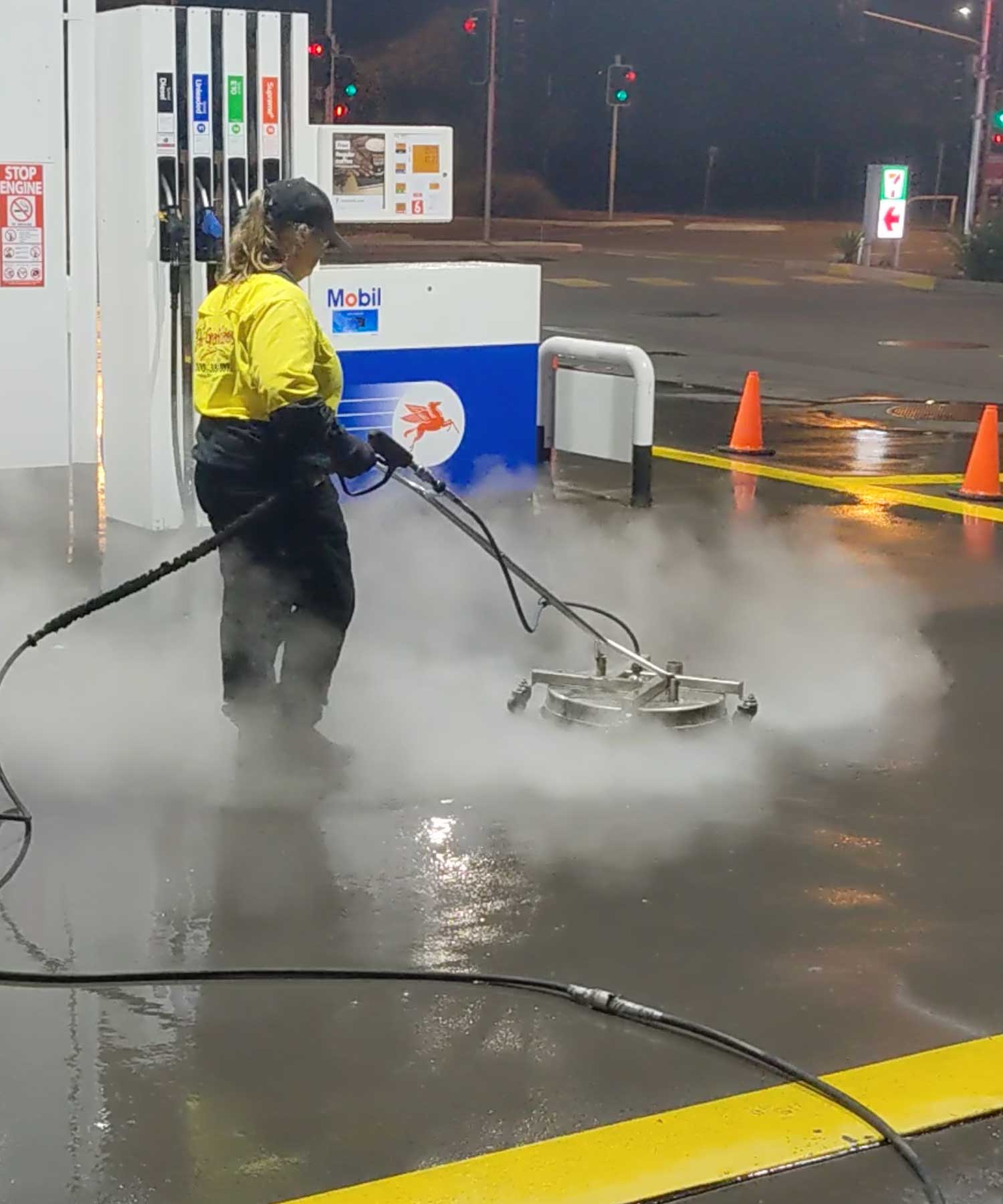
For suitable surfaces — masonry, render, concrete, and other substrates that can tolerate it — hot water pressure washing is the most effective approach to large-format poster removal. The combination of heat, pressure, and the softening effect of water on the paper and adhesive allows the material to be lifted cleanly and completely without the tearing and residue problems that manual removal produces. It is faster, more thorough, and far less likely to leave a result that requires follow-up treatment.
Surface suitability is always assessed before hot water pressure washing is applied to poster removal. Surfaces that cannot safely tolerate heat or pressure — painted surfaces, architectural finishes, certain cladding materials — require a different approach, and our technicians make that determination before any treatment begins.
Surface Sensitivity: Why One Approach Does Not Fit All
This is the point that separates professional adhesive vandalism removal from DIY attempts, and it is worth dwelling on because it is genuinely complex.
Commercial and retail environments contain an extraordinary variety of surfaces, and adhesive vandalism does not discriminate between them. Stickers end up on architectural glazing, anodised aluminium shopfronts, powder-coated steel pillars, painted masonry walls, polished stone cladding, printed vinyl signage, timber hoardings, plastic and composite panel systems, and everything in between. Each of those surfaces has a different tolerance for heat, pressure, solvents, and mechanical action. What works perfectly on one surface can permanently damage another.
Glazing, for example, requires careful treatment. While glass itself is relatively robust, the seals, coatings, and frames surrounding it may not be. Architectural glazing with applied films or tints requires particular care to avoid delamination or surface marking. Powder-coated and anodised metal surfaces can be marked by solvents that would be entirely appropriate on uncoated metal. Printed signage requires hand treatment with solutions specifically selected to dissolve the adhesive without affecting the print layer beneath.
Our technicians assess each surface before any treatment begins, selecting the appropriate specialist cleaning solution and application method for the specific combination of surface type, adhesive type, and exposure history they are dealing with. For small stickers on sensitive surfaces, that means careful hand application with appropriate dwell time and controlled removal. For large bill posters on robust surfaces, that may mean hot water pressure washing. For adhesive residue on glazing or coated metal, it means targeted solution application and hand finishing that leaves the surface clean without any trace of damage.
The common thread across all of those approaches is that the surface comes first. The goal is not just to remove the vandalism — it is to remove it without leaving the surface in a worse condition than the vandalism itself created.
The Time Cost Nobody Talks About
There is another dimension to adhesive vandalism that rarely gets the attention it deserves in property management conversations, and that is the sheer time burden it places on maintenance teams.
For large commercial properties, retail centres, transport hubs, and body corporate managed buildings, adhesive vandalism is not a one-off event. It is a constant and recurring condition. Stickers reappear on the same surfaces, posters go up overnight, and the ongoing cycle of identification, removal attempts, and follow-up consumes maintenance hours that could be directed at higher-value tasks.
When removal is being handled by in-house maintenance staff without the right equipment or specialist cleaning solutions, the time cost escalates further. Ineffective removal methods mean multiple attempts. Incomplete removal means residue build-up that becomes progressively harder to address. And damage caused by incorrect removal means repair and rectification work that adds cost and complexity entirely separate from the vandalism management task.
Engaging a specialist removal service does not just produce better results — it frees your maintenance team from a time-consuming and technically demanding task that is outside their core competency, and it ensures that the result is complete and the surface is protected rather than compromised.
A Consistent Approach to a Consistent Problem
For commercial properties dealing with adhesive vandalism on an ongoing basis, the most effective approach mirrors what we recommend for graffiti management generally — consistency and speed.
Adhesive vandalism that is removed promptly, before weathering has had the opportunity to harden the bond, is significantly easier and faster to treat than material that has been in place for weeks. A consistent removal program that addresses new vandalism quickly keeps the task manageable, prevents accumulation, and sends a clear signal that the property is actively maintained — which in itself reduces the likelihood of repeat targeting.
Graffiti Eaters works with commercial property managers, retail centre operators, facilities management teams, and body corporates to provide reliable, responsive adhesive vandalism removal as part of a broader property maintenance approach. Whether that means a one-off treatment of a heavily affected surface or an ongoing arrangement that keeps your property consistently clean, our team has the capability and the specialist knowledge to deliver results that protect your surfaces and your property’s presentation.
The Last Word
Sticker, poster, and adhesive vandalism is graffiti. It accumulates the same way, it signals neglect the same way, and it damages surfaces — particularly when removed incorrectly — in ways that cost real money to rectify. It deserves the same professional response as any other form of vandalism, and it deserves to be addressed quickly rather than left to compound.
If adhesive vandalism is an ongoing issue at your property — whether that is a single building, a retail precinct, a transport facility, or a body corporate managed complex — Graffiti Eaters has the specialist cleaning solutions, the custom-built equipment, and the surface knowledge to handle it properly. Get in touch with our team today for a free assessment and find out what a consistent, professional removal program could look like for your property.