
Why Rust Stains Appear on Outdoor Surfaces
Orange-brown streaks on driveways, pavers or pool surrounds are more than a cosmetic issue—they’re iron deposits reacting on (and in) the surface. Left alone, they spread, darken and can be harder to remove over time.
Common sources of rust stains
- Outdoor furniture & fixtures: steel legs, BBQs, umbrellas, letterboxes, skip bins.
- Edging & fasteners: garden edging, stakes, bolts and gate hardware.
- Irrigation & water: sprinkler overspray on metal, bore water with high iron, leaking radiators or drums.
- Garden products: fertilisers and lawn tonics that contain iron.
Why some surfaces stain so quickly
Concrete, masonry and many pavers are porous. Moisture wicks into tiny capillaries, taking dissolved iron with it. As the water evaporates, iron oxidises and locks into the surface, creating the familiar orange halo or dark patch—especially in joints and textured areas. Glazed tiles and dense stone stain less, but grout and cut edges remain vulnerable.
Why DIY fixes often disappoint
Acid and harsh cleaners can etch or bleach the surface, leaving pale rings and rough patches that re-soil faster. Scrubbing with water alone rarely removes the iron; it often spreads the stain into adjacent areas and drives it deeper into pores. Using pressure too close to the surface can scar pavers or expose the concrete cream without actually lifting the rust, creating permanent marks that are harder to correct than the original stain.
Prevention that actually helps
Start by upgrading contact points: fit non-staining feet or pads to outdoor furniture and choose stainless or galvanised fixtures wherever possible. Tame irrigation by adjusting sprinkler heads to avoid overspray onto hard surfaces and fix drips promptly. If you’re using bore water with high iron content, consider filtration or redirect overspray away from pavements. After applying fertilisers or lawn tonics, sweep up stray granules and give the area a light rinse the same day. For suitable materials, a quality penetrating sealer can slow uptake of contaminants and make routine cleaning easier—ask us what’s compatible for your surface.
Professional removal—how we get it off
At The Stain Eaters, we match the method to both the stain and the material:
- Identify the source and substrate to set the safest path.
- Apply specialist cleaning solutions formulated for iron and mineral deposits to break down and neutralise the staining—without etching or bleaching.
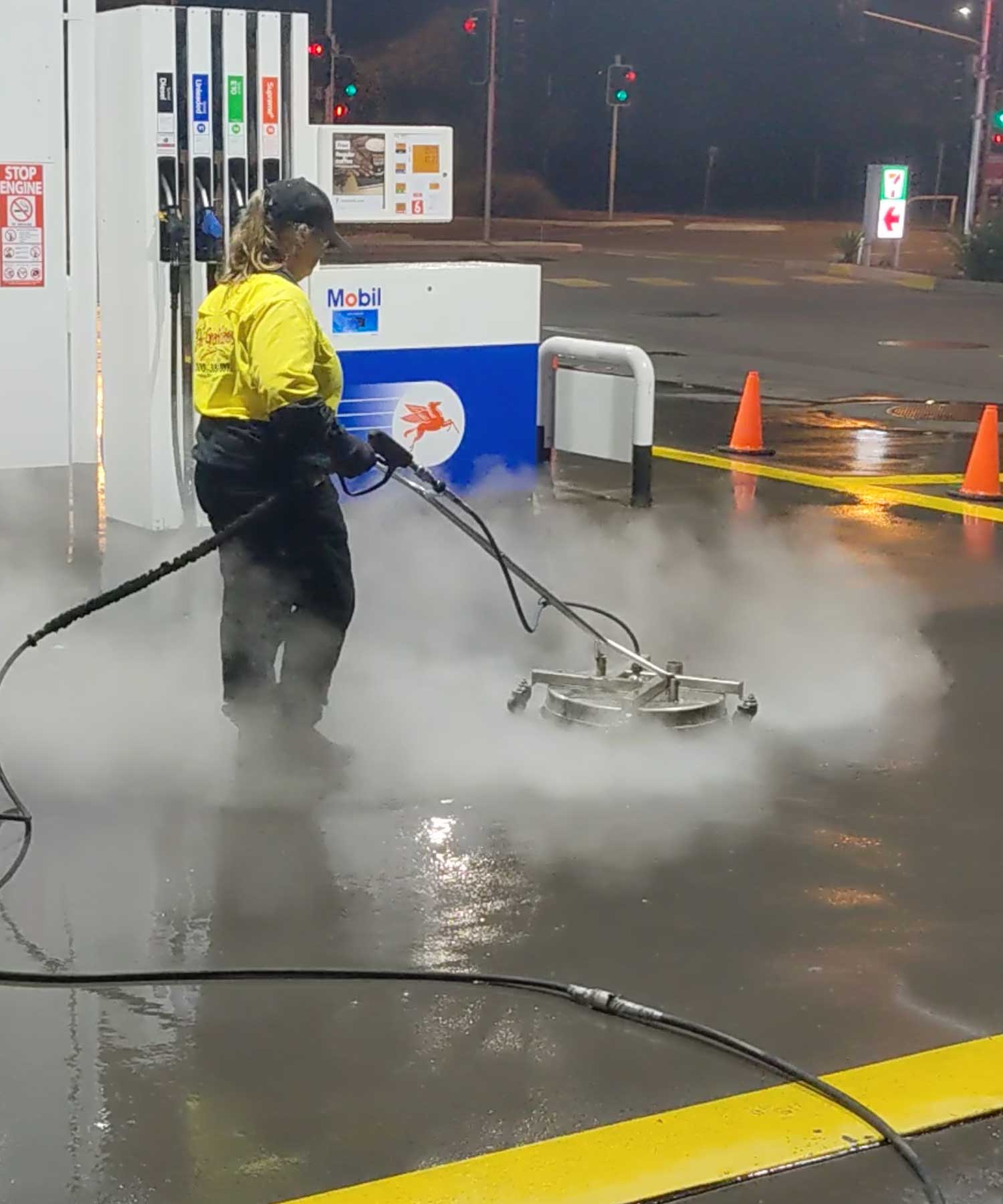
- Rinse and release using our custom-built pressure washing systems under controlled pressure, drawing residues from pores and joints for a consistent result.
- Follow-up where needed to reduce any remaining shadowing and advise on prevention or sealing suited to your site.
If rust has taken the shine off your paths, pavers or concrete, we’ll remove the staining and help you keep it at bay.