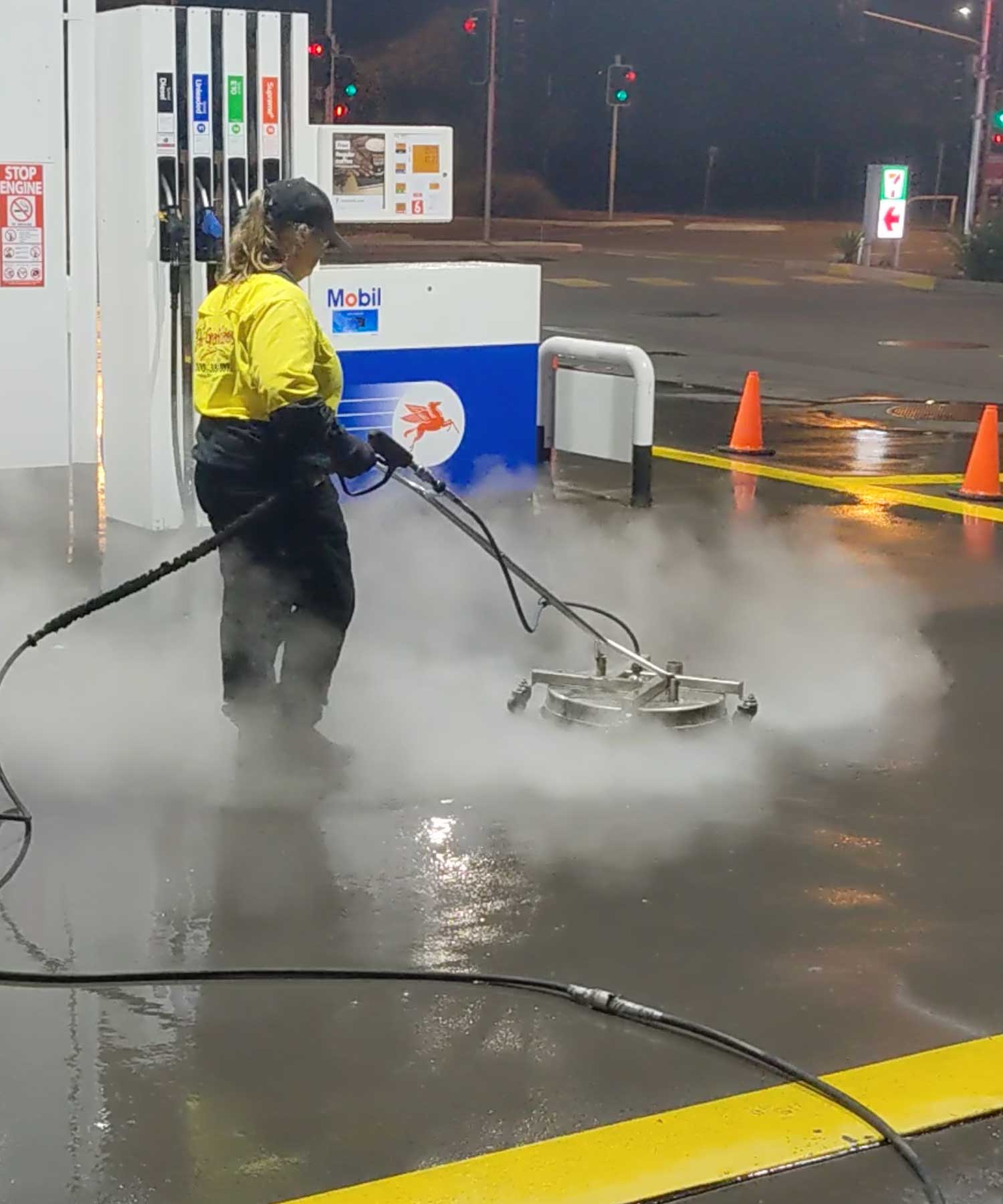

Why Hot Water Pressure Washing Is Better
Hot water vs cold water might sound like a small detail… but when it comes to stain removal, it’s the difference between “sort of clean” and properly restored.
Whether you’re dealing with an oil patch on the driveway at home or years of grime in a commercial carpark, hot water pressure washing has a serious edge. Here’s why it works so much better, and when it really earns its keep.
Why heat changes everything in stain removal
Cold water can rinse off loose dirt and dust. But most of the stains that really bother you – oil, grease, tyre marks, food spills, mould, even some traffic film – are held together by fats, oils and sticky residues. These don’t want to move just because you hit them with pressure.
When you add heat, you change the game. Warm water:
- Lowers the viscosity of oils and grease so they loosen and flow instead of clinging to the surface.
- Reduces surface tension, helping water and cleaning solutions get into the tiny pores in concrete, pavers and brick.
- Speeds up the reactions that break down organic residues, traffic film and some mineral deposits.
In simple terms, hot water helps stains “let go” of the surface, instead of just being pushed around.
Heat + pressure + cleaning solutions: the cleaning trifecta
Pressure on its own can be a blunt instrument. Blast hard enough and you’ll move most things, but you risk chewing up concrete, damaging grout, scarring pavers or stripping soft render.
The most effective and safest cleans happen when three things are working together: the right cleaning solutions, the right level of pressure, and the right temperature.
Our approach is to use specialist cleaning solutions to loosen and break down the stain, then use our custom-built pressure washing systems to deliver hot-water under controlled pressure. The cleaning solutions do the chemistry, the hot water accelerates the reactions and helps dissolve oily residues, and the controlled pressure rinses everything away without damaging the surface.
Because the heat is doing so much of the heavy lifting, we don’t need to rely on extreme pressure or harsh scrubbing to get the result. That’s better for your driveway, your pavers, your warehouse floor and your building exterior.
The science of hot water on greasy and oily stains
Think about washing a greasy frying pan. With cold water, the oil turns cloudy and clings to the surface. With hot water, it suddenly loosens and floats away with just a little detergent. Concrete and asphalt behave in a similar way.
Oil and grease stains bond to the tiny pores and texture in the surface. Cold water tends to bead and run over the top. Hot water softens and thins the oil, allowing cleaning solutions to get underneath and break the bond. The stain becomes easier to lift out of the surface, rather than being forced deeper in by high pressure.
This is especially important for:
- Parking bays and garages where vehicles leak oil.
- Loading docks and bin areas with food fats and spills.
- Workshop entrances and service stations with years of oily build-up.
Cold water might lighten the stain a little. Hot water, used properly, gives you a real shot at removing it or at least dramatically reducing it.
Faster cleaning and better results
Heat doesn’t just help with the stain itself – it also speeds up the whole job. Most cleaning reactions run faster at higher temperatures. That means less dwell time for cleaning solutions and fewer passes with the pressure wand or surface cleaner.
For residential properties, this often means a driveway, patio or pool surround can be cleaned more quickly, with less disruption and a better finish. For commercial sites, it means shorter shutdowns, less interruption to tenants or customers, and lower labour time per square metre.
When you combine hot water with the right surface cleaning equipment, large areas like carparks and warehouse floors can be cleaned efficiently and consistently, rather than patch by patch.
Where hot water really shines
Cold water has its place for light rinsing and extremely delicate surfaces. But hot water pressure washing really comes into its own on:
- Oil and grease stains on concrete driveways, garages and carparks.
- Tyre marks and traffic film in underground parking and high-traffic entryways.
- Food and drink spills around bin areas, loading docks and outdoor eating spaces.
- General grime build-up on paths, pavers and hardstand areas exposed to vehicles or industrial activity.
In many of these situations, cold water alone will only ever get you a partial improvement. You might knock off the surface dirt, but the dark shadow, smell or slick feel remains. Hot water pressure washing goes after the contamination that is actually bonded to the surface.
Isn’t higher pressure enough?
It can be tempting to think, “If cold water isn’t working, I’ll just turn the pressure up.” The problem is that more pressure doesn’t know when to stop. It will cut through dirt, but it will also:
- Etch or pit concrete if held too close.
- Blow out pointing and grout between pavers and bricks.
- Strip paint or protective sealers unintentionally.
Using controlled pressure with hot water is a smarter approach. The heat helps release the stain, so we can use a safe pressure level suited to the surface. That means you get a cleaner finish without leaving the concrete rough or the paving loose.
Why professional hot water pressure washing beats DIY
You can hire a domestic pressure washer from the hardware store, but most of these are cold-water units with limited flow and pressure. They can be handy for a light freshen-up, but they will struggle with heavy staining and years of build-up.
Professional hot water systems are different. They are designed to heat water efficiently and maintain consistent temperature, flow and pressure. Combined with the right cleaning solutions and experienced operators, they deliver much better results, especially on tough stains.
Our technicians don’t simply “turn the machine on and hope.” They assess the surface, the type and age of the staining, and the surrounding environment. Then they choose appropriate cleaning solutions, set our custom-built pressure washing systems to deliver hot-water under controlled pressure, and match the method to the job.
The result is a deeper clean, less risk of damage and a finish that lasts longer because the contamination has actually been removed, not just spread around.
Hot water cleaning for both homes and commercial sites
For homeowners, hot water pressure washing can transform:
- Driveways and garage floors stained with oil and tyre marks.
- Paths, pavers and pool surrounds with mould, mildew and general grime.
- Outdoor entertaining areas that feel a bit tired and slippery underfoot.
For commercial property managers, it’s a powerful tool for keeping:
- Carparks, loading docks and bin areas presentable and safer.
- Entranceways and pedestrian zones clean and inviting for customers.
- Hardstand and service areas compliant with hygiene and appearance standards.
In both cases, you get a better-looking property, improved kerb appeal and a surface that feels properly clean, not just hosed.
Ready to see what hot water can do for your property?
If you have stains that just won’t shift, or areas that seem to bounce back to dirty as soon as they dry, cold water may not be the problem – it might simply be the wrong tool.
Hot water pressure washing, done properly, gives you faster cleaning, deeper stain removal and a better result on everything from residential driveways to large commercial carparks. Our technicians combine specialist cleaning solutions with our custom-built pressure washing systems to deliver hot-water under controlled pressure, so your surfaces get the benefit of heat without the risk of damage.
If you’d like to talk through the options for your home or your portfolio of properties, we’re happy to help.