Why Heavy Graffiti on Bare Concrete and Masonry Needs Special Attention
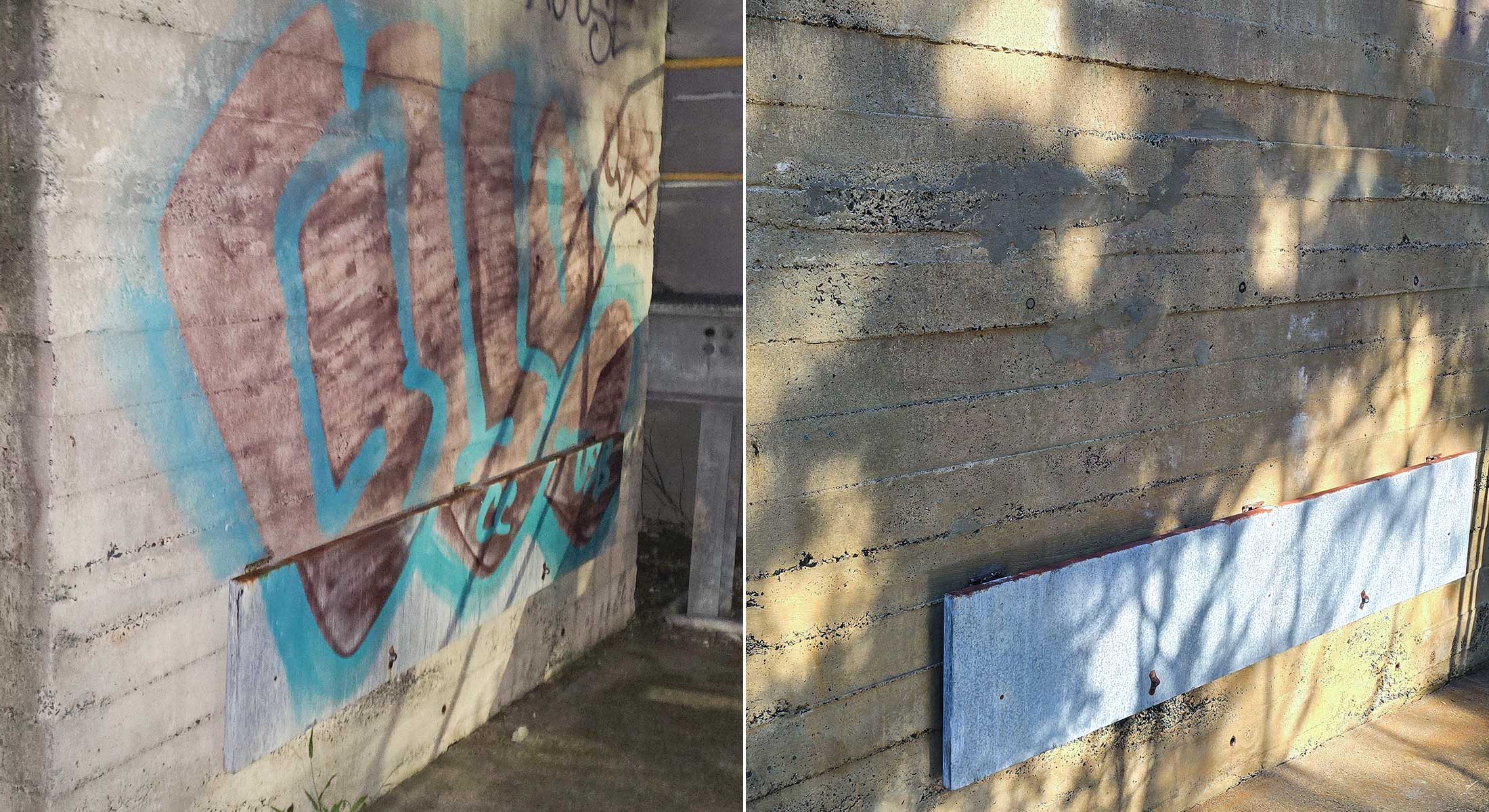
There’s a meaningful difference between a small tag scrawled on a wall and a large, heavily saturated piece that covers a significant section of bare concrete or masonry from top to bottom. Both are graffiti. Both need to come off. But treating them as the same kind of job, just at different scales, is where a lot of removal attempts go wrong. Heavy graffiti on a bare, porous surface isn’t simply more of the same problem. It’s a genuinely different challenge, and understanding why is the difference between a wall that comes back looking properly restored and one that carries a permanent reminder of what used to be there.
Why Bare Surfaces Are Vulnerable in the First Place
Bare concrete, masonry, block, and render all share one critical characteristic that makes them fundamentally different from sealed or coated surfaces. They’re porous. Rather than sitting on top of the material the way paint sits on glass or powder-coated metal, graffiti applied to a bare, unsealed surface penetrates into it. The paint works its way into the microscopic pores and voids that make up the substrate, and depending on the surface finish, that penetration can go surprisingly deep.
This is exactly why a bare wall responds so differently to removal than a coated one. On a coated surface, graffiti sits above a protective barrier and can often be lifted away with relative ease. On bare concrete or masonry, there’s no barrier. The paint and the substrate become intertwined at a material level, which means removal isn’t a matter of wiping something off the surface. It’s a matter of drawing something back out of it.
Texture plays its own role here too. Rougher, more porous finishes like exposed aggregate or unfinished block absorb graffiti more deeply and across a larger surface area than a smoother, more consistent finish. The same amount of paint applied to two different concrete textures can result in two very different removal jobs, purely because of how much surface area and depth the paint has had the opportunity to penetrate.
Why Heavy, Large-Format Graffiti Changes the Equation
A small tag on bare concrete is already a job that needs the right approach. Heavy graffiti, the kind that covers a significant section of wall in bold, saturated colour, takes every one of those challenges and multiplies them.
The sheer volume of paint applied in a large piece means significantly more material has penetrated the surface, often layered thickly enough that what’s visible on top isn’t necessarily representative of how deep the paint actually goes underneath. Heavier saturation also means the paint has had more opportunity to properly bond with the substrate as it cures, particularly in sections where multiple passes or thicker application have been used to build up bold colour or coverage.
Scale adds its own complications beyond just volume. A large piece spans more surface area, which often means it crosses multiple sections of differing texture, exposure, or even substrate condition across a single wall. What works perfectly on one section might need adjusting for the next, simply because the wall itself isn’t perfectly uniform from one end to the other. Treating a large, heavily applied piece properly means assessing and responding to that variation across the full area, not applying a single approach uniformly and hoping it holds up everywhere.
None of this makes heavy graffiti impossible to remove properly. It makes it a job that demands more careful assessment, the right specialist formulation matched to what’s actually there, and often more than one treatment cycle to fully draw the paint back out rather than just lifting the surface layer and calling it done.
Where DIY and Rushed Attempts Go Wrong
This is where a lot of well-intentioned removal attempts create a worse problem than the graffiti itself. Faced with a large, heavily painted wall, the instinct is often to reach for whatever’s on hand and go hard at it, usually meaning a pressure washer turned up as high as it’ll go, or an aggressive scrubbing attempt to physically wear the paint away.
On bare, porous concrete and masonry, this approach tends to backfire badly. Excessive water pressure doesn’t just fail to fully remove deeply penetrated paint, it actively erodes the surface itself, opening up the texture and making the substrate more porous and more vulnerable to future staining. Aggressive scrubbing does something similar, physically damaging the surface finish in the process of trying to work paint out of it, which paradoxically makes future graffiti even easier to bond to and harder to remove.
Using the wrong cleaning solution presents its own risk on bare substrates. Harsh or mismatched products can react with the concrete or masonry itself, causing permanent staining or discolouration that has nothing to do with the original graffiti and everything to do with the removal attempt. On raw or decorative finishes, exposed aggregate, honed concrete, stencilled surfaces, this kind of damage can be genuinely difficult and expensive to fix. In some cases, resurfacing ends up being the only real option, which turns what should have been a graffiti removal job into a far more significant and costly repair.
What Proper Graffiti Removal on Bare Surfaces Actually Involves
Getting a heavily graffitied bare surface back to a clean, restored condition starts with an honest assessment of what’s actually there. Substrate type, texture, the extent and thickness of the paint application, and how long it’s been curing all factor into deciding the right approach, because there’s no single formulation or method that works uniformly across every bare surface and every graffiti job.
A specialist cleaning formulation matched to the specific paint and substrate combination is applied and given time to dwell, allowing it to properly work into the surface and break down the bond between the paint and the material beneath it. Dwell time isn’t a fixed number here either. It’s judged based on how deeply the graffiti has penetrated and how the surface is responding, which matters even more on a large, heavily applied piece where different sections of the same wall might need slightly different treatment timing.
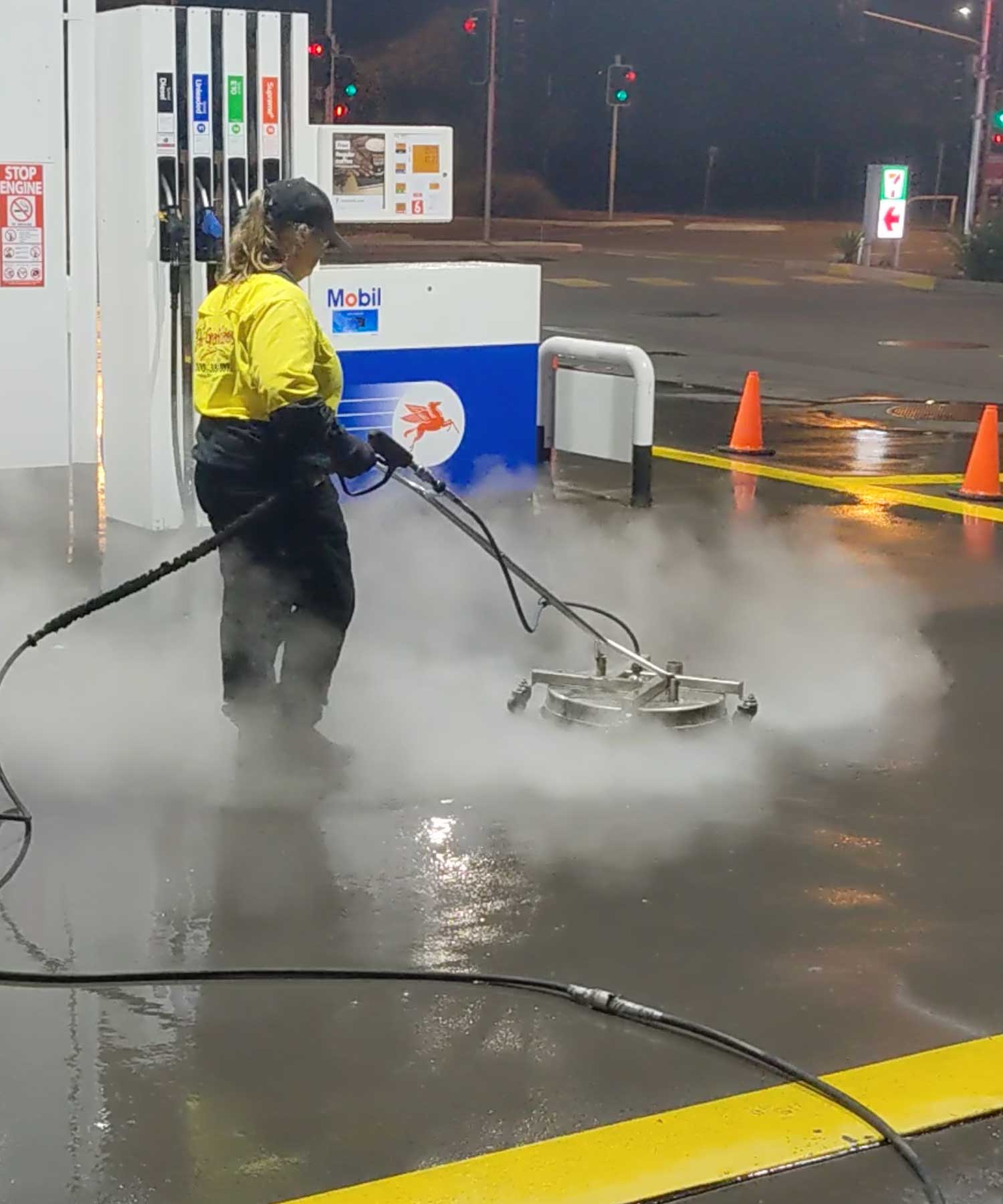
Hot water pressure washing follows, flushing the loosened paint from the surface once the solution has done its work. On heavy graffiti in particular, one treatment cycle often isn’t enough to achieve a genuinely clean result, and repeating the process where any residual paint remains is a normal and expected part of properly restoring a heavily affected wall rather than a sign that something’s gone wrong.
Where ghosting does occur, a faint shadow left behind even after the bulk of the paint has been removed, a specialist treatment continues working over subsequent applications, gradually fading that shadow until the surface is genuinely restored rather than just visually improved.
Why the Substrate Deserves as Much Attention as the Paint
It’s worth remembering throughout all of this that the goal isn’t just removing graffiti. It’s removing graffiti without damaging the surface it’s sitting on, and on bare concrete and masonry, that second part is where the real skill lies.
A wall that’s been aggressively treated might end up graffiti-free but structurally and visually worse off than before, carrying erosion, discolouration, or texture damage that’s arguably more obvious and more permanent than the original tag. Proper removal on bare surfaces means treating the substrate with the same level of care and consideration as the graffiti itself, because a genuinely successful job restores the wall to its original condition, not just its original absence of paint.
Protecting Bare Surfaces Against the Next Incident
Once a heavily graffitied bare surface has been properly restored, it’s worth considering what happens if it gets targeted again. Bare, unprotected concrete and masonry that’s been hit once is often hit again, and each subsequent incident carries the same removal challenges as the first.
An anti-graffiti coating applied after removal creates a genuine barrier between the substrate and any future graffiti, changing the entire equation for next time. Instead of paint penetrating directly into a porous surface, it sits on top of a protective layer, making subsequent removal significantly faster, easier, and in many cases achievable without the same specialist equipment the original job required.
For any bare wall in a location that’s likely to be targeted again, coating isn’t a nice-to-have addition. It’s the single most effective step toward making sure the next heavy graffiti incident is a five-minute job rather than a repeat of this one.
Getting a Heavy Graffiti Job Done Properly
Large, heavily applied graffiti on bare concrete or masonry deserves to be treated as exactly what it is, a bigger and more technically demanding job than a small tag, not simply a scaled-up version of the same quick fix. Done properly, with the right assessment, the right formulation, and the patience to treat the surface as carefully as the paint, a heavily graffitied wall can come back looking genuinely restored rather than just less obviously vandalised.
If you’re dealing with heavy graffiti on a bare concrete, masonry, or block surface, get in touch with our team today for a free assessment.