
Where Do Those Orange Rust Stains on Concrete Come From?
Orange and brown rust stains can appear on driveways, footpaths, patios and other concrete surfaces, sometimes in places where there doesn’t seem to be anything metal nearby. They can start as small marks beneath outdoor furniture or around fixtures and fittings, then gradually develop into larger patches that stand out against the surrounding concrete.
While rust staining is commonly associated with corroding metal, there are several ways it can develop on hard surfaces. Metal furniture, irrigation systems, building fixtures and even materials contained within the concrete itself can all contribute to the problem. Understanding where the staining originates is important because simply cleaning the visible marks may not prevent them from returning.
Why Does Rust Stain Concrete?
Rust forms when iron or steel reacts with oxygen and moisture, producing iron oxide. When rainwater or other moisture comes into contact with rusting metal, it can carry iron compounds onto nearby concrete, leaving behind the familiar orange, reddish-brown or dark brown discolouration.
Concrete is naturally porous, which means the staining doesn’t always remain on the surface. Iron compounds can penetrate into small pores and irregularities, making the marks increasingly difficult to remove with ordinary washing. As moisture continues to move through the affected area, the staining may spread or become more noticeable.
Unlike general dirt and grime, rust staining involves a chemical deposit rather than just loose contamination sitting on top of the concrete. This is why ordinary pressure washing often produces disappointing results, even when considerable pressure is applied.
Rust Stains from Outdoor Furniture and Fixtures
One of the most common causes of rust staining is prolonged contact with metal objects. Outdoor tables, chairs, pot plant stands, barbecues and other steel fixtures can develop corrosion where their protective coatings have worn away. When these objects remain on concrete during wet weather, rust can transfer directly onto the surface underneath.
The resulting stains often follow the shape of the object responsible. Rust rings beneath plant stands, orange patches beneath chair legs and brown marks around metal fixtures are all familiar examples. The staining can become particularly noticeable when furniture is moved, revealing discoloured concrete that has been hidden for months or even years.
Similar problems occur around metal posts, handrails, fencing, bolts and brackets. As these components corrode, rainwater can carry rust down walls and across surrounding concrete, leaving streaks that continue to develop while the source remains untreated.
How Irrigation Systems Can Cause Orange Staining
Not all rust stains come from a piece of metal sitting directly on the surface. Irrigation systems can also be responsible, particularly when the water supply contains elevated levels of dissolved iron.
Bore water is a common example. Water drawn from underground may contain naturally occurring iron, which can oxidise when exposed to air. As sprinklers distribute the water across driveways, paths, walls and paved areas, orange or brown deposits can gradually form wherever the spray regularly lands.
This type of staining can cover a much larger area than rust from a metal fixture. It may follow the spray pattern of the irrigation system, leaving broad discoloured patches across concrete and masonry. Cleaning can remove the deposits, but if the iron-rich water continues reaching the surface, the staining is likely to return.
Iron-containing lawn fertilisers can cause similar marks when granules or overspray land on concrete and become wet. Even a relatively small amount can leave noticeable orange spots that require specialist treatment.
When Rust Comes from Inside the Concrete
Sometimes rust staining originates within the concrete rather than from an external source. Reinforcing steel, embedded metal fixings or iron-bearing aggregate can all contribute to discolouration when exposed to moisture.
This distinction is particularly important because rust emerging from internal steel reinforcement can indicate a more serious problem. As reinforcing steel corrodes, it expands and may eventually cause cracking, delamination or spalling of the surrounding concrete. Rust stains that follow cracks or appear alongside surface deterioration should therefore be investigated rather than treated as a purely cosmetic issue.
Not every stain originating within concrete indicates structural damage. Small iron-bearing particles in the aggregate can also produce isolated rust-coloured spots. However, determining the cause is an important part of choosing the appropriate response, particularly where corrosion may be continuing beneath the surface.
Why Ordinary Pressure Washing Often Isn’t Enough
Pressure washing is highly effective for removing many types of surface contamination, but rust stains behave differently from ordinary dirt. Once iron compounds have penetrated the pores of concrete, water pressure alone may not be able to release them.
Increasing the pressure is not necessarily the solution. Excessive force can damage the concrete surface, leaving behind etching, scarring or an uneven finish while the original rust staining remains. Strong household chemicals can also cause problems, particularly on coloured concrete, decorative finishes and natural stone.
Professional rust stain removal relies on selecting the appropriate treatment for both the contamination and the substrate. Different surfaces respond differently to cleaning solutions, which is why the age of the stain, the underlying material and the likely source all need to be considered before treatment begins.
How The Stain Eaters Remove Rust Stains
Our team uses specialist rust stain removal treatments designed to break down the iron compounds responsible for the discolouration. The cleaning process begins with assessing the affected surface and identifying the likely source of the staining, followed by selecting a suitable treatment for the material involved.
Once applied, the cleaning solution is allowed sufficient time to work on the embedded contamination. The treated surface is then cleaned and rinsed using controlled water pressure to remove the loosened rust compounds and treatment residue. Depending on the surface and severity of the staining, additional treatment may be needed to achieve the best possible result.
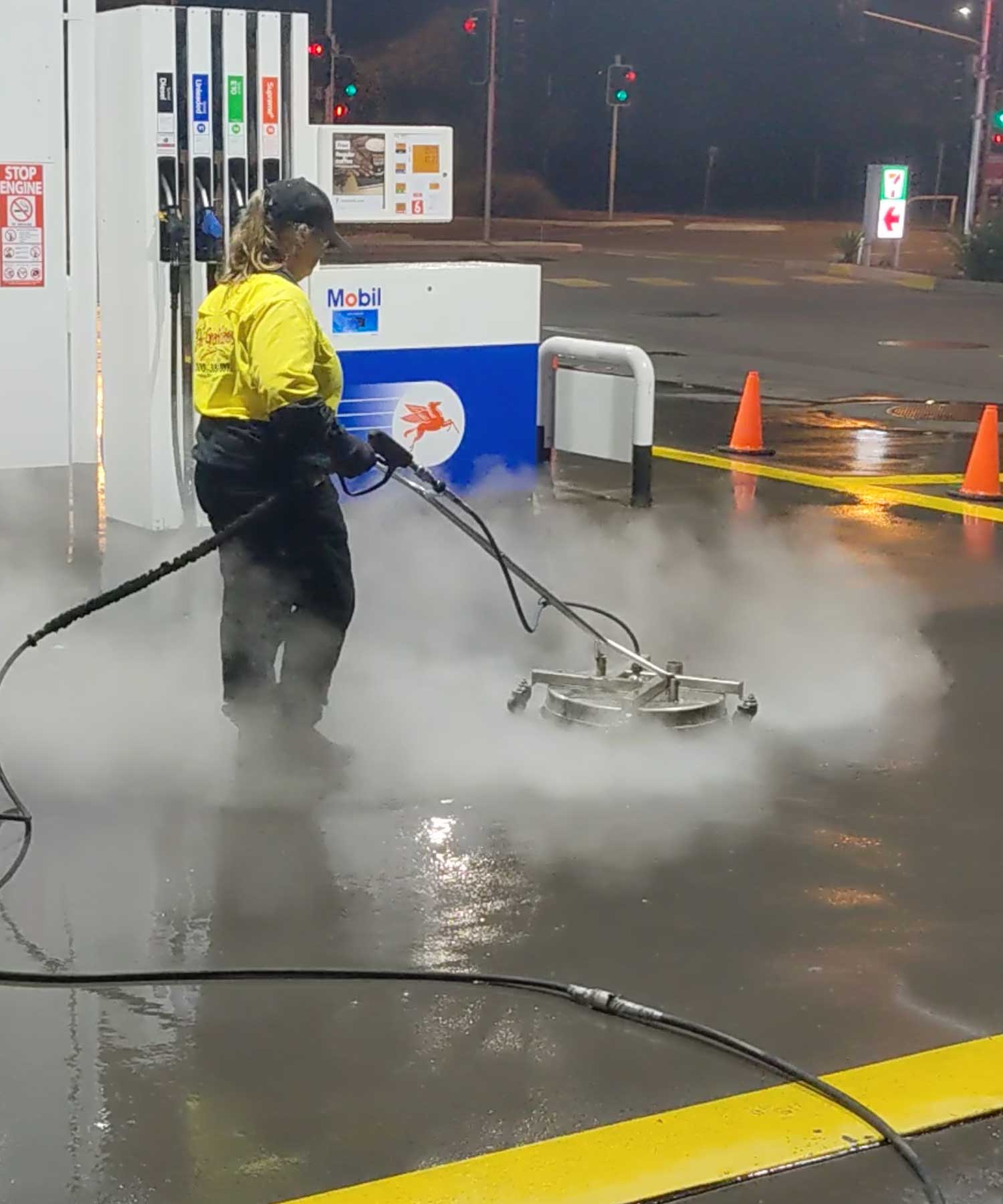
The Stain Eaters also have access to **our custom-built pressure washing systems to deliver hot-water under controlled pressure.** However, rust stain removal depends primarily on the specialist chemical treatment rather than water pressure alone. The objective is to remove the contamination while preserving the original surface as much as possible.
Our team treats rust staining on a range of materials, including concrete, pavers, brickwork, rendered surfaces and natural stone. Each job requires the cleaning method to be matched to the material, as a treatment suitable for plain concrete may not be appropriate for sandstone, limestone or decorative finishes.
Preventing Rust Stains from Returning
Removing rust staining can restore the appearance of a surface, but dealing with the original cause is equally important. If a corroding fixture continues to release rust, or an irrigation system continues spraying iron-rich water across the same area, new staining can develop after cleaning.
In some cases, prevention may involve replacing or protecting corroding metal fixtures, adjusting sprinkler coverage or investigating the source of iron in the water supply. Where rust appears to originate from reinforcing steel within concrete, the underlying corrosion should be assessed and repaired by an appropriately qualified professional before cosmetic restoration is considered.
Addressing the cause wherever practical helps maintain the cleaning result and reduces the likelihood of the same problem developing again.
Professional Rust Stain Removal for Concrete and Masonry
Rust stains can be surprisingly stubborn, particularly when they have been allowed to develop over a long period. What begins as a small orange mark beneath a piece of outdoor furniture can eventually become a prominent stain across a driveway, pathway or commercial surface.
The Stain Eaters provide specialist rust stain removal for residential, commercial and industrial properties, using cleaning treatments selected according to the surface and the contamination involved. Whether the staining has come from metal fixtures, irrigation water or another external source, our team can assess the problem and determine the most suitable removal method.