
The Real Cost of “Just Paint Over It”
And Why It Often Backfires
When graffiti shows up, “just paint over it” feels like the fastest, cheapest fix. Grab a tin, roller it on, and pretend it never happened. Done… right?
Not quite.
Painting over graffiti can work in a pinch, but it often creates a bigger problem that costs more over time — in money, time, reputation, and repeat vandalism. And the worst part is you usually don’t realise it until you’ve done it two or three times and the wall starts looking like a patchwork quilt.
This is the real cost of the paint-over approach — and why a proper removal plan (plus anti-graffiti coatings in the right places) is usually the smarter budget play.
The “cheap” fix that keeps coming back
The first paint-over is often easy to justify. It’s a quick action, it looks better than a tag, and it gets someone off your back. But the hidden costs start stacking up fast.
You’re not just paying for paint. You’re paying for labour. You’re paying for access. You’re paying for disruption. And you’re paying in the only currency that matters on a visible property: presentation.
Once you paint over graffiti, you’ve effectively committed your building to a cycle. Every new tag becomes “another patch”. Over time, those patches become the new eyesore.
Cost #1: Downtime and disruption
Even if the paint itself is cheap, the process rarely is.
For homes, it’s time and hassle — moving things, covering areas, repainting, cleaning up, dealing with the smell, and hoping you didn’t choose the wrong colour.
For commercial sites, downtime is the killer. A shopfront, warehouse entry, office building façade, or common-area wall is part of your public face. Painting over graffiti often means access equipment, safety setup, wet paint around customers or staff, and sometimes closing off areas. That’s not “cheap”, even if the invoice looks small.
And if you’re managing tenants, there’s another cost: complaints. Graffiti is annoying, but messy patchwork repairs can be just as frustrating to live with.
Cost #2: Patchy repainting and colour mismatch
This is the big one — and it happens almost every time.
Matching paint on an exterior wall isn’t as simple as grabbing the same brand and colour code. Sun, weather and age change colour over time. Even if you match perfectly on paper, the wall may have faded, chalked, or collected grime that alters the finish.
So what happens?
You end up with a visible rectangle. Or a slightly different shade. Or a different sheen level that catches the light. Instead of “graffiti”, you now have a permanent patch that tells everyone there was a problem — and it never got properly fixed.
Do that a few times, and the building starts to look like it’s wearing a dozen band-aids.
Cost #3: Repeat tagging gets easier, not harder
Vandals love predictable targets. If a wall looks unmanaged or “always messy”, it signals low risk and low consequence.
A freshly painted patch can actually attract attention because it highlights where the previous graffiti was. It becomes a blank canvas. And if the area isn’t cleaned properly, tags can reappear within days — turning the paint-over approach into a weekly chore.
Fast, professional removal helps break that pattern. If graffiti disappears quickly and cleanly, the reward is gone — and the site becomes less appealing to hit again.
Cost #4: You’re often trapping the problem underneath
Here’s something most people don’t realise: marker inks and some paints can bleed through new coatings. Even if you paint over it, you may still see a shadow, a tint, or a ghosted outline appear later — especially after heat and sun.
Now you’re repainting again. Possibly with extra primer, extra coats, and extra labour.
And the more layers of paint you add, the worse the surface can look and feel — thicker edges, texture changes, and that uneven “rolled over repairs” look.
Cost #5: The hidden cost of looking “unmanaged”
This is the one that doesn’t show up on a receipt.
A property that looks “tagged” or patched sends a signal. For residential owners, it impacts pride, presentation, and resale appeal. For commercial owners and managers, it affects tenant confidence, customer perception, and even how staff feel turning up to work.
People read visual cues quickly. Graffiti and patchwork repairs can make a site feel neglected — even if everything behind the scenes is running perfectly.
So what’s the better option?
A smarter plan is usually a two-part strategy:
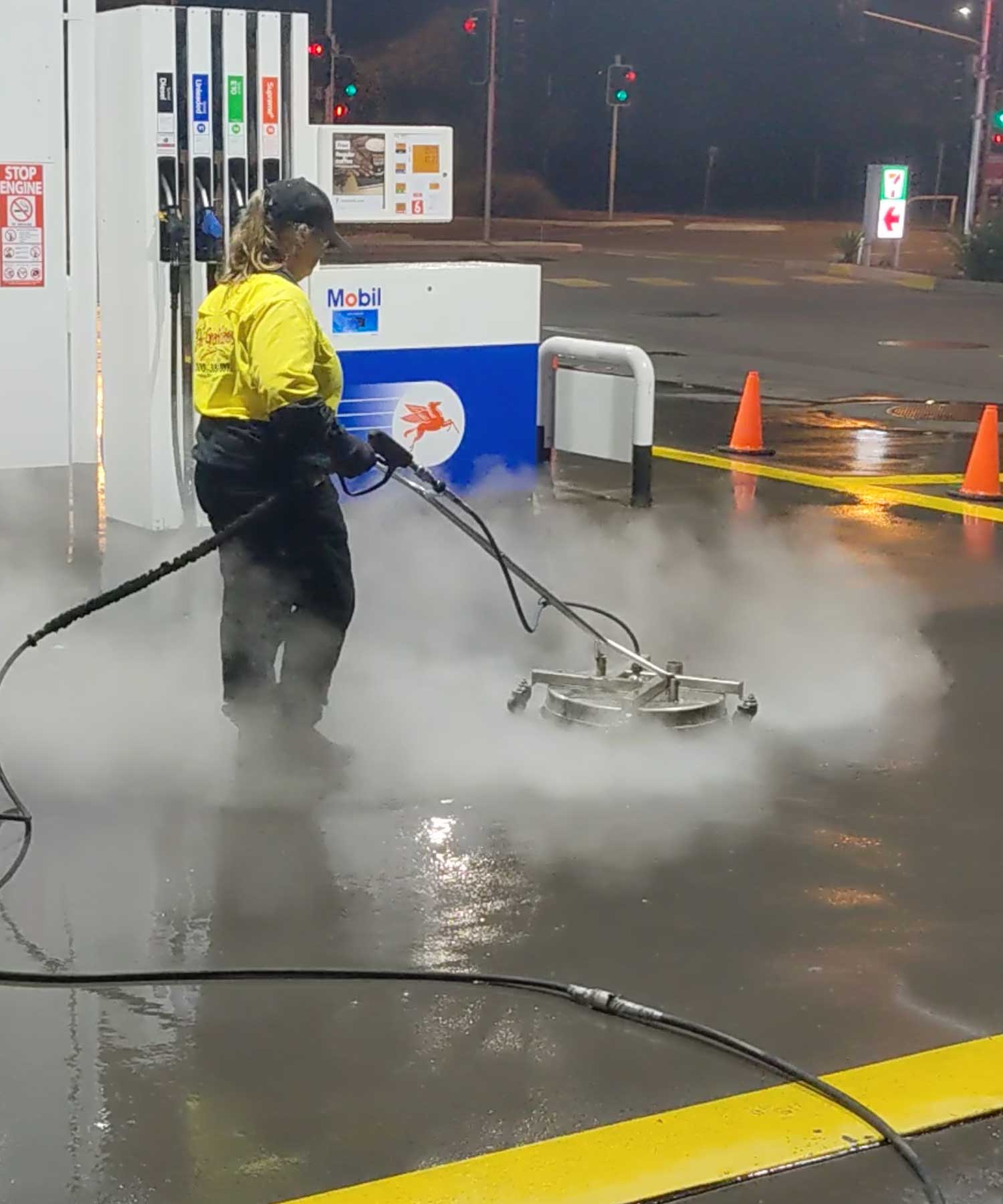
First, remove graffiti properly rather than covering it. Our technicians use specialist graffiti cleaning solutions selected for the paint and the substrate, with a controlled, methodical approach to lift graffiti without damaging the surface underneath. Done right, you avoid the patchwork look and reduce the chance of ghosting.
Second, where repeat tagging is common, anti-graffiti coatings can be a game changer. Coatings don’t stop tagging entirely, but they can make removal faster, safer and more predictable — especially on porous surfaces where paint loves to soak in.
From a budgeting point of view, that predictability matters. Instead of “How much will this cost each time?” you get closer to “This is what we spend to keep this area clean”.
When painting over might still make sense
There are times repainting is appropriate — for example, when the substrate is already heavily weathered, previously patched, or when removal would be more invasive than the owner is comfortable with.
But if you’re painting over graffiti because it feels cheaper, it’s worth stepping back and asking the real question: cheaper compared to what? One job today… or a cycle of repairs that makes your property look worse over time?
If you’re sick of the patchwork look, call The Graffiti Eaters
If graffiti is hitting your property and the paint-over approach is turning into a routine, it’s time for a better plan. We can remove graffiti professionally, help reduce repeat tagging, and advise where anti-graffiti coatings make sense for your site.
We’ll get it off.