
Beyond the Blemish: The Hidden Ways Oil Stains Damage Your Driveway
Oil stains on a driveway are easy to ignore at first. A dark patch under the car, a drip from a lawnmower, a spill from weekend tinkering — they feel like small, harmless marks that come with everyday life. But what most homeowners don’t realise is that oil stains don’t just sit on the surface. They seep in, spread out, and begin causing deeper problems that can impact your home’s appearance, safety, and long-term value.
What looks like a cosmetic issue is often the first sign of damage happening beneath your feet.
Oil Doesn’t Just Stain — It Penetrates Deep Into the Surface
Driveways made from concrete, exposed aggregate, or pavers are all porous. When oil lands on them, it behaves like any liquid on a sponge — it soaks in. Over time, the oil migrates deeper into the pores, binding with the substrate and creating a softened, weakened area that becomes harder to clean the longer it’s left.
Even if you scrub the surface or try a hardware-store cleaner, the stain often remains because the oil is sitting below the visible layer. This is why old oil patches seem to “bleed back through” after rain or during warm weather.
Left alone, oil contamination becomes a long-term problem you simply can’t wash away.
Weakened Substrate: How Oil Quietly Eats Away at Your Driveway
Oil doesn’t just discolour concrete — it cleaning solutionly interacts with it. Petroleum-based fluids begin to break down binders within the concrete or paver structure. Over time, this leads to:
- soft, powdery patches
- surface erosion
- increased porosity
- small pits and crumbling sections
This degradation happens slowly and silently, often going unnoticed until the damage is obvious. Once the structural integrity of the concrete is compromised, expensive repairs or resurfacing may become necessary.
Addressing the stain early prevents deeper structural damage later.
A Magnet for Dirt, Grime and Ugly Build-Up
Oil-stained areas behave differently to clean concrete. They become sticky, tacky patches that attract dust and grime far faster than the surrounding surface. Dirt clings to them, tyre marks embed more easily, and small spills spread further.
This is why oil stains seem to grow larger over time — they collect everything, and the area soon looks darker, muddier, and far more noticeable than a typical surface mark.
A small stain can quickly become a large, attention-grabbing blemish that drags down the look of your entire driveway.
A Hidden Slip Hazard When Wet
Most homeowners don’t connect oil stains with safety risks, but wet oil patches can become slippery enough to cause falls — especially on smooth concrete or sealed pavers.
During rain or hosing, these oily areas create a thin film on the surface, reducing traction and increasing the likelihood of slips. For homes with children, elderly residents, or visitors using the driveway as a walkway, this becomes a liability you don’t want to overlook.
A clean driveway isn’t just about appearance — it’s about safety.
Why Oil Stains Stop Sealers and Coatings From Working
If you plan to seal, colour, or resurface your driveway in the future, untreated oil contamination becomes a major obstacle.
Sealants and coatings need clean, dry, uncontaminated concrete to bond properly. Oil prevents that bond from forming, causing:
- patchy adhesion
- peeling or blistering
- colour mismatches
- premature failure of the coating
This is one of the costliest consequences of ignoring oil stains. Homeowners often discover that their brand-new coating lifts off — but only from the areas contaminated with old oil.
Professional oil removal ensures the entire surface is ready for coating, protecting your investment.
Kerb Appeal and Property Value Take a Big Hit
Oil stains are one of the first things people notice on a driveway. They make a home look neglected even when the rest of the property is immaculate. For anyone considering selling, renting, or simply maintaining a high standard of presentation, those dark, messy patches can send the wrong message.
A clean driveway improves kerb appeal instantly and helps maintain the value of your home.
How The Stain Eaters Remove Oil Properly
DIY cleaners might lighten the stain, but they rarely remove the deep oil contamination that causes long-term issues. That’s because most off-the-shelf products only address the top layer of the stain — not what’s below.
Our technicians use specialist cleaning solutions designed to break down and neutralise oil within the substrate itself. These products penetrate deep into the surface, dissolving the petroleum-based residues that standard cleaners leave behind.
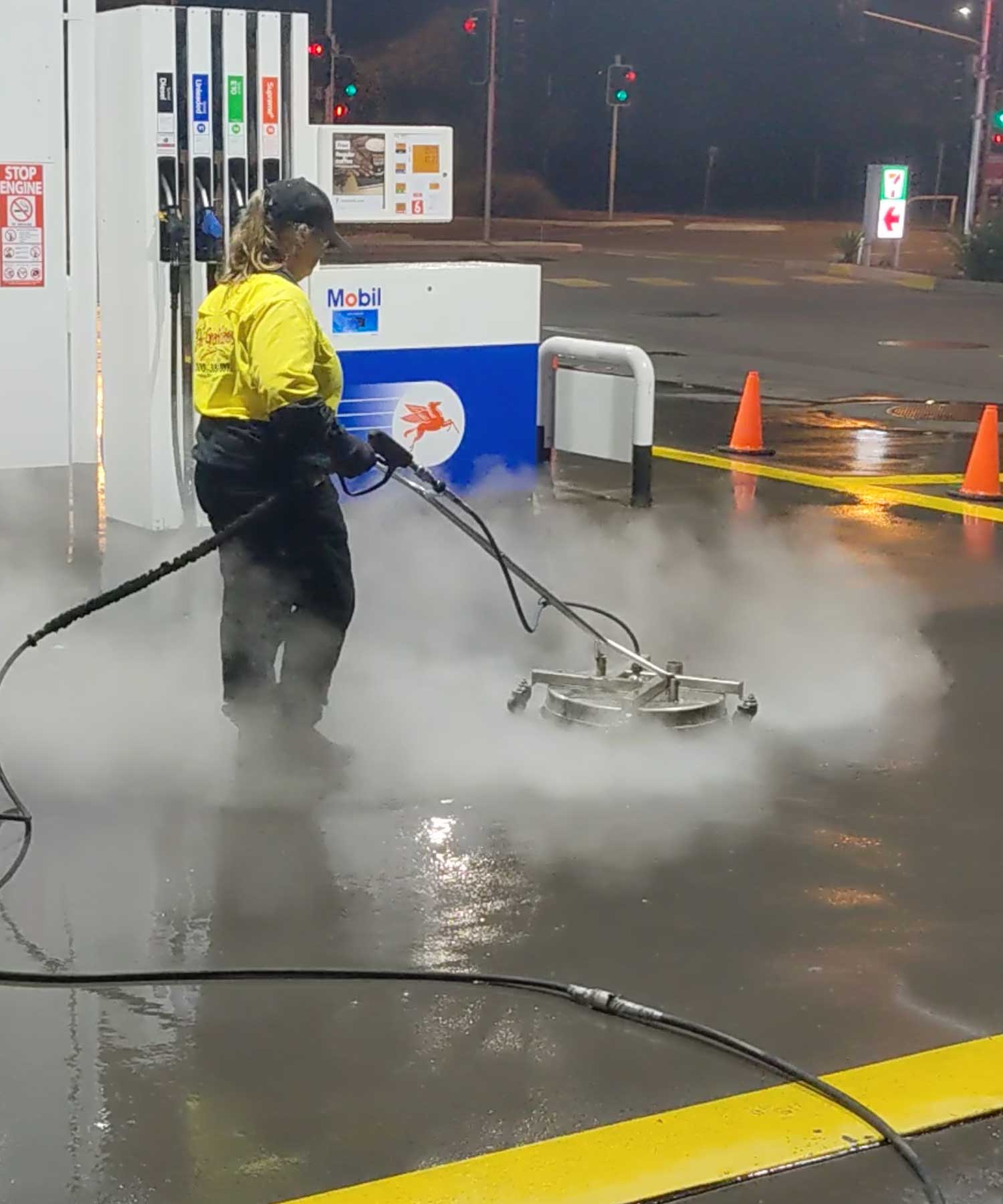
Once the oil is cleaning solutionly released, we use our custom-built pressure washing systems under controlled pressure to flush contaminants out of the pores and restore the driveway’s clean, bright appearance.
The result isn’t just a lighter stain — it’s a fully restored surface ready for sealing, safe for foot traffic, and dramatically improved in appearance.
Protect Your Driveway Before the Damage Spreads
Oil stains are one of those problems that only get worse when ignored. They spread, they weaken the surface, they attract grime, and eventually they create expensive repair issues.
Treating them early is faster, cheaper, and far more effective — and that’s where we can help.
If your driveway is starting to show dark, stubborn oil patches, now’s the ideal time to act. Our team can remove the stain at its source, protect the integrity of your surface, and restore your property’s appearance before the damage becomes permanent.
For professional, safe and effective oil stain removal, contact The Stain Eaters today.