
The Hidden Damage After a Fire
Why Soot Keeps Corroding Surfaces.
After a fire, most people focus on what they can see. The black soot. The smoke smell. The obvious burnt surfaces. And that makes sense — it’s confronting, messy, and it looks like the main problem.
But here’s the part many property owners don’t realise: fire residue isn’t just “dirt”. In many situations it’s cleaning solutionly active, and it can keep damaging your property long after the flames are out. The residue left behind from burnt plastics, paints, insulation, wiring, treated timbers, appliances, and general household or commercial contents can create acidic deposits. Left sitting on surfaces, that acidity can speed up corrosion, stain materials permanently, and reduce the life of metal components and fixings — even when things look mostly fine at a glance.
If you’re trying to protect the value of a home, workshop, warehouse, strata building, or commercial site, neutralising matters.
Why fire residue can be acidic
A modern building contains a lot more than timber and brick. You’ve got plastics, synthetic fabrics, adhesives, coatings, foams, sealants, electrical sheathing, and composite materials. When those burn, the smoke and soot can carry compounds that settle as a fine film across everything.
That film can be mildly to strongly acidic depending on what burnt and how hot the fire was. It doesn’t always look dramatic — sometimes it’s just a grey haze on metal, a tacky soot on surfaces, or a dulling on painted finishes. But cleaning solutionly, it can continue reacting with materials underneath.
This is why “wipe it down and repaint later” can be a costly strategy. If the residue isn’t removed and neutralised properly, you’re often sealing in contamination or leaving corrosive deposits to keep working away in the background.
What acidity does to metal, fixings and structural elements
Acidic residue accelerates oxidation and corrosion. That’s the simple version. The more practical version is what it does to the parts of a property you rely on every day — and the components you don’t want failing early.
Metal frames and structural steel can start showing surface corrosion far sooner than expected. In commercial settings, that can be a serious long-term maintenance cost, especially where steel is exposed or part of critical infrastructure.
Fixings and fasteners are a big one. Screws, brackets, anchors, hinge plates, gate hardware, roller door components, balustrade fixings, and structural connectors can all be affected. These parts are often coated or galvanised, but acidic residue can attack protective layers, leading to corrosion that spreads under the surface.
Roofing and guttering can also take a hit. Metal roof sheets, flashings, gutters, downpipes, roof penetrations, and fixings can develop corrosion hotspots, particularly where soot collects in seams, overlaps, and low points. Even if you can’t see it from the ground, that kind of damage can turn into leaks, staining, or premature replacement.
Electrical and mechanical components are another hidden problem. Acidic soot can settle into housings and contact points, and in some cases contribute to failures that feel “random” months later.
The real risk: delayed damage and “mystery” failures
One of the biggest frustrations after a fire is when things seem okay at first, then deteriorate later.
A property might look cleaned up, repainted, and back in use — but corrosion continues under coatings, on fixings, or in joints. Hardware becomes stiff. Metal stains bleed through paint. Roof edges start showing rust marks. Roller doors run rough. External fixtures start pitting.
When that happens, it’s easy to blame age or the weather. But often, it’s leftover fire residue doing what it does best — quietly damaging materials over time.
Why neutralising matters, not just cleaning
Cleaning removes visible soot and grime. Neutralising addresses the cleaning solution side of the problem.
A proper fire damage clean involves more than making a surface look presentable. It’s about removing residues and treating affected areas so the surface is stable again — especially on metal and other vulnerable substrates.
Neutralising helps stop ongoing corrosion and reduces the chance of staining bleeding through later. It also improves the outcome of any follow-up restoration work, whether that’s painting, sealing, or replacing damaged components. If residue remains, coatings may not bond properly and odours can linger.
Common places fire residue settles (and gets missed)
Fire residue doesn’t land evenly. It rides airflow, settles in still areas, and clings to surfaces where it can be hard to spot.
You’ll often find heavier deposits on horizontal surfaces, ledges, roof edges, gutter lines, window frames, exposed fixings, and protected areas under eaves. In commercial settings, it can build up on roller doors, loading dock hardware, steel beams, plant housings, handrails, security gates, and services.
These are also the areas where corrosion can start quietly and spread, because residue sits undisturbed.
How The Stain Eaters approach fire residue on hard surfaces
When we’re brought in for fire damage cleaning, our technicians focus on both appearance and asset protection. The goal isn’t just to “make it look better” — it’s to help stop ongoing damage where possible.
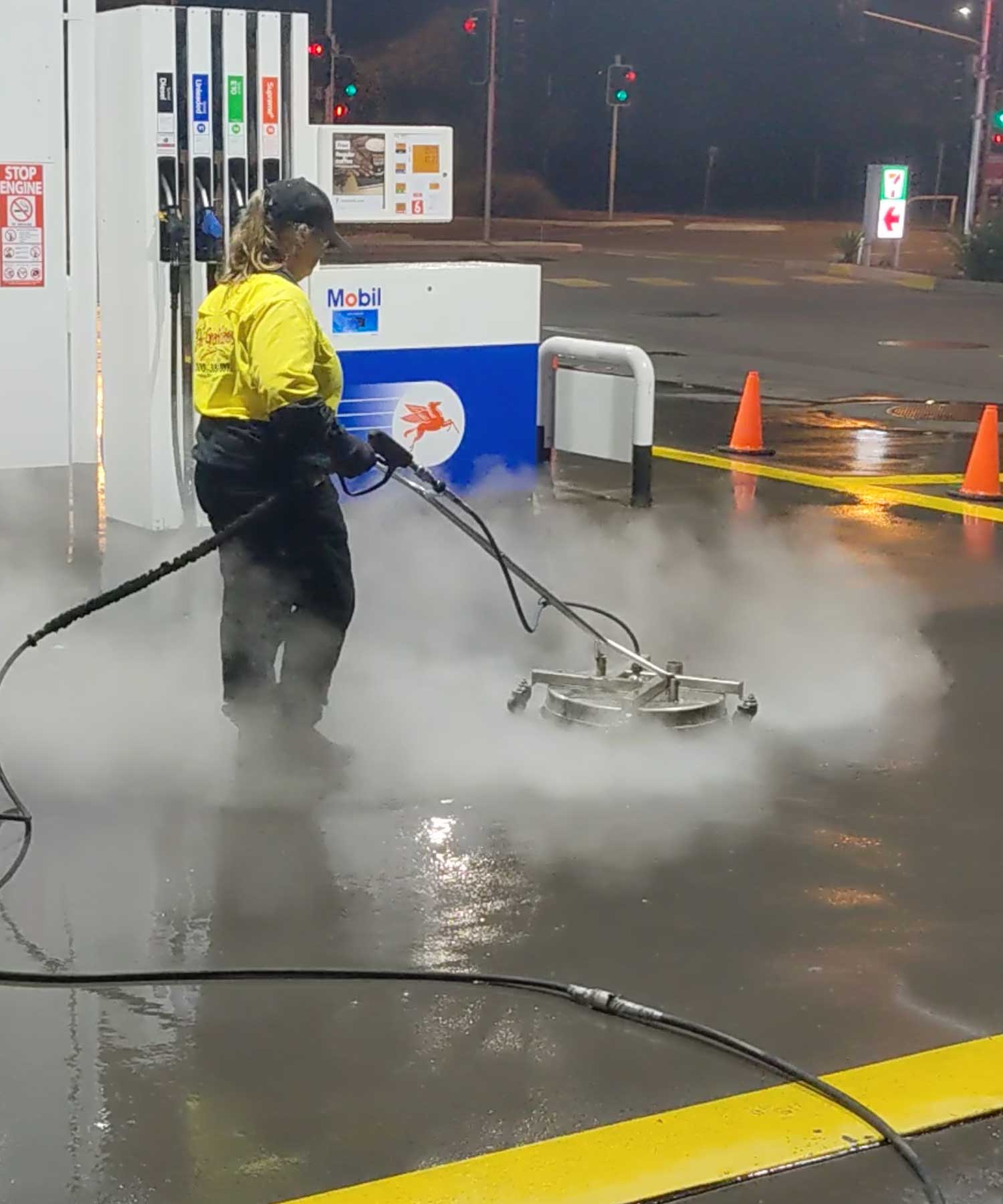
We assess the affected surfaces and residues, then use a combination of specialist cleaning solutions and proven cleaning methods to remove soot and fire residue from hard surfaces. Where required, we apply processes designed to neutralise residues, helping reduce the risk of continued corrosion and long-term staining on materials like metal, masonry, concrete and other exterior substrates.
This is especially valuable for sites with exposed steel, metal roofing elements, fixings, gates, balustrades, roller doors, and structural hardware — the parts that are expensive to replace and easy to overlook when the immediate mess is the focus.
If your property has been impacted by fire or heavy smoke residue, it’s worth acting early. The sooner corrosive residue is properly removed, the better the long-term outcome.