
Pressure Washing vs. Soft Washing: Choosing the Right Method for Your Property
Maintaining the exterior of a property is essential for its longevity, safety, and kerb appeal. When faced with built-up dirt, grime, or biological growth, many property owners know that a professional clean is required, but may not realise that the method used is just as important as the cleaning itself. The two primary professional techniques used in exterior cleaning are pressure washing and soft washing. While they might sound similar, they are fundamentally different processes, each designed for specific surfaces and types of soiling. Understanding this difference is the key to achieving exceptional results without risking costly damage. At The Stain Eaters, our expertise lies in assessing your property’s unique needs and applying the perfect cleaning method every time.
Understanding Pressure Washing – The Power of Force
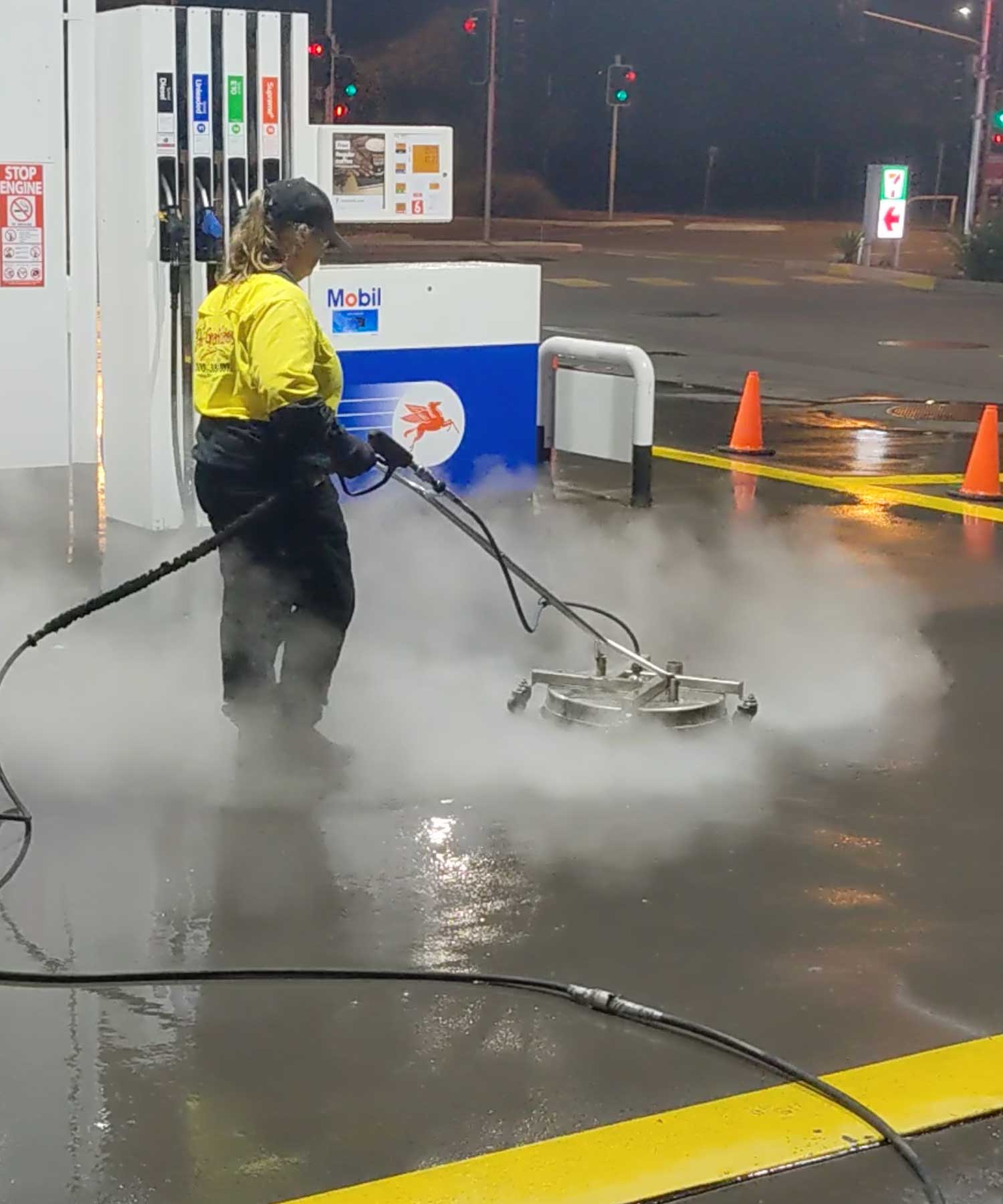
Pressure washing, as the name suggests, is a cleaning technique that relies on the physical force of water projected at high pressure to remove contaminants from a surface. This method uses the kinetic energy of the water jet to physically dislodge and blast away dirt, grime, mud, peeling paint, and other loose debris. It is an incredibly effective tool for cleaning hard, durable surfaces that are affected by deep-seated, non-biological grime.
Our custom built pressure washing equipment can also incorporate hot water, which significantly boosts its power against stubborn, greasy, or oily stains. Pressure washing is the go-to method for robust surfaces like unsealed concrete driveways and paths, some types of brickwork, and other hard-scapes that can withstand the high-pressure force.
Understanding Soft Washing – The Power of Science
Soft washing is an entirely different approach that prioritises finesse over force. This technique uses a much lower water pressure, often comparable to that of a standard garden hose, to deliver specialised cleaning solutions. In this method, it is the cleaning solution itself that does the heavy lifting, not the force of the water. These specialist products are formulated to break down contaminants and, crucially, to kill biological growths like mould, mildew, algae, and lichen at their source. The low-pressure water is then used to gently rinse away the loosened grime and dead organic matter.
Soft washing is the ideal method for cleaning any surface that could be damaged by high pressure, or for treating biological infestations where simply blasting the surface isn’t enough to solve the problem long-term.
The Direct Comparison – Which Method for Which Job?
Choosing between pressure washing and soft washing comes down to two key factors: the type of soiling and the type of surface.
When tackling tough, ingrained dirt, heavy grime, or mud on durable surfaces, pressure washing is often the superior choice. Its powerful blasting action is excellent for dislodging packed-in dirt from hard-wearing materials like concrete car parks and pathways.
For any kind of biological growth, however, soft washing is the definitive and more effective long-term solution. In climates with periods of high humidity, mould, algae, and lichen are common problems. Because soft washing solutions kill these living organisms down to the root and spore, they prevent the rapid regrowth that often occurs when these growths are only superficially removed with high pressure.
For delicate and sensitive surfaces, soft washing is the only safe and appropriate option. Materials such as painted walls, modern render finishes like acrylic, timber decking and fences, Colorbond® sheeting, roof tiles, and heritage stonework can all be easily chipped, stripped, etched, or otherwise permanently damaged by high pressure. Soft washing cleans these surfaces thoroughly without any risk of harm. This gentle approach also makes it ideal for cleaning high or hard-to-reach areas of a building facade safely and efficiently.
The Professional Advantage – It Starts with Assessment
The most critical step in any professional exterior cleaning job is the initial assessment. An experienced technician from The Stain Eaters will evaluate both the surface material and the specific type of soiling to determine the correct and safest cleaning method. Because our team is expertly trained and our custom built service vehicles are equipped to perform both pressure washing and soft washing, we can provide an unbiased recommendation that is truly best for your property. We don’t try to make one tool fit every job; we choose the right tool from our arsenal to deliver a perfect, damage-free result.
The Right Tool for a Superior Clean
Both pressure washing and soft washing are excellent, professional cleaning techniques, but they are designed for very different applications. Understanding their strengths and weaknesses is fundamental to protecting your property while achieving a brilliant clean. By entrusting your exterior cleaning to the experts at The Stain Eaters, you ensure that the correct method will be chosen every time, guaranteeing a safe, effective, and lasting restoration of your property’s appearance.
To discuss the best cleaning method for your property, contact The Stain Eaters today for a professional consultation and quote.