
When Pressure Cleaning Goes Wrong
Pressure washing can look deceptively simple. Point the lance at the dirty area, pull the trigger and watch the grime disappear.
Unfortunately, it does not always work that way.
Used correctly, pressure washing can be an effective way to clean concrete, pavers, walls and other hard surfaces. Used badly, it can leave behind uneven cleaning, visible wand marks and permanent surface scarring. In some cases, the damage can be more noticeable than the dirt that was there in the first place.
The photo shown here is a good example. The area has not been cleaned evenly, and the surface now has obvious pressure marks caused by poor technique.
More Pressure Does Not Mean Better Cleaning
One of the most common mistakes with pressure cleaning is assuming that more pressure will always produce a better result. In reality, excessive pressure can damage the surface, especially when the operator is working too close or using an unsuitable nozzle.
Concrete, for example, may look extremely tough, but the top layer can still be etched or scarred if too much force is applied. Once this happens, the damage is not simply dirt that can be washed away. The surface itself has been altered.
That is why professional pressure cleaning is about control, not brute force.
Technique Matters Just as Much as Equipment
The quality of a pressure cleaning job depends heavily on how the equipment is used. The operator needs to maintain the right distance from the surface, use a suitable nozzle and keep the cleaning pattern consistent.
Holding the lance too close can create narrow, aggressive cleaning lines. Moving too slowly can over-clean one area, while moving too quickly can leave dirt behind. Uneven passes can also create the patchy, striped appearance often seen after inexperienced pressure washing.
A good result should look even and consistent across the whole area, without obvious wand marks or patches where the surface has been overworked.
The Surface Needs to Be Assessed First
Not every surface should be cleaned in the same way. Concrete, exposed aggregate, pavers, brickwork, painted surfaces and natural stone all respond differently to pressure, heat and cleaning products.
Older or weathered surfaces can be particularly vulnerable. Cracks, weak mortar joints, damaged coatings and worn concrete may all require a gentler approach. In some cases, specialist cleaning solutions can do much of the work, reducing the need for aggressive pressure.
This is why an experienced operator will assess the substrate first rather than using the same pressure setting on every job.
Hot Water and the Right Cleaning Products Can Reduce the Need for Force
Professional pressure cleaning is often more effective when the cleaning process does not rely entirely on water pressure.
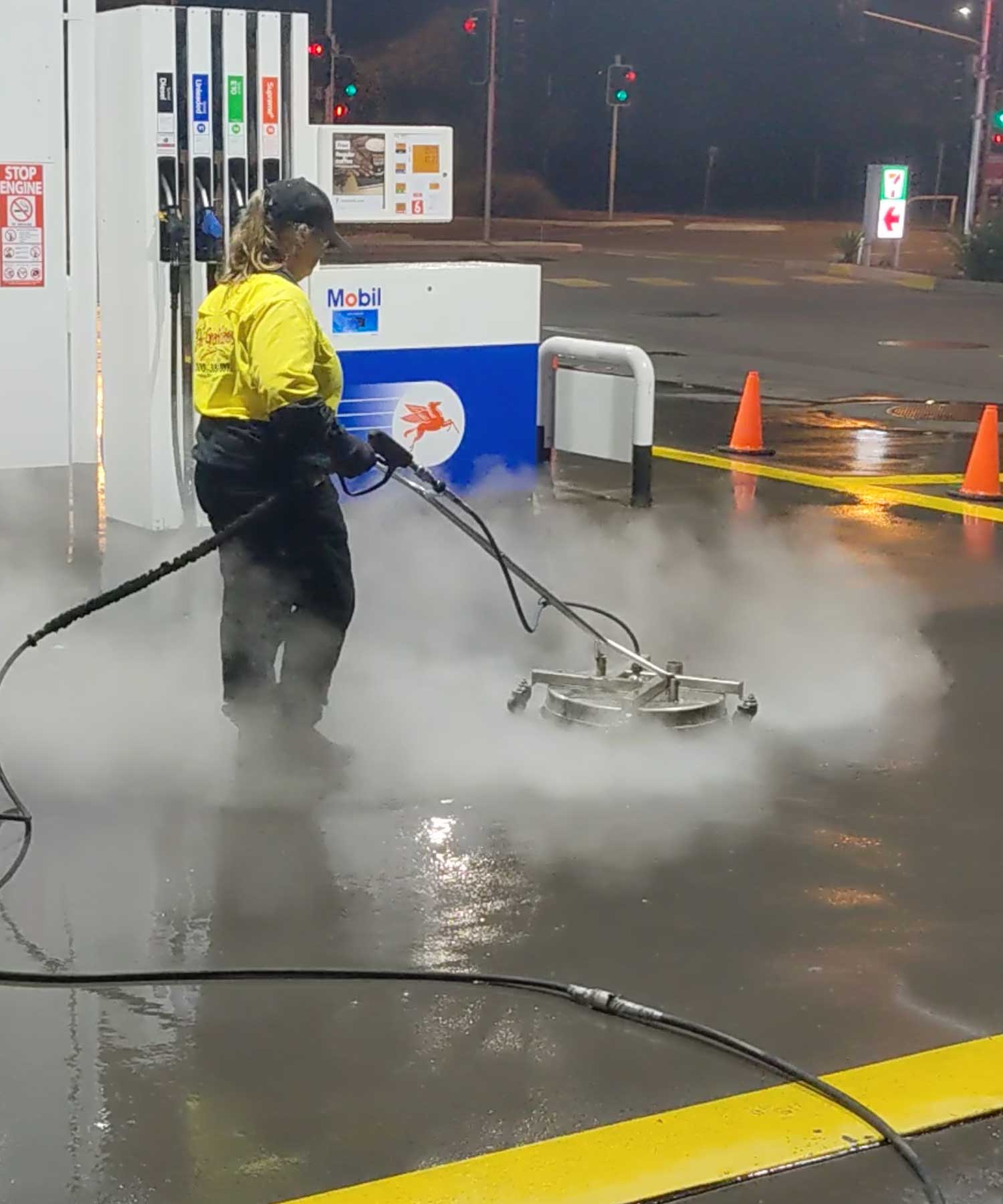
Depending on the contamination, our team can use specialist cleaning treatments together with our custom-built pressure washing systems to deliver hot-water under controlled pressure. The combination of heat, appropriate cleaning products and carefully managed pressure can help break down stubborn grime without unnecessarily attacking the surface.
This is especially useful for oil, grease, organic contamination and other difficult stains where simply increasing the pressure is not the best solution.
Surface Damage Can Be Permanent
When a surface is scarred by excessive pressure, the marks may not disappear with further cleaning. The top layer of concrete or masonry may have been physically removed, creating a different texture and colour compared with the surrounding area.
Trying to fix the problem by pressure washing the rest of the surface just as aggressively can make matters worse. Instead of correcting the original damage, it can spread it across a much larger area.
Depending on how severe the damage is, resurfacing, sealing or other remedial work may be needed. This is one reason it is worth getting the pressure cleaning process right the first time.
Professional Pressure Cleaning Is About Control
A good pressure cleaning job should remove contamination while protecting the surface underneath. That requires the right equipment, the right cleaning method and an operator who understands how the substrate will respond.
Our team works across residential, commercial and industrial properties, cleaning a wide range of hard surfaces while adjusting the process to suit each job. The goal is not simply to make the surface look cleaner today, but to avoid creating damage that remains long after the cleaning is finished.