Paint Spills & Splatters
Accident or Vandalism, the Clock Is Ticking Either Way.
There are two very different stories behind most paint spills we get called out to. One is the accident, a tin knocked off a ladder mid-job, a delivery vehicle clipping a can on a construction site, a can that tips over during transport and empties itself across a footpath before anyone notices. The other is deliberate, someone throwing or pouring paint across a driveway, a shopfront, a fence, or a building entry, as an act of vandalism rather than a mishap.
Different story, same problem. Whether that paint ended up on the surface by accident or on purpose, the material itself doesn’t know the difference, and neither does the clean-up process. Both scenarios call for the same urgency, and both come with the same risk of the job getting significantly harder the longer it’s left.
The Accident Half of the Equation
Accidental paint spills happen more often than most people expect, and they happen across an enormous range of settings. A residential DIY paint job gone slightly wrong. A tradesperson on a commercial site with a tin that tips at the wrong moment. A transport or delivery mishap that leaves paint running across a road or car park. None of it is anyone’s fault in the sense that matters, these things happen, but the aftermath still needs dealing with properly and promptly.
The instinct with an accidental spill is often to try and mop it up immediately with whatever’s on hand, rags, a hose, paper towel, and in fairness, that instinct isn’t wrong as a first response for containing the spread. What it doesn’t do is fully remove the staining, particularly once the paint has had any time at all to start setting into the surface underneath it.
The Deliberate Half of the Equation
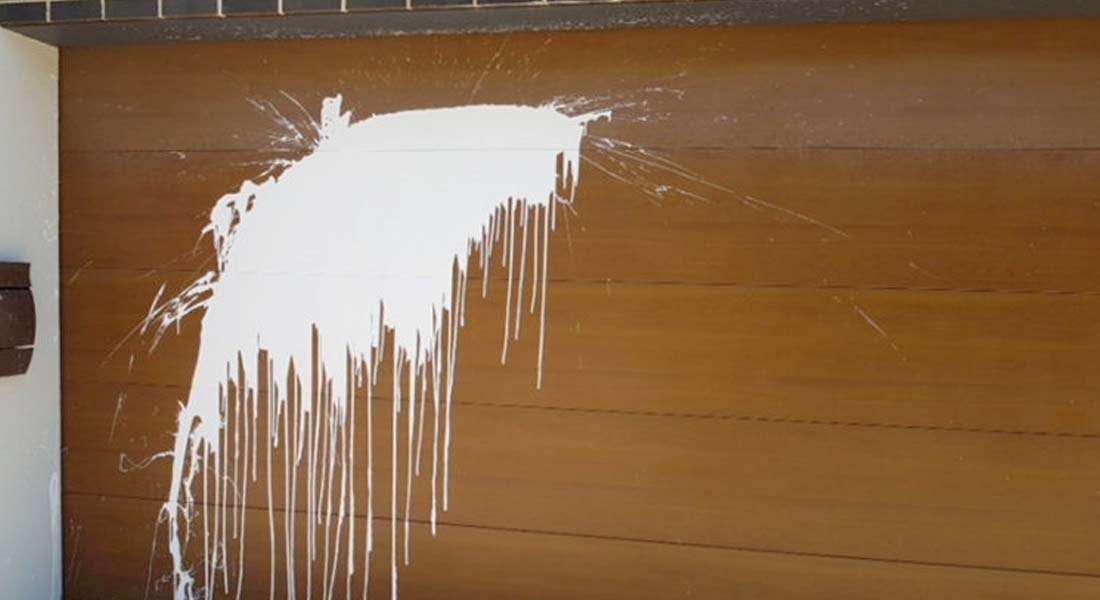
Paint vandalism, sometimes called paint bombing, is graffiti’s messier cousin. Rather than a tag applied with a spray can, it’s a can or bucket of paint thrown or poured across a surface, footpaths, driveways, shopfronts, fences, and building entries are all common targets. It tends to leave a heavier, more concentrated layer of paint than typical spray graffiti, often pooling in low points and running down vertical surfaces in a way that spreads the affected area considerably wider than the point of impact.
From a removal standpoint, deliberate paint vandalism carries all the same urgency as any other graffiti attack. A property left displaying paint vandalism sends exactly the same message as an unaddressed spray tag, that nobody’s paying attention and nothing’s going to happen if it’s targeted again. Treating a paint attack with the same speed and seriousness as any other act of vandalism is just as important here as it is anywhere else.
Why the Surface Matters as Much as the Cause
Regardless of how the paint got there, what it’s sitting on changes the entire removal approach. Paint spills and splatters turn up on an enormous range of surfaces, concrete and natural stone, Colorbond and other metal cladding, aluminium and steel fixtures, glass, PVC and plastic panelling, shade sails, and signage, and each of these responds differently to both the paint itself and to whatever cleaning approach is used to remove it.
Porous surfaces like concrete and natural stone absorb paint into their structure as it dries, which means the removal process needs to draw the paint back out rather than simply lift it off a surface. Metal surfaces like Colorbond, aluminium, and steel bring their own risk, the wrong cleaning solution can strip or damage a factory-applied coating just as easily as it removes the paint, leaving a surface that’s technically paint-free but visibly compromised. Glass, PVC panelling, and shade sails are typically more delicate again, needing a gentler approach that won’t scratch, cloud, or degrade the material while still fully lifting the paint away. Signage brings all of this together in one job, since a single sign might combine several of these materials at once.
This is exactly why there’s no single product or process that handles every paint spill the same way. The right approach depends on correctly identifying both the paint type and the surface it’s landed on, then matching the treatment to that specific combination.
Why Waiting Makes Everything Worse
Most paints, particularly the fast-drying formulations common in both residential and trade use, don’t stay workable for long. What starts as a wet, relatively straightforward spill can cure into a properly set stain within hours, and once that happens, a simple wipe-down or hose-off is no longer going to touch it. At that point, specialist cleaning is required to fully remove what’s left behind, and the longer that’s delayed, the more entrenched the staining becomes.
If a spill happens and immediate professional attention isn’t possible, the most useful thing to do is contain it, stopping the paint from spreading further and, particularly for larger volumes, keeping it away from drains and garden beds where it can cause genuine environmental harm. Beyond containment, resist the urge to start scrubbing or applying household products, since the wrong approach at this stage can do more harm than good, working paint deeper into a porous surface or reacting badly with a coated one.
Getting the Right Team on the Job
Paint spills and splatters, accidental or deliberate, call for a technician who can correctly read the situation on arrival, identify the paint type and the surface involved, and select the cleaning process that will fully remove the staining without damaging what’s underneath it. That’s not a guessing game, it’s matching known variables to a known solution, and getting it right the first time is what keeps a paint spill from turning into a bigger, more expensive job than it needed to be.
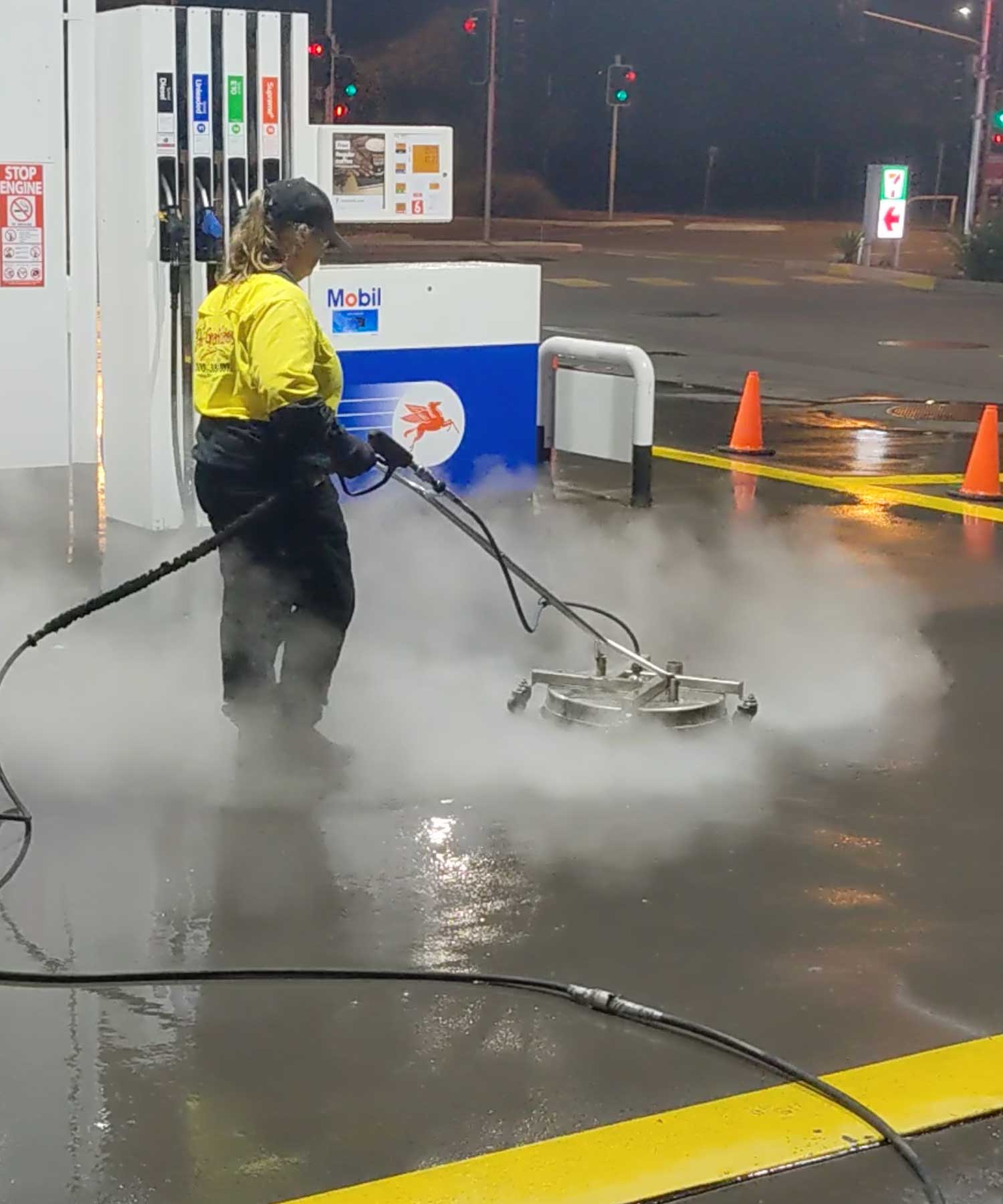
Our surface restoration vehicles carry the full range of cleaning solutions and equipment needed to handle whatever combination of paint and surface a job presents, so whether it’s an accidental spill on a residential driveway or a deliberate paint attack on a commercial shopfront, the right response is ready to go.
If paint has ended up somewhere it shouldn’t be, on your property, your business, or a surface you’re responsible for, get in touch with our team today for an assessment.