
Paint Spills on Outdoor Surfaces – Fresh vs Cured
What to do, and how we remove them.
Paint where it shouldn’t be can derail jobs, stain your property, and—if it reaches drains—trigger compliance headaches. Whether the spill is fresh or fully cured, the right response and cleaning method makes all the difference. Here’s how The Graffiti Eaters handle it so your hard surfaces are restored safely and efficiently.
Fresh spills: the first 30 minutes
Speed matters. Contain, don’t spread. Keep traffic away, place simple bunds to stop run-off, and blot rather than scrub so you don’t drive pigment deeper into pores. If it’s water-based acrylic, preventing rapid drying helps; for solvent enamels or two-pack systems, keeping the area contained and ventilated is key. Avoid blasting with a hose—pushing paint into joints, lawns or stormwater makes cleanup harder and can breach site rules.
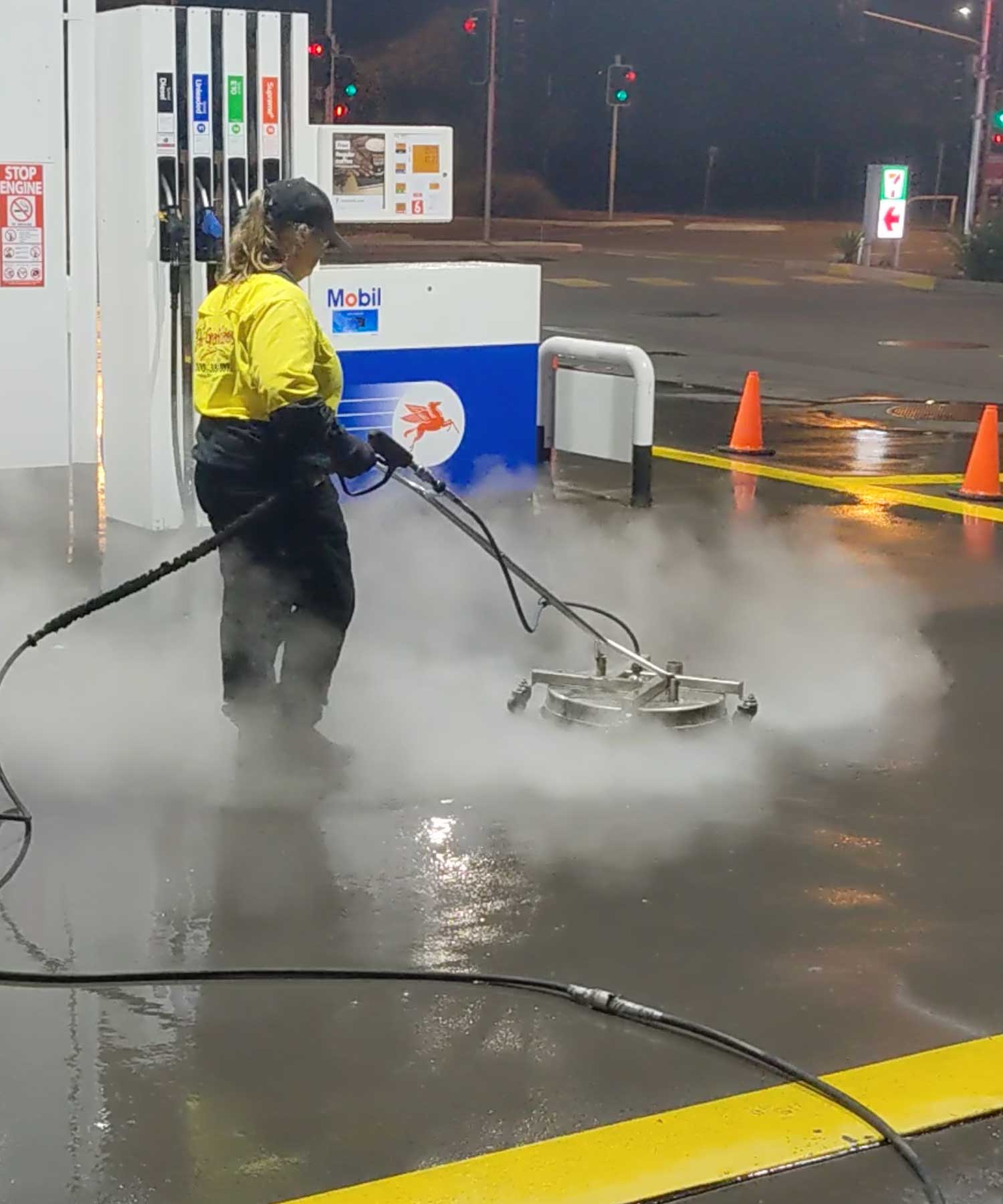
Once on site, we identify the paint type and substrate, pre-test a suitable remover, and break the paint’s bond before any rinse. On porous concrete and brick we often pair cleaning solutions with our custom-built pressure washing systems to deliver hot-water under controlled pressure, lifting binder and pigment from the pores without etching the surface. On delicate finishes we use a chemistry-led soft wash with measured dwell times, followed by a controlled rinse so residues don’t travel.
Cured spills: set-in paint and “shadowing”
Once paint has hardened, pigment and resins can lock into micro-pores and leave a faint shadow even after initial removal. We tackle cured spills with targeted cleaning solutions matched to the paint chemistry (acrylic, enamel, epoxy/urethane), staged dwell and agitation, then a careful lift and rinse. On stubborn areas we may use poultice techniques to draw colour out evenly. Where bio-growth or traffic film sits on top of the spill, we soft wash first to expose the paint layer so removal chemistry can work cleanly.
Different surfaces, different risks
- Concrete & hardstands: deep pores hold colour; we combine pre-treatments with hot-water under controlled pressure to extract without tiger-striping.
- Pavers & natural stone: texture and salts demand low-pressure rinsing and pH-appropriate chemistry to avoid patchiness or efflorescence.
- Brickwork & mortar: careful dwell control avoids softening joints while lifting paint from the face of the brick.
- Metal, glass & coated panels: non-abrasive removal protects sheen and avoids haze; soft washing and test patches protect warranties.
- Asphalt: heat-sensitive; we avoid scarring and ghost lines with tailored methods.
Environmental care and documentation
We manage run-off so residues don’t reach landscaping or stormwater. Work areas are signed, scheduled around tenants, and handed back tidy—with photo documentation for your records.
Prevention after cleanup
Where risk is ongoing—loading bays, walls near line-marking, high-traffic entries—we can recommend protective measures, including anti-graffiti coatings on suitable substrates to make future incidents faster to remove and less disruptive.
Ready to clear paint from paths, façades or hardstands—without damage or downtime? Speak with The Graffiti Eaters and we’ll match the method to the material and get it done right.