
Paint Spills on Concrete Driveways and Hardstands
Paint spills on concrete driveways and hardstands aren’t just annoying – they’re the kind of problem you see every single day when you come and go. Once that bright splash of colour dries, it can feel like you’ve permanently branded your property with a DIY accident or a trade mistake.
Whether you’re a homeowner, body corporate or commercial property manager, paint on concrete quickly turns into one of those “I really should do something about that” jobs.
How paint actually behaves on concrete
Fresh paint looks like it’s just sitting on the surface, but concrete is porous. As the paint starts to dry, the liquid binder and pigments soak down into those tiny pores and capillaries. The longer it sits, the deeper it locks in.
On brushed or broom-finished concrete and older, more open surfaces, this effect is even stronger. Instead of just wiping off the top, the paint grips the texture. When someone attacks it with a cold pressure washer or a grinder, they often push pigment further in or chew up the concrete trying to get it out. That’s how you end up with a permanent “clean patch” that looks worse than the original spill.
Common ways paint spills happen
Most jobs don’t start with a disaster in mind. Paint spills and splatter usually appear when someone is:
- Repainting fascias, eaves or balustrades and a tray tips over onto the driveway.
- Rolling walls or ceilings in a garage and walking paint-laden rollers or trays outside.
- Loading or unloading tins from a ute or van and a lid pops off.
- Spraying fences, bollards or line markings on a windy day and overspray drifts onto the concrete.
On commercial sites and hardstands, it can be something as simple as a contractor setting up near a door or roller shutter, or a delivery driver dropping a tin in the loading bay. Before you know it, there’s a solid, bright stain right where customers or residents walk and park.
Why paint spills are more than just ugly
Visually, a paint spill stands out a mile away, especially on front driveways, entry aprons and high-traffic hardstands. It can make an otherwise well-kept property look careless.
For residential properties, that can mean reduced kerb appeal, awkward inspection days and friction with body corporate or neighbours. For commercial sites, it sends the wrong message to tenants, customers and visitors about how the property is managed.
There are also practical concerns. Thick paint build-up can leave a slippery patch when wet. On sloping driveways and ramps this is not ideal. And if someone starts grinding or scraping without a plan, dried paint flakes can end up in drains and stormwater systems, which is not great from a compliance perspective.
Why DIY fixes often make the stain worse
The first instinct is almost always to reach for whatever is handy – a scraper, a wire brush, some generic solvent, or a domestic pressure washer. Sometimes that takes the edge off, but often it creates a new problem.
Aggressive scraping or grinding can gouge the concrete surface, leaving a rough patch with a visible edge. Harsh solvents can soften the binder but smear pigment across a wider area, especially if they’re not rinsed carefully. Cold water pressure washing may strip the top of the paint film but leave a ghost of pigment in the pores, which then cures even harder.
You end up with a hazy, uneven mark that is more noticeable because the surrounding concrete is now cleaner. Once the surface profile has been damaged, it’s harder to blend everything back to a consistent finish.
Our approach: pre-treatment first, pressure second
Effective paint spill removal is all about working with the stain, not fighting it. At The Stain Eaters we start by assessing the type of paint, how long it has been on the surface, and the condition of the concrete or hardstand.
We then pre-treat the affected area using specialist cleaning solutions selected to break down the paint’s binders and loosen the pigment within the pores. This is a controlled process: the aim is to soften and release the contamination without attacking the concrete itself.
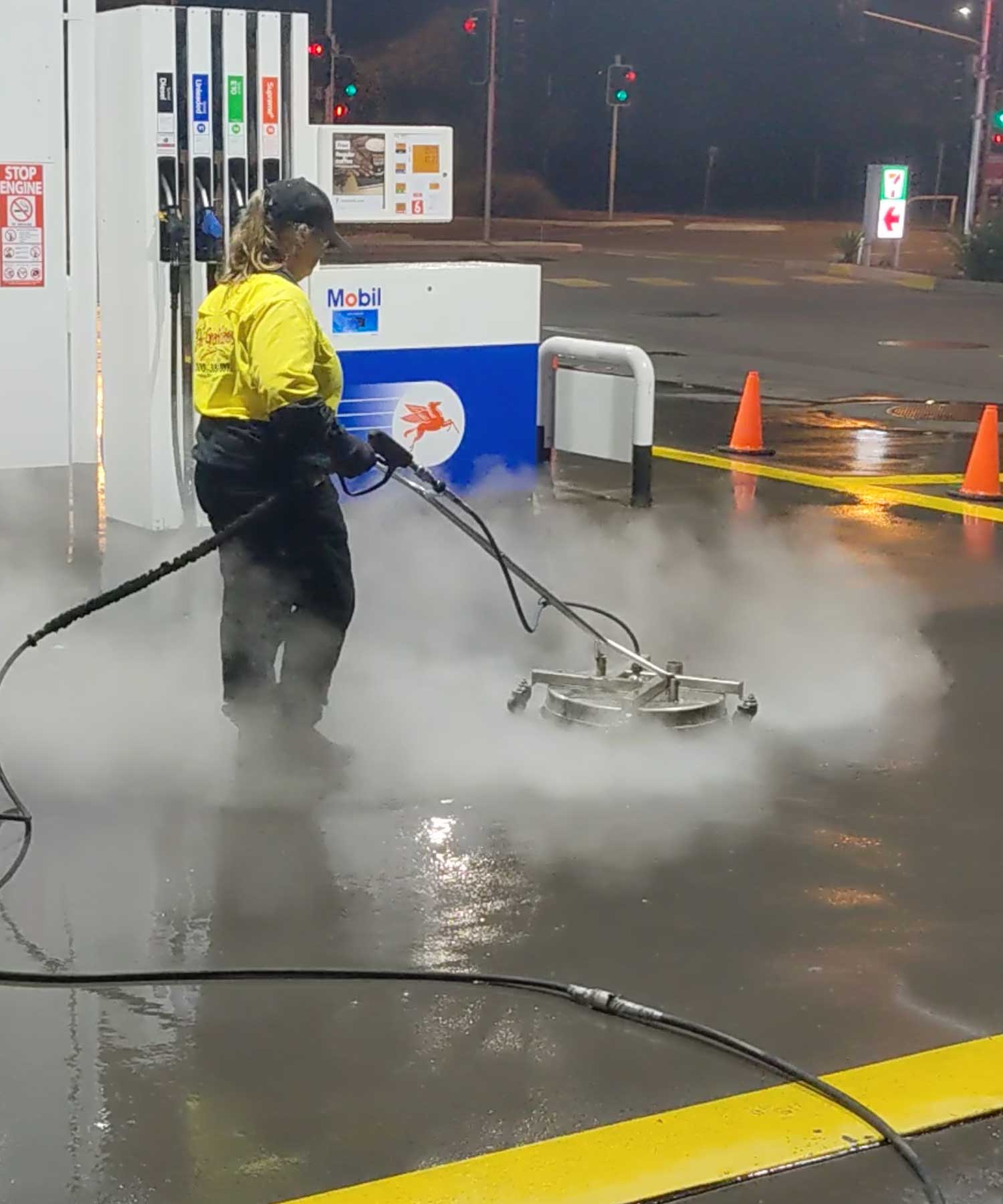
Once the paint has been properly conditioned, our technicians use our custom-built pressure washing systems to deliver hot-water under controlled pressure. The combination of heat and carefully chosen pressure helps flush loosened pigment and residues out of the surface, rather than driving them deeper. Because the pre-treatment has already done the heavy lifting, we don’t have to resort to extreme pressure that might etch or strip the concrete.
Hot water: the edge you don’t get from a standard wash
Cold water alone has limited effect on stubborn paint. Hot water, on the other hand, helps thin and mobilise the softened binder, speeds up cleaning reactions and improves the way our cleaning solutions penetrate the concrete.
This means paint can be lifted more thoroughly and more quickly, and there is a much better chance of avoiding that pale, patchy “shadow” that cheap cleaning attempts often leave behind.
By pairing hot water with controlled pressure, we can target the spill while respecting the surrounding surface. That is especially important on decorative concrete, exposed aggregate, coloured hardstands and high-visibility entry areas where a harsh approach would stand out.
Managing wastewater and protecting the wider site
Paint spill clean-ups need more than just good tools – they need good housekeeping. When required, we set up systems to divert and capture wash water so loosened paint and residues don’t run into gardens, neighbouring properties or stormwater drains. The captured wastewater can then be managed and disposed of in line with local regulations, helping keep your site compliant as well as clean.
This is particularly important in basement carparks, shared driveways and commercial hardstands where drainage points often lead directly to stormwater systems.
Residential driveways, body corporate sites and commercial hardstands
For homeowners, a paint spill on the driveway or garage entrance is a daily reminder of a job gone wrong. It can spoil photos when selling, become a sticking point during rental inspections and just generally bug you every time you walk over it.
For body corporate managers, common-driveway spills and overspray around unit blocks can trigger complaints from multiple residents. Treating these areas properly keeps the property looking consistent and avoids arguments about who did what and when.
On commercial properties, paint spills on loading docks, entry aprons, carparks and hardstands are highly visible to customers and tenants. They can undermine the appearance of otherwise well-maintained facilities and, if badly handled, create rough or slippery patches where vehicles and pedestrians meet.
Why acting sooner is better than later
Fresh paint is usually easier to remove than older, fully cured spills that have baked through a few summers. The longer it sits, the deeper it bonds and the more work is required to get a good result.
Calling in a specialist team early often means less disruption, better blending with the surrounding concrete and a lower overall cost than trying multiple DIY fixes first and then needing restoration on top. Even if the spill is old, it is still worth assessing. With the right pre-treatment and hot water pressure washing, we can usually make a significant improvement and in many cases remove it almost entirely.
When you want the spill gone – not just “less obvious”
If you are staring at a paint spill every time you drive in, or managing a site where overspray, drips and dropped tins have left their mark, you don’t have to just live with it.
Our technicians are trained to deal with paint on concrete driveways and hardstands properly. By combining specialist pre-treatment with our custom-built pressure washing systems to deliver hot-water under controlled pressure, we can extract pigment and binders while protecting the surface underneath.
The aim is simple: leave you with concrete that looks clean and consistent, without etched patches or rough edges that tell the story of the spill forever.
If you’d like to talk through a paint spill or overspray problem at your property, we’re ready to help.