
Common Misconceptions about High Pressure Cleaning
Pressure cleaning can be one of the most effective ways to remove built-up dirt, grime and staining from hard exterior surfaces, but it is also one of those jobs that often looks easier than it really is. From driveways and car parks to pathways, loading areas and commercial surfaces, the right equipment and technique can produce an excellent result. The wrong approach, however, can leave behind uneven cleaning, surface damage or contamination that has simply been moved somewhere else.
A lot of the confusion comes from the idea that pressure cleaning is simply about using as much water pressure as possible. In reality, a professional clean involves assessing the surface, understanding the contamination and selecting the right combination of heat, pressure, cleaning products and technique. Here are five common misconceptions about pressure cleaning and why they can lead to disappointing results.
More Pressure Means a Better Clean
This is probably the biggest misconception of all. High pressure can be useful, but more pressure does not automatically mean a cleaner surface. In fact, excessive pressure can scar concrete, damage mortar joints, strip coatings and leave visible wand marks behind.
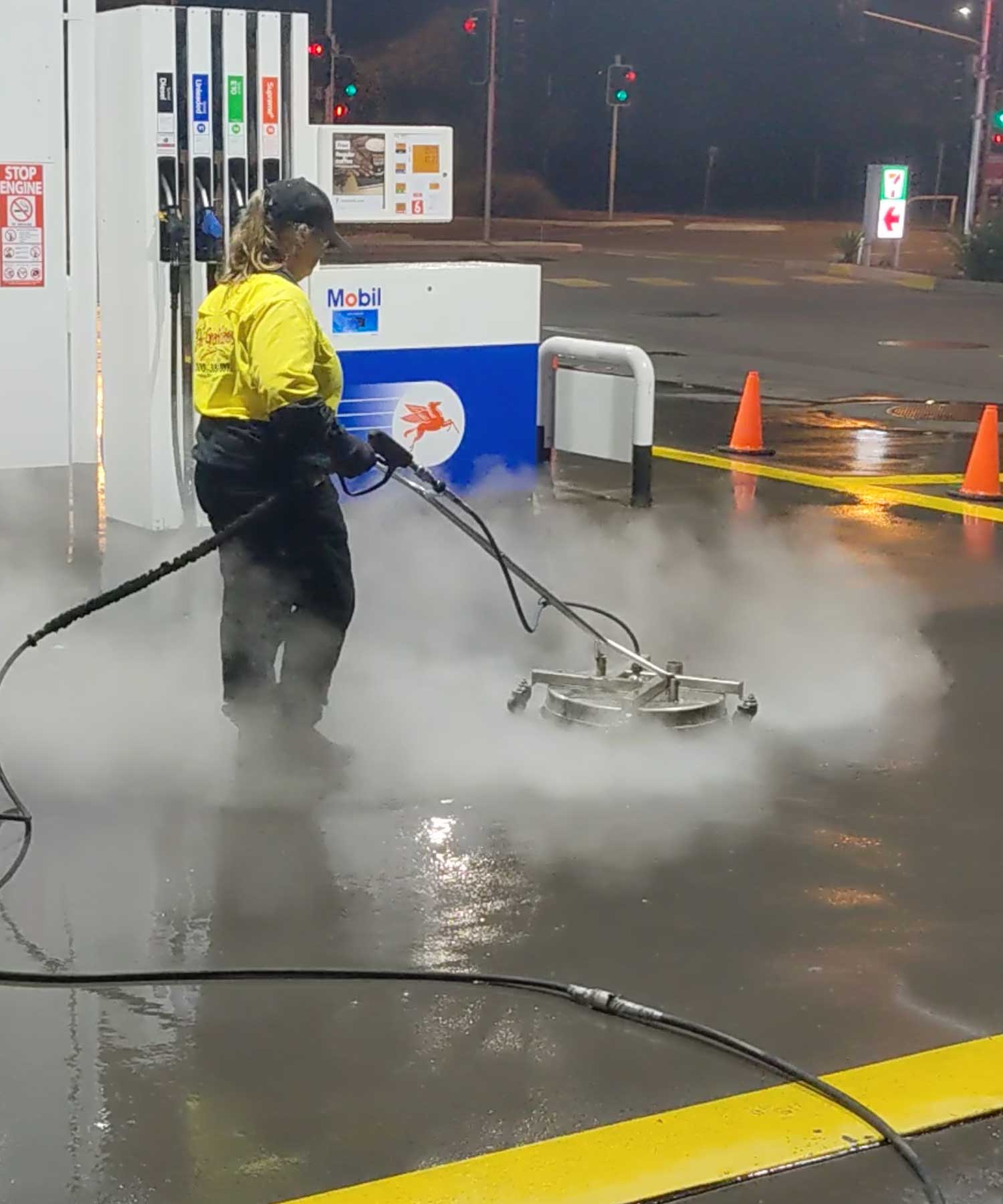
A good pressure cleaning job is about control. The operator needs to choose the right nozzle, working distance and pressure for the particular surface. In many cases, heat and the correct cleaning treatment can do more of the work, reducing the need to rely on brute force.
Our team uses our custom-built pressure washing systems to deliver hot-water under controlled pressure. This allows the cleaning process to be adjusted to suit the substrate and contamination, rather than treating every job the same way.
Pressure Cleaning Is Suitable for Every Surface
Pressure cleaning is highly effective on many hard surfaces, but it is not always the right option. Older brickwork, soft sandstone, painted surfaces, roof materials, composite products and weakened masonry can all be damaged if they are subjected to too much pressure.
This is why the surface should be assessed before cleaning begins. Sometimes a gentler treatment is more appropriate, particularly where the substrate is fragile or already deteriorating. In other situations, specialist cleaning solutions can loosen the contamination first so less pressure is needed during the rinse.
The best result is not the one achieved with the strongest machine. It is the one that removes the contamination while protecting the surface underneath.
Pressure Cleaning Is Just Pointing and Spraying
It may look straightforward, but there is quite a lot happening behind a good pressure cleaning job. The operator needs to maintain a consistent distance, overlap passes correctly and adjust technique as the surface changes. Poor control can result in stripes, patches or areas that are over-cleaned compared with the surrounding surface.
There is also the issue of safety. High-pressure water can cause serious injury, particularly when used at close range, and the force from the equipment can make working on ladders or unstable surfaces dangerous. Wet surfaces can also become slippery during the cleaning process, so access and site conditions need to be managed carefully.
Professional pressure cleaning is as much about experience and judgement as it is about the machine itself.
Pressure Cleaning Is Messy and Bad for the Environment
It can be if the job is poorly managed. Water, cleaning solutions and loosened contaminants should not simply be allowed to run into stormwater drains or spread across surrounding areas.
Professional cleaning should consider where the wastewater is going and whether it needs to be contained or recovered. This is particularly important when removing oil, grease or other contaminants that may create environmental or drainage issues if they are washed away uncontrolled.
Depending on the job, our team can use wastewater recovery methods and manage the cleaning process so that contaminated water is dealt with appropriately rather than left to flow wherever it goes.
It Is Better to Wait Until the Surface Gets Really Dirty
Putting off pressure cleaning can seem like a good way to save money, but some contaminants become more difficult to remove the longer they remain on the surface. Oil and grease are good examples because they can penetrate into porous materials such as concrete and pavers rather than simply sitting on top.
Organic growth, grime and other staining can also become more established over time, particularly in shaded or damp areas. Dealing with contamination earlier can often make the cleaning process simpler and may produce a better result.
Regular maintenance can also help keep larger commercial and managed properties looking presentable, rather than waiting until staining and grime have built up across a much wider area.
Professional Pressure Cleaning Is About Using the Right Process
Pressure cleaning can be extremely effective, but the quality of the result depends on far more than the amount of pressure being used. The type of surface, the contamination, the water temperature, the cleaning products and the operator’s technique all play a part.
Our team provides professional pressure cleaning for residential, commercial and industrial properties, with the cleaning method matched to the surface and the problem being treated. The aim is to remove dirt and staining effectively without causing unnecessary damage in the process.
Need a surface professionally cleaned? We’ll get it off!