Marker Pen and Texta Tags
Small, Sneaky, and Surprisingly Hard to Remove!
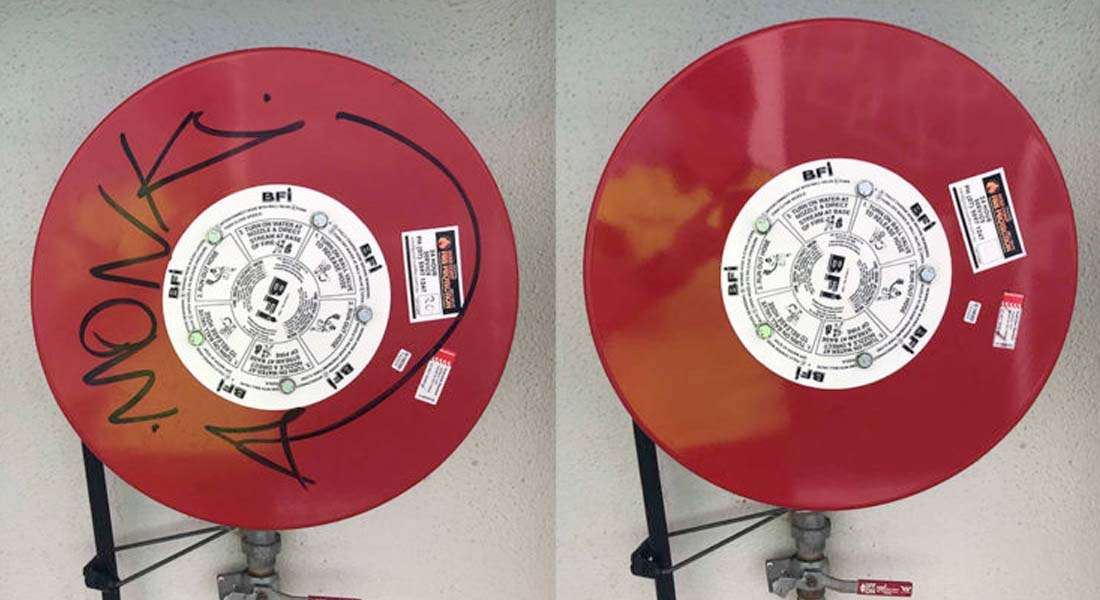
Spray paint gets most of the attention when people talk about graffiti, and it’s easy to understand why. It’s big, it’s bold, and it’s usually the first thing anyone notices on a building exterior. Marker and texta tags tend to fly under the radar by comparison, small, quick to apply, and often tucked away somewhere less obvious. That relative subtlety leads a lot of property managers and facilities teams to underestimate them, treating marker tagging as a lesser problem that can wait or be handled with whatever’s under the sink.
That assumption is worth correcting early, because in a lot of cases, marker and texta ink is genuinely harder to properly remove than spray paint, not easier.
Small and Sneaky, By Design
Marker and texta tagging has a completely different profile to spray paint vandalism, and it’s worth understanding why before getting into removal. A can of spray paint isn’t something you casually carry around and use in a few seconds without anyone noticing. A marker or texta pen is exactly that, small enough to slip into a pocket, silent to use, and quick enough to leave a tag in the time it takes to walk past a wall, a door, or a partition.
This is why marker and texta tagging so often shows up in interior spaces rather than on exterior walls the way spray paint typically does. Public toilets, lift interiors, retail changerooms, stairwells, and other enclosed spaces with regular foot traffic and limited passive surveillance are common territory for this kind of tagging, precisely because they offer the brief moment of privacy needed to leave a mark without being noticed doing it. Because it can happen so quickly and so quietly, marker tagging often accumulates steadily over time rather than arriving as a single obvious incident, one tag here, another there, until a surface that looked fine last month is now covered in a scattered collection of small marks.
Why Ink Is a Tougher Job Than Paint
Here’s the part that catches a lot of people out. Spray paint is pigment suspended in a resin or binder, and once applied, that binder forms a bond with the surface it’s on, penetrating into a porous substrate as it cures just as it would on brick, render, or concrete. That bond can be broken down chemically with the right specialist solution, then mechanically flushed or lifted away, which is why treatment on porous surfaces often finishes with the loosened paint being rinsed out.
Marker and texta ink is a different kind of problem, because it typically doesn’t have that same binder holding it together as a film. It’s dye, and dye behaves more like a stain than a coating. Rather than sitting as a distinct layer that can be broken down and lifted off in one go, the dye disperses into the material it’s applied to, or in the case of non-porous surfaces, bonds tightly at a microscopic level without leaving anything resembling a film to physically remove. There’s often nothing loose to flush away. The dye needs to be drawn back out through solvent action, rather than broken down and rinsed off the way a paint film can be.
This is exactly why reaching for a household cleaning product or a general-purpose solvent so often produces a disappointing result. It might lighten the tag, but it rarely removes it completely, and in some cases it can spread the dye further across the surface or push it deeper into a porous material, turning what looked like a quick fix into a more entrenched stain than the original tag.
Why It Turns Up on Almost Anything
Part of what makes marker and texta tagging such a persistent nuisance is how indiscriminate it is about the surface it ends up on. Unlike spray paint, which tends to be applied to larger, flatter surfaces suited to that kind of application, marker and texta pens can mark virtually anything, glass, laminate, painted walls, signage, stainless steel fixtures, toilet partitions, mirrors, plastic surfaces, and more.
That variety matters, because it means the surface underneath the ink changes just as often as the ink itself, and getting a proper result depends on treating each surface appropriately rather than applying the same approach everywhere. What draws ink cleanly out of glass isn’t necessarily what you’d use on painted laminate, and treating a stainless steel fixture the same way as a porous painted wall risks damaging a surface that never needed anything close to that level of intervention.
Why It’s a Hand-Applied Cleaning Job
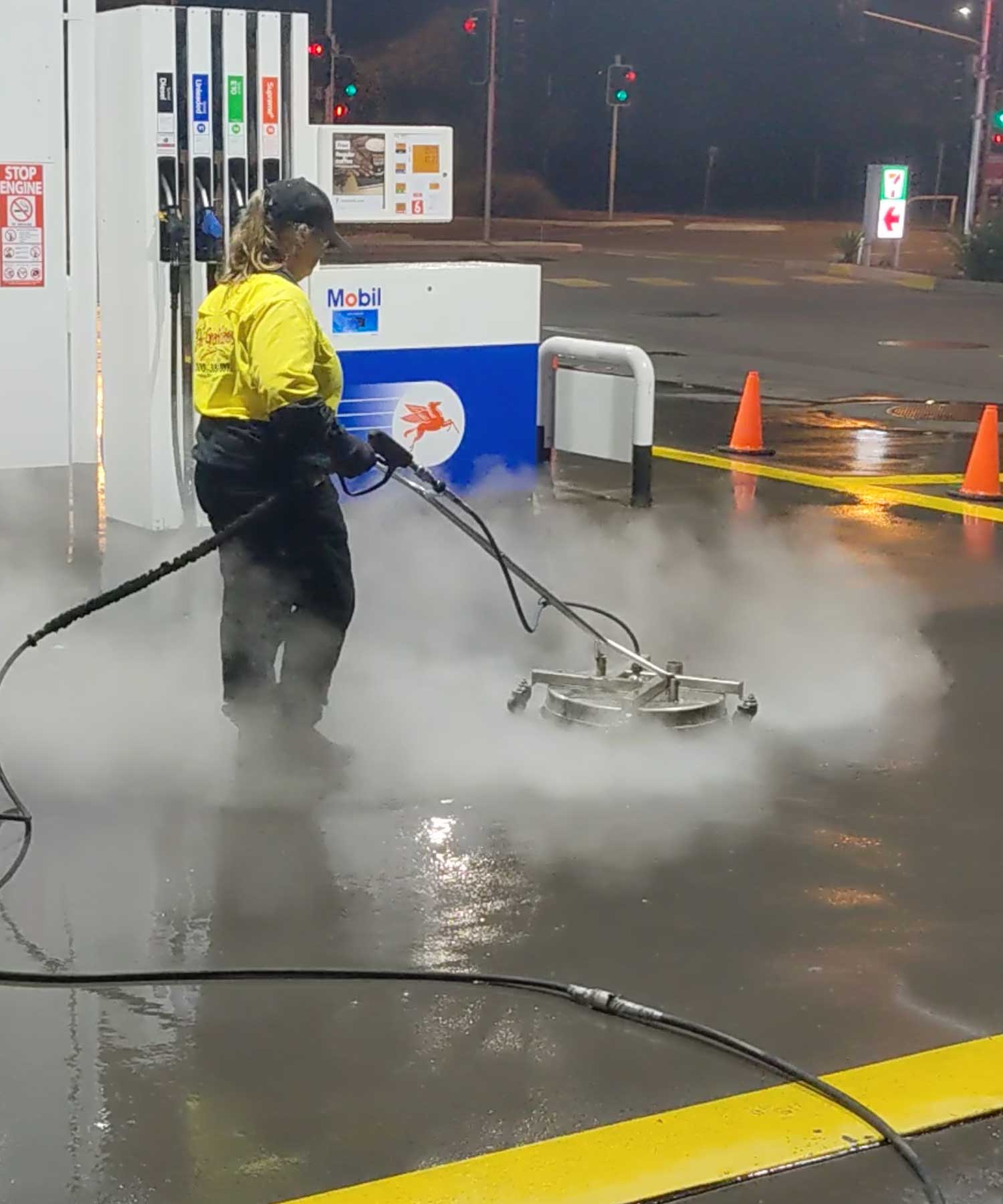
Given how dye-based ink behaves and the range of surfaces it turns up on, marker and texta removal is almost always a hand-applied process rather than something suited to pressure washing. Pressure washing works well once a specialist solution has broken down a bonded paint film on a robust exterior surface, but ink doesn’t leave that kind of loosened material to flush away, and the surfaces marker tagging shows up on, glass, laminate, fixtures, interior partitions, are rarely suited to that kind of mechanical treatment in any case. Removing it properly means working a targeted specialist solution directly onto the tag with appropriate dwell time, drawing the dye out through careful, controlled application rather than force.
This also makes marker and texta removal a genuinely detail-oriented job. Because tags are typically small and often numerous rather than one large piece, a technician is frequently treating several individual marks across a space rather than one continuous area, each potentially on a slightly different surface, each needing the same careful, methodical attention as the last.
Why It’s Worth Taking Seriously
It’s tempting to view a handful of small marker tags as a low priority compared to a large spray paint piece on a building facade, but the accumulation effect is real. Left unaddressed, marker and texta tagging in interior spaces tends to multiply in exactly the same way any other unaddressed vandalism does, one tag left in place signals that nobody’s paying attention, and more follow. A public toilet, lift, or changeroom covered in accumulated marker tags looks just as neglected and poorly managed as an exterior wall covered in spray paint, and it sends the same message to anyone who sees it, staff, customers, tenants, and visitors alike.
For businesses managing public-facing interior spaces, retail environments, transport facilities, education facilities, and shared amenities in particular, staying on top of marker and texta tagging is just as much a part of maintaining a well-presented, well-managed property as dealing with exterior graffiti.
Getting It Removed Properly
Because marker and texta ink behaves so differently to spray paint, and because it can turn up on such a wide variety of surfaces, getting it removed properly comes down to correctly identifying the surface, selecting the right specialist solution for that surface and ink combination, and applying it by hand with the care and attention this kind of detailed work requires.
If marker or texta tagging is accumulating somewhere at your property, whether that’s a single stubborn mark or a scattered collection across an interior space, get in touch with our team today for a free assessment.