
How Pressure Washing Can Help Prepare Hard Surfaces for Sealing or Painting
If you’ve ever sealed or painted a driveway, path or factory floor and thought, “That didn’t last long,” chances are the problem started before the first coat went down.
The most overlooked step in any sealing or painting job isn’t which product you choose – it’s how well the surface was cleaned and prepared.
Pressure washing, done properly, is one of the best ways to get hard surfaces ready for a new finish. But it’s more than just blasting away the obvious dirt.
Why surface prep makes or breaks the job
Sealers and coatings are basically glue with a fancy job description. They’re designed to bond to concrete, pavers, stencilled finishes and other hard surfaces, then stand up to traffic, weather and spills.
They can’t do that if they’re trying to stick to:
- Old sealer or flaking paint
- Oil, grease or tyre residue
- Mould, algae and dirt films
- Efflorescence, rust stains or fertiliser marks
When those contaminants are left behind, the new coating bonds to them instead of the actual surface. The result is peeling, patchiness, hot tyre pick-up, or sealer that wears through in all the wrong places.
From a property owner’s point of view, that means wasted product, wasted labour and that sinking feeling when the job you just paid for starts failing months – not years – down the track.
The limits of a broom and garden hose
It’s tempting to think a good sweep and a quick hose down is enough. It’s not.
Dry sweeping can move loose dust and leaves, but it does nothing for oily contamination, traffic film and the fine dirt that gets trapped in the pores of concrete and pavers. A garden hose will wet the surface and wash away the obvious grime, but it won’t break down the thin films left by tyres, exhaust, food spills or mould.
On commercial sites, forklifts, pallet jacks and delivery vehicles grind contaminants into the floor day after day. In residential settings, driveways collect everything from sunscreen and car shampoos to fertiliser and leaf tannins. All of that sits between your new coating and the surface it’s meant to protect.
How professional pressure washing changes the game
Pressure washing is about more than just high pressure. The real magic comes from combining the right cleaning solutions with the right temperature, pressure and technique for the job.
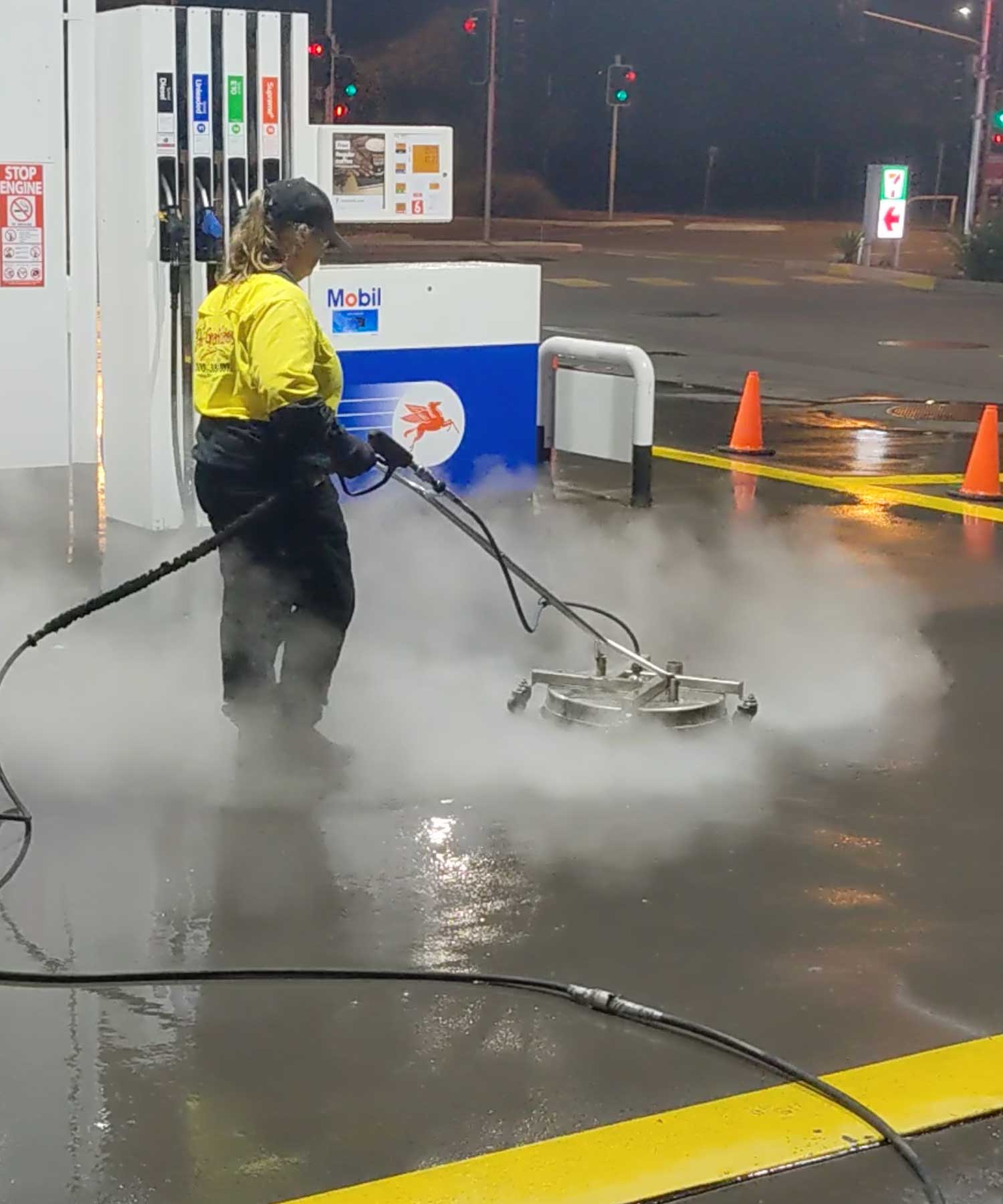
At The Stain Eaters, our technicians use specialist cleaning solutions to loosen and dissolve contaminants first. Then we use our custom-built pressure washing systems to deliver hot-water under controlled pressure to flush everything out of the surface.
The cleaning solutions do the chemistry, breaking down grease, tyre residues, mould and other films. The hot water and controlled pressure then carry that contamination away, instead of simply moving it around. Because the pressure is matched to the surface, we can clean deeply without scarring concrete or blowing out joints and grout.
This kind of preparation gives sealers and coatings the best possible surface to bond to: clean, sound concrete or paving rather than a layer of old dirt and residue.
Common preparation problems we see
On DIY and even some commercial jobs, we’re often called in after something has gone wrong. The same themes keep popping up.
Driveways sealed over oil stains
A few drops of degreaser, a quick rinse and straight on with the sealer. It looks fine for a little while, then hot tyres start lifting the sealer in dark patches where the oil was never fully removed.
Pavers coated over mould and algae
The area looks “clean enough” when it’s wet, but once the sealer goes on, dark spots and greenish patches show through. In damp or shaded areas, the mould continues to grow underneath the sealer and lifts it off.
Warehouse floors painted over dust and forklift tracks
The paint bonds to dust and tyre residue instead of the concrete. Within months you see peeling where forklifts turn, and long dark tracks through high-traffic zones.
Paths sealed over fertiliser and rust marks
The marks seem light, so they’re ignored. After sealing, the stains become more obvious, and some products can even react with contaminants, leading to discolouration.
All of these headaches come back to one thing: the surface wasn’t truly clean before the first coat went down.
Pressure washing as part of a proper preparation system
Good prep is a process, not just a single step. Pressure washing fits into that process as the muscle that finishes the clean.
First, you identify the contaminants. Is it mainly organic growth like mould and algae? Are there oil spots from vehicles or forklifts? Any rust or fertiliser staining? Is there old sealer or paint that needs to be removed or reduced?
Next, you choose the right cleaning solutions and methods for those contaminants and for the substrate. Concrete, exposed aggregate, pavers and stencilled finishes all respond differently, and you don’t want to damage decorative surfaces while you clean them.
Finally, you use pressure washing to rinse it all away. The aim is to wash off not just the dirt you can see, but the residues left by cleaning cleaning solutions and the fine material hiding in the pores. Done properly, you’re left with a surface that is clean, neutral and ready for sealer or paint.
DIY vs professional prep – what’s the difference?
For small, low-risk jobs, a hired cold-water pressure washer and some elbow grease can be enough. But there are some limitations to be aware of.
Domestic machines often lack the pressure, flow and temperature control needed to deal with heavy contamination. They can freshen up the look, but leave behind invisible films that still interfere with bonding. Without the right cleaning solutions and experience, it’s also easy to etch the surface in patches, especially on softer concrete, stencilled finishes or older pavers.
Professional equipment and techniques are built to overcome those problems. Higher flow rates move more contamination off the surface. Hot water improves the effectiveness of cleaning solutions on oils and greases. Our technicians understand how to adjust pressure, nozzles and working distance so the result is a consistently clean surface, not a patchwork of stripes.
For commercial property managers, the difference shows up in reduced callbacks, coatings that last longer and surfaces that look better for tenants and customers.
Why this matters for sealers, paints and coatings
Most manufacturers of sealers and coatings are very clear in their instructions: surfaces must be clean, dry and free of contaminants. They make those recommendations for a reason.
When coatings fail because of poor preparation, it rarely shows up in the first week. It appears months later as peeling, flaking, uneven gloss levels or patchy colour. At that point, the blame is often put on the product itself, when the real issue was what it was applied over.
Pressure washing as part of a proper prep system gives you confidence that you’ve done your bit. The coating then has a fair chance to perform the way it was designed to, whether that’s a decorative driveway sealer at home or a hard-wearing coating in a factory.
Getting value from your sealing or painting project
Preparing hard surfaces properly can feel like an annoying extra step when you’re keen to see the finished result. But it’s the part that protects your investment.
For homeowners, that means a driveway or outdoor area that still looks good years later, instead of needing to be stripped and redone. For commercial property managers, it means less disruption, fewer complaints and longer intervals between major maintenance work.
If you’re planning to seal or paint concrete, pavers or other hard surfaces, it’s worth asking one simple question first: how clean is the surface really?
If the answer is “we gave it a quick hose,” pressure washing with the right equipment and methods might be the step that saves you time, money and frustration down the track.
If you’d like help preparing your surfaces properly before sealing or painting, our technicians can assess the area, choose suitable cleaning solutions and use our custom-built pressure washing systems to deliver hot-water under controlled pressure for a thorough, even clean.