
Graffiti Removal for Shopping Centres
What a Good Maintenance Program Looks Like.
If you manage a shopping centre, you already know graffiti isn’t just “someone else’s problem”. One tag on a roller door turns into three more by the weekend. A tenant emails. A customer notices. Centre management wants it gone yesterday. And somehow it all lands on your desk.
The frustrating part is that graffiti is rarely a one-off. It’s a repeat pattern — and the centres that stay looking sharp aren’t the ones who get “lucky”. They’re the ones with a graffiti maintenance program that’s built for real life: multiple tenancies, multiple surfaces, busy trading hours, and zero tolerance for damage or disruption.
This guide walks through what a solid shopping centre graffiti removal program looks like, how to set it up so it runs smoothly, and how our technicians can take the pressure off you week after week.
Why graffiti becomes a facility manager’s headache so fast
Graffiti hits shopping centres differently to standalone sites because you’re managing both brand and momentum. When a centre looks neglected, customers feel it. Tenants feel it. And vandals read it as a signal.
It also creates a unique kind of admin load. You’re not just organising removal. You’re dealing with who’s responsible, which tenancy is impacted, access approvals, after-hours arrangements, and the follow-up complaints if the result isn’t clean. And if someone has already tried to remove it themselves, you may be stuck with smearing, ghosting, or a patchy finish that looks worse than the original tag.
A good maintenance program is designed to remove that friction — not just remove the paint.
The goal of a shopping centre graffiti maintenance program
The goal isn’t to “win” against graffiti forever. The goal is to keep your centre consistently presentable while reducing repeat tagging and making the process predictable for you.
A strong program does three things:
- It removes graffiti quickly enough that it doesn’t become a billboard for copycats.
- It standardises how removal is handled so you’re not reinventing the wheel each time.
- And it protects surfaces and finishes so your site doesn’t end up looking tired from over-aggressive cleaning.
When that happens, the day-to-day impact drops. Tenants complain less. Your incident log gets shorter. And you spend less time firefighting.
What “good” looks like in practice
A good program starts with planning, not panic. That doesn’t mean overcomplicating it — it means setting up a few simple systems that handle 80% of the problems automatically.
Clear response times that match how centres operate
Shopping centres don’t run on a “we’ll get there when we can” schedule. Your peak periods are obvious, and the moments graffiti is most visible are predictable: opening hours, weekend foot traffic, school holidays, and event periods.
A practical graffiti maintenance program sets response expectations based on your priorities. Some marks need fast attention because they’re front-and-centre. Others can be bundled into a scheduled visit. The key is having an agreed approach so you’re not negotiating urgency every time a photo comes through.
A consistent reporting workflow that doesn’t waste your time
Most centres already have a way staff report maintenance issues. The trick is making graffiti reporting specific enough to be actioned without a dozen follow-up emails.
The best reporting includes a photo, the exact location, and whether it’s in a public area, tenancy frontage, car park, or service corridor. When that’s standardised, your supplier can assess it quickly and turn up prepared with the right method for the surface.
Site knowledge: surfaces, finishes, and repeat hotspots
Shopping centres are a patchwork of materials. Painted masonry, powder-coated doors, signage, glass, tiled areas, stainless steel, rendered walls, and newer cladding systems — all of them behave differently under removal.
A “good” provider learns your site. They recognise the hotspots and the surfaces that need extra care. That matters because the wrong approach can create long-term problems such as shadowing, dull patches, etching, or damage to coatings. It’s also how you get faster results over time because your supplier isn’t starting from scratch each call-out.
A method that’s matched to the surface — not a one-size-fits-all blast
Facility managers hate two things: damage and excuses.
Effective shopping centre graffiti removal means treating the substrate with respect. Our technicians use specialist graffiti cleaning solutions chosen for the graffiti type and the surface, with controlled application and rinsing methods to lift graffiti while minimising impact on the underlying finish.
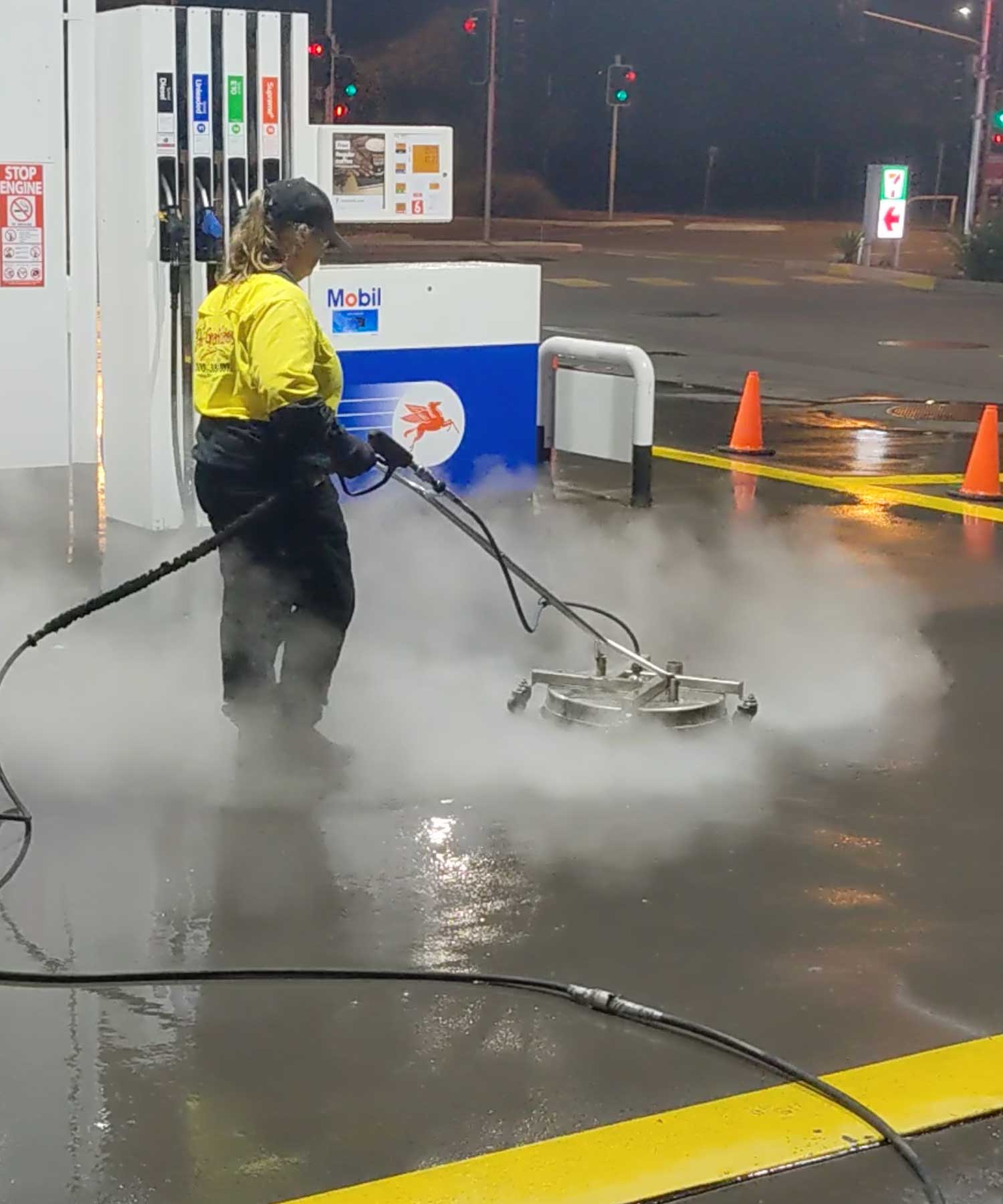
On suitable surfaces where pressure washing is appropriate, we use our custom-built pressure washing systems to deliver hot-water under controlled pressure. The emphasis is always on control — the right approach for the specific surface, not “more pressure” as a shortcut.
Trading-hour friendly scheduling
You don’t want technicians blocking access, creating noise during peak trade, or working in a way that draws more attention to the graffiti than the graffiti itself.
A good program bakes in flexible scheduling, including early starts, after-hours visits, or quiet-time work in back-of-house areas. It also includes practical planning around high-traffic zones like entrances, food courts, and main mall areas so removal can happen smoothly with minimal disruption.
Quality control: “removed” isn’t the same as “looks good”
This is where many providers fall down. They remove the graffiti, but the area still looks marked. A faint outline, a dull patch, a halo, or uneven colour can keep tenants unhappy because the wall still looks “damaged”.
A strong maintenance partner focuses on finish quality. That means the method is chosen to avoid surface damage and reduce the chance of ghosting, especially on roller doors, signage panels, and painted walls.
When you’re judged on how the centre looks, the end result matters more than the task being ticked off.
How a maintenance agreement makes your life easier
If you’re arranging graffiti removal as a once-off every time, you’re effectively running a mini tender process on repeat. Quotes. Availability. Admin. Delays. And then the same cycle again next week.
A maintenance agreement turns graffiti into a managed process.
It gives you predictable response times and scheduling. It streamlines approvals. It reduces admin. And it helps your supplier build familiarity with your centre so each job gets easier, faster, and more consistent.
It also supports better budgeting. Instead of surprise invoices and reactive call-outs, you’re working with a planned approach that suits how your centre operates.
What to look for when setting up your graffiti maintenance program
You don’t need a complicated document. You need a program that’s practical, repeatable, and aligned with how your centre runs.
A good starting point is agreeing on how graffiti is reported, what the target response windows are for different visibility levels, what areas are prioritised, and how after-hours access is handled. From there, a good provider will recommend a visit cadence that matches your site’s reality and adjust it as hotspots change.
Most importantly, you want a team that understands you’re managing reputational risk and tenant relationships, not just cleaning.
Why shopping centres choose The Graffiti Eaters
We work with commercial sites where appearance standards matter and where graffiti is a recurring issue, not a one-time inconvenience. Our technicians focus on consistent results, surface-safe methods, and a process that reduces your workload.
If you’re tired of the constant back-and-forth and you want a graffiti maintenance program that runs smoothly, we can help you set up a maintenance agreement that suits your centre, your trading hours, and your brand standards.
Ready to take graffiti off your weekly to-do list?
If you manage a shopping centre and want a smarter, less stressful approach to shopping centre graffiti removal, get in touch about a maintenance agreement. We’ll talk through your site, your hotspots, and the response approach that makes the most sense.