
Fire Damage Cleaning
Why Soot Removal Is Only Part of the Job.
When a property has been affected by fire, the most obvious damage is usually easy to see. Black soot, smoke staining and burnt materials can make the extent of the problem immediately apparent, but fire damage often goes well beyond what is visible on the surface. Carbon deposits, acidic residues and persistent smoke odours can spread through a building and remain long after the flames have been extinguished.
This is why proper fire damage cleaning needs to be approached as a restoration process rather than a simple wash-down. The aim is not only to improve the appearance of the affected surfaces, but also to deal with the residues left behind by combustion and help prevent longer-term problems from developing.
Fire Damage Can Spread Beyond the Burnt Area
Smoke and airborne contaminants can travel throughout a property during a fire, reaching areas that were never directly exposed to flames. Soot can settle on walls, ceilings, beams, roof structures, metalwork and other surfaces, while combustion by-products may also remain on building materials after the fire has been brought under control.
The extent of the contamination can vary depending on what has burned, how long the fire lasted and how smoke moved through the building. For this reason, a thorough assessment is important before cleaning begins. Focusing only on the most visibly damaged area can mean other affected surfaces are overlooked.
Carbon and Soot Need the Right Treatment
Soot is not always something that can simply be scrubbed or washed from the surface. On porous materials such as brick, concrete and masonry, carbon can penetrate into the substrate and become difficult to remove with surface cleaning alone.
Different fires can also produce different types of residue. Materials such as plastics, timber, oils and other products can all leave behind different forms of contamination, which means the cleaning process needs to be matched to both the residue and the surface underneath it.
The Stain Eaters can use specialist cleaning formulations to soften and release carbon deposits before the affected surfaces are cleaned. This allows the process to focus on drawing contamination out of the substrate rather than relying solely on aggressive scrubbing or excessive pressure.
Acidic Residues Can Cause Longer-Term Problems
One of the less visible consequences of fire is the acidic residue created during the combustion process. These residues can settle on metal surfaces and structural components, and if they are not treated correctly they may contribute to corrosion over time.
Structural steel, roof trusses, fixings, window frames and other metal components can all be affected. A surface may look clean once the soot has been removed, but if acidic contamination remains, deterioration can continue in the background.
Neutralisation can therefore be an important part of the restoration process. Treating these residues helps reduce the risk of ongoing corrosion and ensures the clean addresses more than just the appearance of the building.
Hot-Water Pressure Cleaning Can Form Part of the Restoration Process
Once the appropriate cleaning and neutralising treatments have been applied, affected surfaces may need to be thoroughly rinsed to remove loosened carbon, residue and cleaning products. This is where the right equipment can make a significant difference.
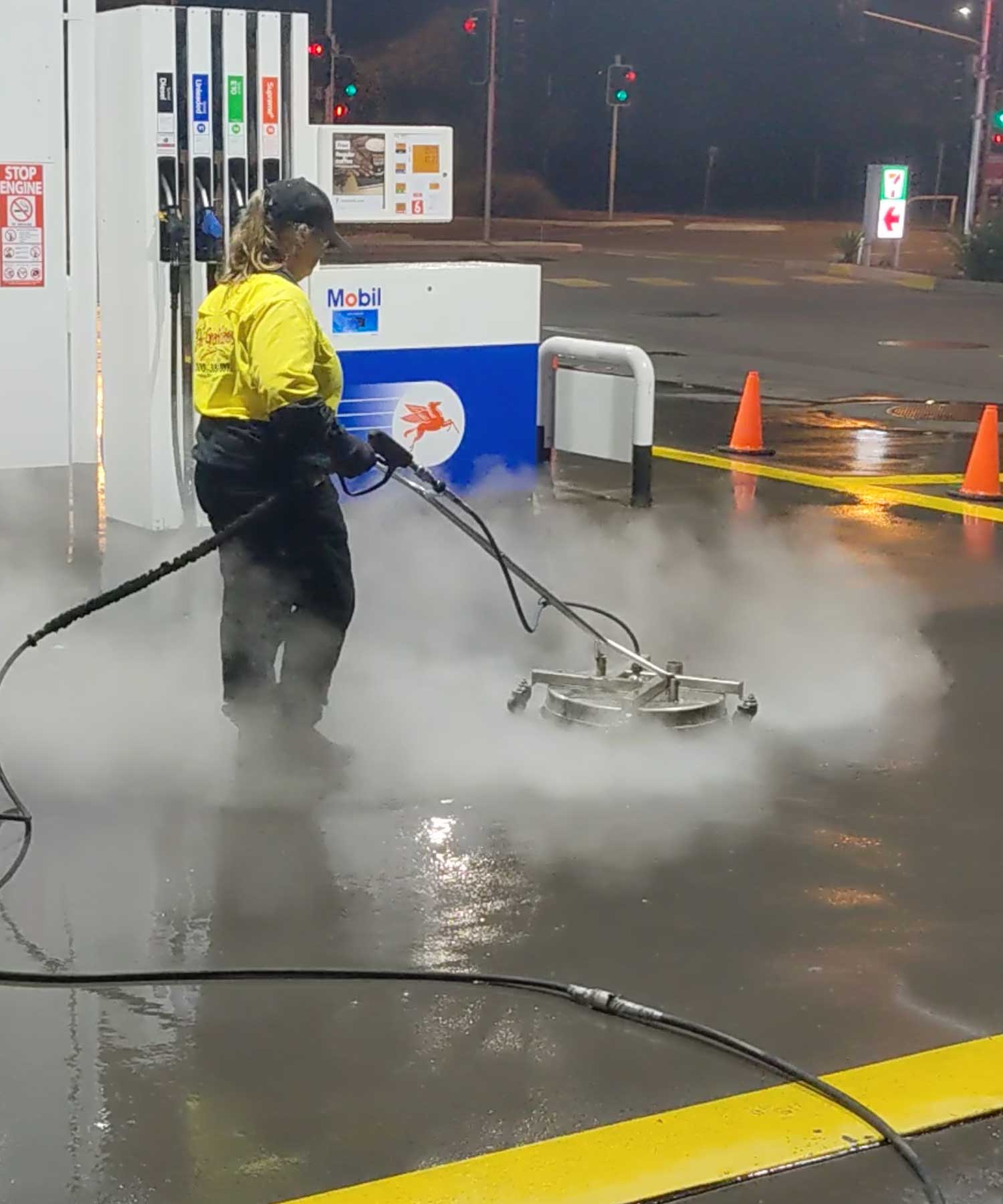
Where suitable for the surface, The Stain Eaters team use our custom-built pressure washing systems to deliver hot-water under controlled pressure. The heat can help loosen stubborn contamination, while the pressure is adjusted to suit the substrate rather than simply using maximum force.
This is particularly important on fire-damaged buildings, where surfaces may already have been weakened or affected by heat. The cleaning method needs to remove the contamination without creating additional damage during the restoration process.
Smoke Odour Can Remain After the Surface Looks Clean
A building can look much cleaner after soot and carbon have been removed but still retain the unmistakable smell of smoke. Smoke can penetrate porous materials, cavities and enclosed spaces, allowing odours to remain long after visible staining has disappeared.
Odour treatment can therefore be another important part of fire damage restoration. Specialist treatments may be used to reduce or suppress lingering smoke smells once the contaminated surfaces have been properly cleaned.
This is especially relevant when a property is being prepared for reoccupation. Removing visible staining is only one part of returning the building to a clean and usable condition.
Access and Site Conditions Need to Be Considered
Fire-damaged properties can present additional challenges that are not normally encountered during routine cleaning. Structural damage, unstable materials, restricted access and elevated work areas can all influence how the restoration work is carried out.
Affected surfaces may include roof structures, canopies, upper walls and other areas that require specialist access equipment. Depending on the site, scaffolding, elevated work platforms or other access systems may be needed to complete the cleaning safely and effectively.
Planning the job around the condition of the building, the materials involved and the level of access required is an important part of achieving a good restoration result.
Fire Damage Cleaning Is About More Than Appearance
Effective fire damage cleaning is not simply about making blackened surfaces look clean again. The process needs to consider soot, carbon contamination, acidic residues, smoke odour and the condition of the building materials underneath.
By treating both the visible and less obvious effects of the fire, affected surfaces have a much better chance of being properly restored. In many cases, specialist cleaning can also help determine which materials can be saved and which may ultimately need replacement.
The Stain Eaters provide specialist fire damage cleaning and restoration for residential, commercial and industrial properties, with treatment methods selected according to the type of contamination and surface involved.