
Façade Cleaning: Pressure vs Soft Washing
How we choose for each surface.
For commercial properties, the façade carries your brand long before anyone steps inside. The wrong cleaning method can leave etching, streaks or water ingress; the right one restores the finish and extends coating life. Here’s how we decide between soft washing and pressure washing so your building looks cared for and stays protected.
What’s really on a façade?
City pollution, diesel soot, airborne salts, mould, algae and mineral deposits form a film that bonds into the surface. On porous materials like concrete and brick, contaminants lodge deep in the pores. On coated or delicate finishes, harsh methods can strip colour, bruise the texture or force water behind panels. That’s why every job starts with identification of the substrate, the coating and the specific contamination, followed by the right pre-treatment chemistry.
When soft washing is the right choice
Rendered and panelled walls, composite cladding, coated metal and painted masonry often call for a gentle, chemistry-led approach. Soft washing uses specialist cleaning solutions applied at low pressure to break down organic growth and traffic film without abrading the finish. Dwell times are controlled, test patches confirm suitability, and rinsing is measured so we remove residues without driving water into joints, fixings or cavity spaces. This protects delicate renders and panel systems from furring, streaking and blow-outs, and it preserves warranty conditions for many coated façades. Where smoke or fire residues are present, we use chemistry that cleans and neutralises acidity in the same step before any rinse.
When pressure washing does the heavy lifting
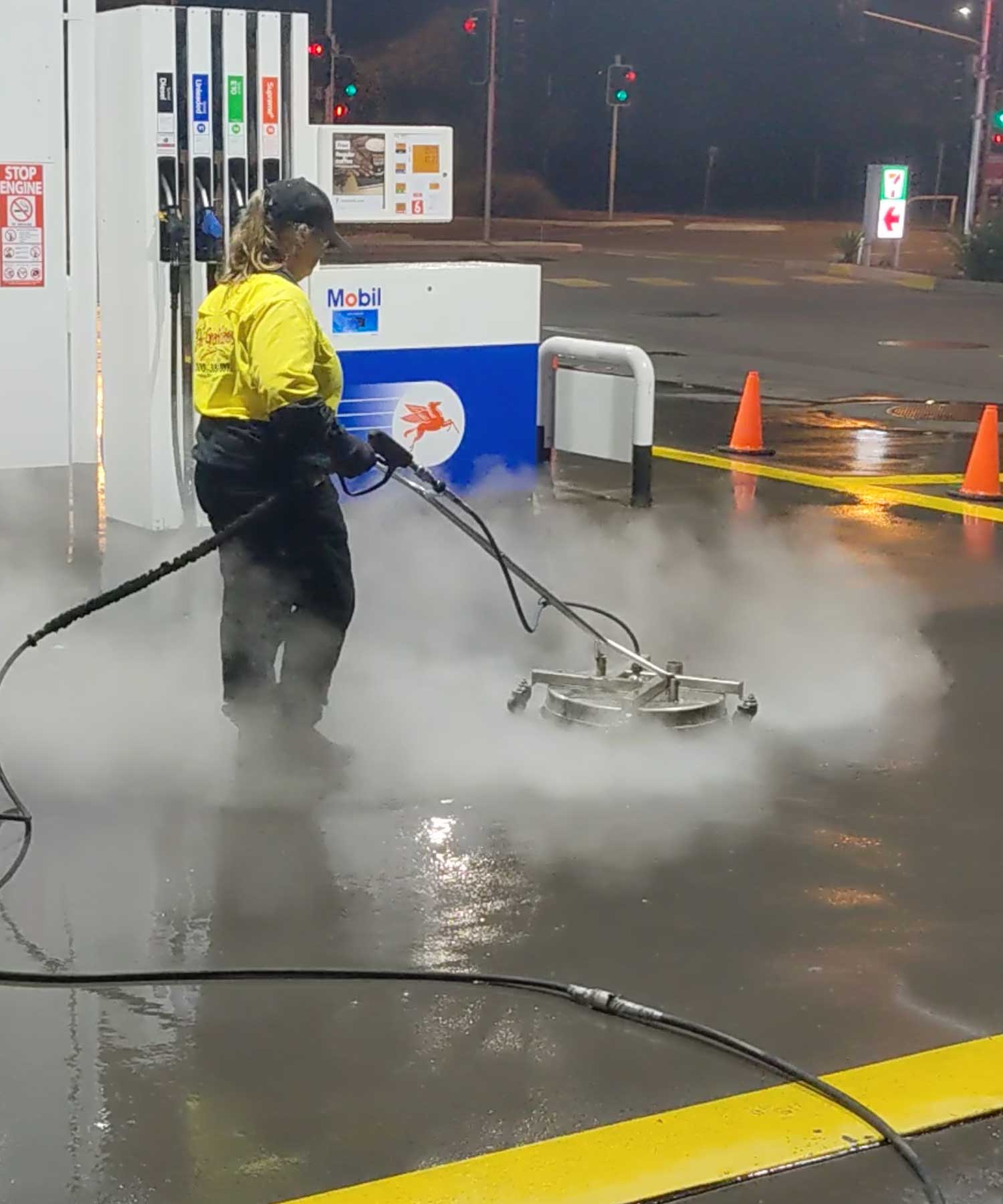
Porous mineral substrates such as concrete, brick and precast often need deeper extraction of oils, grime and mineral build-up. Here we use our custom-built pressure washing systems to deliver hot-water under controlled pressure, lifting contamination from within the pores while protecting the substrate. Temperature, pressure, nozzles and standoff distance are adjusted in real time to match the surface condition. Hot water accelerates the breakdown of grease and traffic film, while careful technique avoids etching, tiger-striping or mortar damage. On stubborn deposits like efflorescence or rust, targeted pre-treatments are paired with a controlled rinse to restore an even, natural appearance.
How we choose on site
Every façade gets a full assessment: what the surface is made of, how it’s coated, where water can travel, and what’s actually causing the staining. We consider height access, adjacent glazing or signage, sensitive landscaping, and run-off capture so we stay compliant and tidy. The plan may combine methods — for example, soft wash for upper render and controlled hot-water rinsing at ground level concrete — to deliver an even result across mixed materials.
Preparation for painting and sealing
If you’re planning repainting or applying a sealer, correct preparation is crucial. DIY washdowns often leave residues that interfere with adhesion. Our process clears contaminants properly so new coatings bond cleanly and wear as they should. We can coordinate cleaning with painters or sealing contractors to minimise downtime for tenants and visitors.
Safety, access and scheduling
We work with EWPs, booms or rope access as needed, set clear exclusion zones, and schedule around trading hours to reduce disruption. Water use, overspray and run-off are managed to protect the public realm and your landscaping, and you’ll get clear communication throughout so facilities teams can sign off with confidence.
FAQs
Will pressure washing damage our render or panels?
Not when it’s the right method, set up correctly, and applied by trained technicians. Many delicate façades are better served by soft washing; when in doubt, we test first and choose the gentlest effective option.
How often should a commercial façade be cleaned?
Exposure drives frequency. CBD and high-traffic sites often benefit from an annual clean; coastal, industrial or heavily shaded sites may need shorter cycles to prevent staining from taking hold. We can suggest a simple schedule after the first service.
Can you work outside business hours and handle height safely?
Yes. We regularly schedule early, late or weekend work and use certified access methods to meet site safety requirements and minimise disruption.
Ready to match the method to the material and bring your building back to life? Speak with The Stain Eaters and we’ll recommend the safest, most effective approach for your façade.