
Don’t Let a Graffiti Tag Define Your Property
There are not many things that stop you in your tracks quite like walking out of your front door in the morning and finding your home has been tagged overnight. It does not matter whether it is a throw-up across the front fence, a tag sprayed across the rendered boundary wall, or a marker scrawl on the letterbox — the feeling is immediate and unsettling. This is your home. Your space. And someone has left their mark on it without your permission.
The instinct in that moment is understandable — you want it gone, and you want it gone now. That instinct is exactly right. Acting quickly after a residential graffiti attack is one of the most important things you can do, and not just for the obvious reason that it looks bad. There are practical, surface-related, and security-related reasons why speed matters that go well beyond the cosmetic — and understanding them helps explain why professional removal, done properly and done fast, is the right response.
The Emotional Reality — and Why It Is Worth Acknowledging
Having your home vandalised feels like a violation of personal space in a way that having a commercial property tagged does not quite replicate. Your home is where you feel safe, where you have invested time and money and care into creating an environment that reflects who you are. Graffiti on that environment is an intrusion — uninvited, unwanted, and deeply personal in a way that a tag on a warehouse roller door simply is not.
That feeling of violation is real, and it is worth acknowledging rather than brushing past. But what is equally real is that allowing graffiti to remain on your home — even for a short period — compounds that feeling rather than relieving it. Every day the tag is there is another day it is visible to your neighbours, to people passing your property, and to you every time you arrive home or look out your front window. Removing it quickly is not just about the surface. It is about restoring your sense of security and reclaiming your space.
The Practical Case for Acting Fast
Beyond the emotional dimension, there are compelling practical reasons why speed is the single most important factor in residential graffiti removal — reasons that are rooted in the chemistry of paint and the physics of porous surfaces.
Spray paint is a solvent-based coating that begins bonding to the surface it contacts almost immediately upon application. In the first hours after application, the paint is still relatively fresh — the solvents have not fully evaporated, the pigment has not fully cured, and the bond between the paint and the surface is at its least tenacious. This is when graffiti is at its most removable, and when professional treatment is most likely to produce a complete, clean result with the least intensive intervention required.
As time passes, that window closes. The solvents evaporate, the paint cures, and the pigment bonds progressively more deeply to the surface — particularly on porous materials like brick, concrete, render, and natural stone, where the paint penetrates into the pore structure of the material as it cures. Paint that has been in place for a week is harder to remove than paint addressed within 24 hours. Paint that has been in place for a month is harder again. And paint that has weathered through rain, sun, and temperature cycling for an extended period can bond so deeply that complete removal becomes significantly more challenging and, in some cases, not fully achievable.
Acting fast is not just about convenience. It is about giving the removal process the best possible chance of producing a complete result — your surface fully restored, with no ghosting, no residual staining, and no evidence that the tag was ever there.
Why DIY Removal Often Makes It Worse
The urgency of wanting graffiti gone from your home can lead to a removal attempt that creates a bigger problem than the original tag. This is particularly common with pressure washing — reaching for a domestic pressure washer and blasting the surface in an attempt to shift the paint.
Cold water pressure washing applied directly to graffiti on brick, render, or concrete without first treating the paint with an appropriate specialist cleaning solution does not remove graffiti. What it does is drive the paint deeper into the pore structure of the surface, pushing pigment further into the material than it would have penetrated through curing alone. The result is a ghost — a pale, diffuse version of the original tag embedded in the surface rather than sitting on it — that is significantly harder to treat professionally than the original fresh paint would have been.
In some cases, that ghost mark becomes permanent. The pigment reaches a depth within the porous material where surface-applied cleaning solutions cannot adequately reach it, and the mark cannot be fully removed without resurfacing or recoating the affected area. A removal attempt intended to solve the problem quickly has instead created a lasting one.
Excessive pressure also causes physical surface damage — scarring, furring, and erosion of brick faces, rendered surfaces, and natural stone that permanently alters the appearance and texture of the material. On a residential property where the front fence or facade is an important part of the home’s presentation and value, that kind of damage is a significant and costly outcome.
The practical implication is clear: if graffiti has appeared on your home, the right response is to call a professional rather than attempt removal with whatever is to hand. The cost of professional removal is almost always less than the cost of rectifying a DIY attempt that has gone wrong.
Deterrence: The Security Argument for Rapid Removal
There is a dimension to residential graffiti removal that goes beyond the surface and the aesthetics — and it is one of the most compelling reasons to act quickly. Graffiti left in place sends a signal. It signals that the property is not actively monitored, not quickly maintained, and not a place where vandalism has consequences. And that signal is read — consciously or not — by the people who tagged it in the first place, and by others who might consider doing the same.
Properties where graffiti is removed quickly and completely are demonstrably less likely to be targeted again than properties where graffiti is left in place for extended periods. The logic is straightforward: a tag that disappears within 24 to 48 hours earns nothing for the person who put it there. No lasting visibility, no territorial mark, no evidence of the act. Over time, properties that consistently remove graffiti quickly become lower-value targets — because the effort of tagging is not rewarded with a result that persists.
The reverse is equally true. A tag left on a residential fence for weeks tells anyone who passes that this property is slow to respond. It invites repeat attacks. And repeat attacks compound rapidly — what begins as a single tag can evolve into a heavily affected property in a surprisingly short period if the initial signal of non-response is left unchallenged.
Rapid removal is not just a maintenance response. It is an active deterrence strategy — a clear message that your home is watched, maintained, and not worth targeting.
Why Professional Removal Matters
Understanding that speed matters and understanding that professional treatment matters are related but distinct points, and both are important.
Professional graffiti removal is not simply the application of cleaning products followed by a rinse. It is a process that begins with an assessment of the surface type, the graffiti medium, and the condition and age of the paint — and uses that assessment to select the appropriate specialist cleaning solution and treatment approach for the specific situation. Different surfaces respond to different treatments. Different graffiti mediums require different cleaning solutions. Getting that match right is what produces a complete result without surface damage.
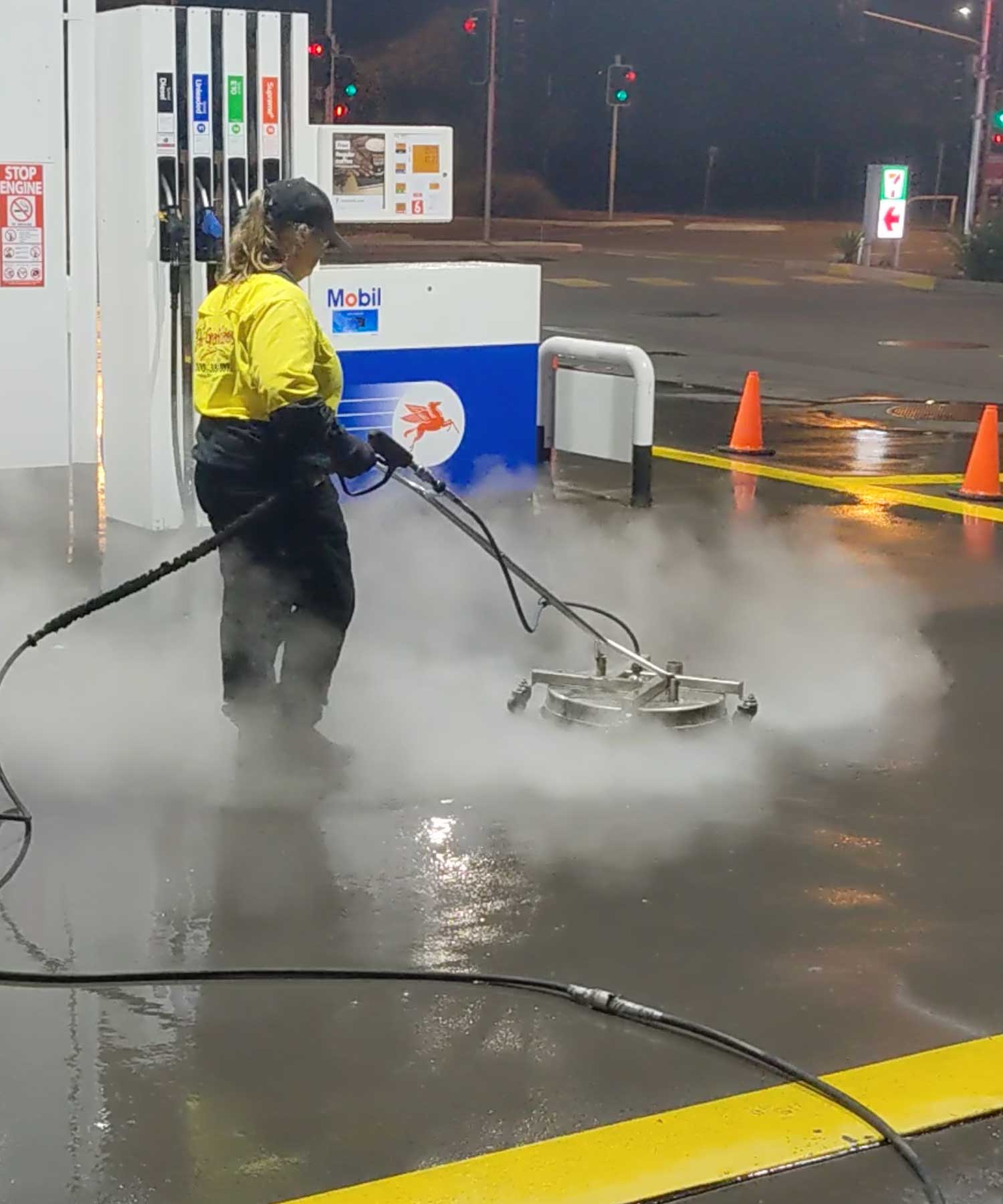
The Graffiti Eaters technicians apply specialist cleaning solutions specifically formulated for the graffiti medium and surface type, allow appropriate dwell time for the solution to break down the paint’s bond with the surface, and complete the removal either by hand or with hot water pressure washing at controlled pressure — depending on the surface and the nature of the job. That process, applied correctly by trained technicians, is what produces the result a homeowner actually wants: their surface fully restored, with the graffiti completely gone and the material beneath it undamaged.
It is also worth noting that the surfaces found on residential properties are varied — brick, render, natural stone, concrete, timber, metal fencing — and each requires a different approach. Our technicians are experienced across the full range of residential surface types and bring the right solution and technique to each one.
What to Do When You Discover Graffiti on Your Home
The steps are straightforward, and following them gives you the best possible outcome.
Document the graffiti with photographs before removal begins. This is useful for any report you make to local council or police — many councils have graffiti reporting systems, and having a photographic record supports any report you make.
Contact The Graffiti Eaters as quickly as possible. The sooner professional treatment begins, the better the result and the more complete the removal. Do not attempt to remove the graffiti yourself with a pressure washer, solvents, or abrasive materials — the risk of making the problem worse or causing surface damage is real, and professional treatment applied to undisturbed fresh paint is the best starting point.
Once the graffiti has been removed, consider whether a protective anti-graffiti coating is appropriate for the affected surface. Anti-graffiti coatings create a barrier on the surface that makes future graffiti significantly easier to remove and reduces the time and cost of each removal job. For residential properties that have been targeted once, a coating applied after removal is a practical investment in easier management of any future incidents.
Your home should feel like yours — safe, maintained, and exactly the way you want it. Graffiti is an unwanted intrusion into that space, and getting it off quickly and properly is the most effective response available to you.