
Does Graffiti Become Harder to Remove Over Time?
Graffiti can appear on a property overnight, transforming a clean wall, fence or building façade into an unwanted display of spray paint, marker or other vandalism. While the immediate concern is usually the appearance of the property, the amount of time the graffiti remains on the surface can also influence how difficult it will be to remove.
Fresh graffiti is generally easier to treat than paint that has been left exposed to the elements for weeks or months. As the paint cures and bonds to the surface, removal can become more involved, particularly on porous materials such as brick, concrete and natural stone. However, the age of the graffiti is only one part of the equation. The type of paint, the condition of the surface and the effects of weathering all play a role in determining the most effective removal method.
What Happens to Graffiti Paint as It Ages?
When spray paint is first applied, the solvents or other liquid components begin evaporating, leaving behind the pigments and binders that form the paint coating. Although the surface may feel dry relatively quickly, some paint formulations continue hardening or developing their final properties over a longer period. As this process progresses, the paint can become more resistant to cleaning and removal.
The rate at which paint dries and cures depends on several factors, including the formulation, temperature, humidity and the surface onto which it has been applied. Graffiti sprayed onto a warm wall during summer may dry considerably faster than paint applied in cooler, damp conditions. Different types of spray paint and marker inks can also behave differently, which is why two graffiti tags on the same building may require different removal treatments.
Once the paint has fully cured, specialist cleaning solutions may be needed to soften or break down the coating before it can be removed. This doesn’t mean old graffiti cannot be cleaned successfully, but the treatment can become more demanding than it would have been shortly after the vandalism occurred.
Why Porous Surfaces Make Graffiti Removal More Difficult
One of the biggest challenges in graffiti removal is the surface underneath the paint. Brick, concrete, sandstone and many other masonry materials contain pores and irregularities that allow paint and pigments to penetrate beyond the visible surface. The extent of this penetration depends on the material, its condition and the properties of the graffiti itself.
On a relatively smooth, non-porous surface such as glass or certain coated metals, graffiti may remain largely on top of the material. Porous masonry behaves differently because some of the paint can enter the surface texture or pores as it is applied. Once the liquid components evaporate, pigments and binders may remain trapped within these small openings, making complete removal more challenging.
This is one reason old graffiti on bare brickwork or concrete can sometimes leave behind faint staining even after the visible paint has been removed. Known as ghosting, this residual discolouration occurs when pigments remain embedded within the substrate. Specialist treatments can often reduce or remove these marks, although the results depend on the surface and the extent of penetration.
How Sunlight and Weather Affect Graffiti
Outdoor graffiti is continually exposed to changing temperatures, sunlight, rain and moisture. These conditions can influence both the graffiti coating and the material underneath it, sometimes making the removal process more complicated.
Sunlight and heat can contribute to changes in the properties of some paint coatings as they age. Depending on the formulation, prolonged exposure may cause the coating to harden, become brittle, fade or deteriorate. Weathering can also affect the underlying surface, particularly where masonry is already worn or exposed to moisture.
Rainwater introduces another consideration. On porous materials, moisture can move through the substrate and influence how contamination behaves within the surface. Repeated wetting and drying may also affect the condition of masonry and existing coatings, making careful assessment particularly important before cleaning begins.
The effect of weathering is not the same for every job. Some aged paints become more difficult to break down, while others may deteriorate over time. This is why the age of the graffiti alone cannot determine the cleaning method or guarantee how easily it will be removed.
Why Old Graffiti Can Require More Intensive Treatment
Professional graffiti removal involves more than applying a cleaning product and washing the surface. The graffiti material needs to be identified, the substrate assessed and a suitable treatment selected to break down the unwanted coating without damaging the original surface.
Older graffiti may require longer treatment times, additional applications or different cleaning formulations, particularly when pigments have penetrated porous masonry. On some surfaces, several stages of treatment may be necessary to remove the visible paint and address residual staining. However, using a stronger chemical or increasing water pressure is not automatically the answer, as aggressive cleaning can permanently alter the substrate.
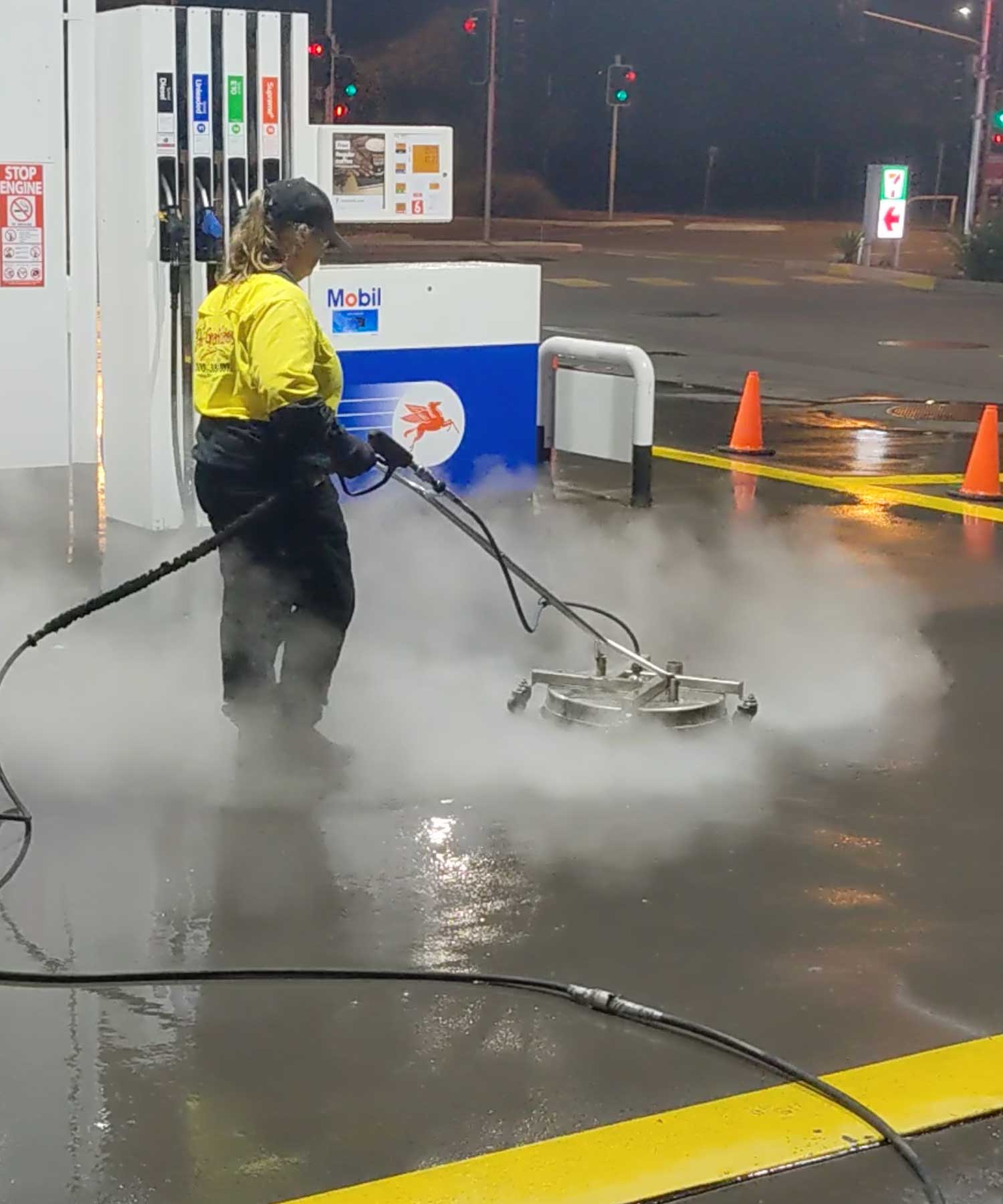
The Graffiti Eaters use specialist graffiti removal treatments selected according to the paint or ink involved and the surface being cleaned. Where appropriate, our team also uses **our custom-built pressure washing systems to deliver hot-water under controlled pressure.** The cleaning solutions work to break down the graffiti, while the controlled hot-water cleaning process helps remove the treated paint and contamination from suitable surfaces.
More delicate materials may require alternative techniques. Painted finishes, signage, plastics, glass and coated metal surfaces can all respond differently to cleaning products, so the treatment needs to protect the original material as well as remove the vandalism.
Why Prompt Graffiti Removal Makes Sense
Although older graffiti can often be removed successfully, there are good reasons to deal with vandalism as soon as practical. Fresh paint may be easier to treat before it has fully cured, particularly on porous surfaces where residual staining can be more difficult to address. Early removal also reduces the amount of time the graffiti remains visible on the property.
For businesses, schools, shopping centres, apartment complexes and other managed properties, presentation is another important consideration. Graffiti left in place can make otherwise well-maintained buildings and surrounding areas appear neglected. Where several incidents occur over time, multiple layers of spray paint, marker and other vandalism can also make eventual removal more involved.
Establishing a regular inspection and removal process can help organisations manage graffiti before it becomes a larger maintenance issue. This is particularly useful for properties with exposed walls, fences, car parks, service areas and other locations that are repeatedly targeted.
Can Anti-Graffiti Coatings Make Future Removal Easier?
For properties experiencing recurring graffiti, protective coatings can provide an additional level of defence. Anti-graffiti coatings are designed to create a barrier between the vandalism and the original surface, reducing the opportunity for paint and marker pigments to penetrate or bond directly to the substrate.
Different coating systems are available for different materials and applications. Sacrificial coatings are generally removed during the cleaning process and need to be reapplied, while suitable long-life coatings are designed to withstand repeated cleaning without being removed each time. The choice depends on the surface, its appearance, the exposure conditions and the expected frequency of vandalism.
These coatings do not prevent someone from applying graffiti, but they can make subsequent cleaning easier and help protect the material underneath. For frequently targeted masonry, painted surfaces and other suitable substrates, combining anti-graffiti protection with prompt removal can be an effective maintenance strategy.
Don’t Leave Graffiti Longer Than Necessary
There is no fixed point at which graffiti suddenly becomes difficult or impossible to remove. Some relatively fresh graffiti can be challenging because of the surface or paint involved, while older tags may still respond well to the correct specialist treatment. What matters is understanding the combination of graffiti material, surface condition and environmental exposure before deciding how the cleaning should be carried out.
The Graffiti Eaters have extensive experience removing both fresh and long-standing graffiti from brickwork, concrete, natural stone, painted surfaces, metal, glass and many other materials. Our team selects the treatment according to the individual job, with the aim of removing the graffiti while preserving the original surface wherever possible.
Whether the graffiti appeared overnight or has been sitting on the property for months, professional treatment can often restore the affected area without unnecessary damage.