
Commercial vs Residential Concrete Cleaning Needs
Concrete is everywhere — driveways, paths, loading docks, car parks, shopfront aprons, warehouse floors. And while it’s all “just concrete”, the way it gets dirty (and the way it needs to be cleaned) is very different depending on where it lives.
If you’ve ever wondered why a home driveway clean feels straightforward, but a shopping centre car park turns into a whole project, this is why.
Residential concrete is all about lifestyle stains
At homes, concrete usually cops the slow-and-steady stuff. Think tyre marks where cars turn, oil drips on the favourite parking spot, leaf tannin stains after a wet week, and the green film that builds up where shade and moisture hang around.
A lot of residential cleaning is about restoring kerb appeal and safety. Homeowners want it to look brighter, feel less slippery, and stop the place looking “tired” from the street. The catch is that DIY gear often struggles with deep, embedded grime, and it’s easy to end up with wand lines, patchy results, or accidental surface damage if you go too hard.
Shopping centres and car parks deal with repeat traffic and repeat mess
Commercial sites are different because the staining is constant and widespread. Shopping centres and public areas deal with heavy foot traffic, trolley marks, drink spills, food grease near bins, chewing gum, and grime tracked in from the street. Car parks bring fuel spots, oil, tyre marks, and that grey-black build-up that settles into porous surfaces over time.
And because these are customer-facing spaces, it’s not just about cleanliness — it’s about presentation. Patchy concrete, missed sections, or streaks can look worse than leaving it alone. Plus you’ve got access windows, safety management, and the reality that the job needs to be done efficiently with minimal disruption.
Warehouses are a different beast again
Warehouse and factory concrete often has the toughest combination: scale plus industrial staining. Forklifts, pallet jacks, rubber marks, grease, hydraulic fluid, tyre scuffing, and general grime from day-in, day-out operations. It’s not unusual to see staining concentrated in travel lanes and work zones, with heavier build-up around loading docks and roller door thresholds.
Here, the priority is often safety and functionality. Clean floors reduce slip risk, improve visibility of line marking, and can even help with audits and general site standards. And because these spaces are huge, consistency matters — you want the whole floor to look uniform, not like it’s been cleaned in strips.
Why size changes everything
The bigger the area, the more obvious inconsistent cleaning becomes. A small driveway can be detailed carefully. A 5,000m² car park or warehouse floor can’t be approached the same way — not if you want it done quickly and to a high standard.
This is where professional equipment and process make a noticeable difference.
How custom-built systems handle large-scale concrete stain removal
Large areas need more than a weekend pressure washer. The right setup is about maintaining consistent pressure and flow, using the correct surface cleaning attachments where appropriate, and pairing that with the right pre-treatment approach for the type of staining.
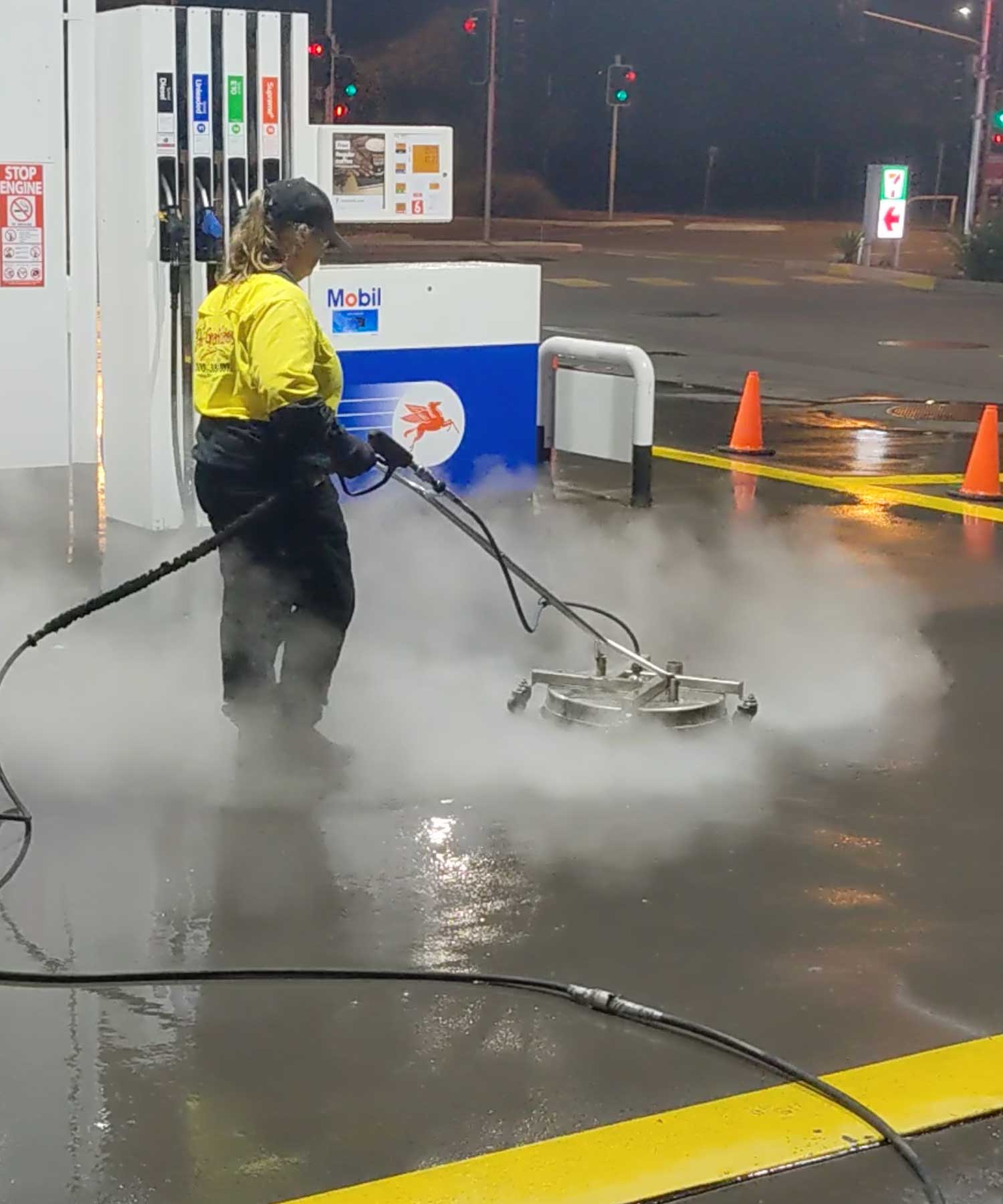
At The Stain Eaters, our technicians use our custom-built pressure washing systems to deliver hot-water under controlled pressure. That controlled approach is what helps achieve even results across big expanses of concrete — reducing streaking, improving efficiency, and lifting stubborn contamination that smaller machines often leave behind.
It also means we can tackle a wide variety of real-world stains, from oil and tyre marking to organic build-up, without chewing up the surface or leaving it looking patchy.
Choosing the right approach for your site
If it’s residential, you’re usually chasing kerb appeal, safety, and a “fresh again” look. If it’s commercial, you’re balancing appearance, traffic flow, safety requirements, and minimal downtime — often across much larger areas.
Either way, the goal is the same: cleaner concrete that looks consistent and performs better.
If you’re dealing with staining that keeps spreading, looks uneven after cleaning attempts, or covers a large area, it’s worth getting it assessed properly so you don’t waste time (or accidentally make it worse).